In 2028 we expect a whole new generation of cars to be much safer as vehicle-to-vehicle (V2V) communication technology is rolled out.
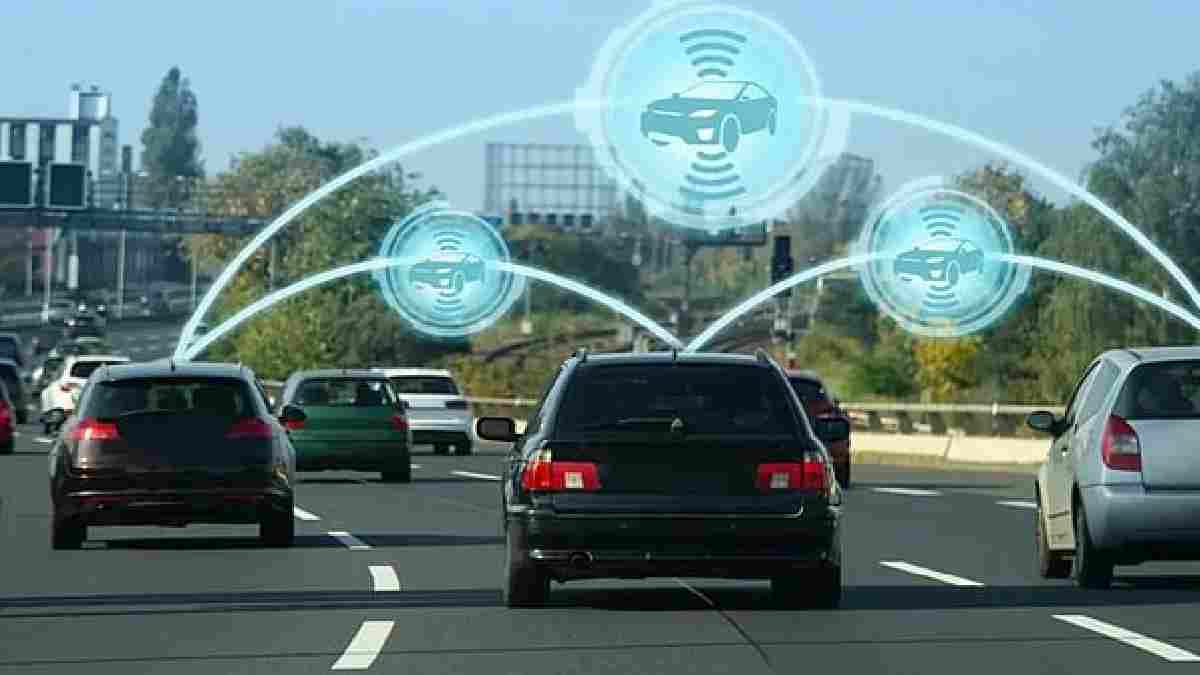
Vehicle-to-Vehicle communication technology allows the cars to communicate with each other in real time, thus preventing car accidents before they happen.
Like traditional safety features that rely on cameras, radar, and sensors in a single vehicle, V2V technology allows vehicles to “talk” to one another. They communicate speed, direction, location, braking status, and lane position. Cars are able to spot collision threats in such data and immediately alert drivers.
The technology was developed for road safety, in situations where there may be no visibility for drivers. For instance, if a car suddenly brakes in a blind curve or at a busy intersection, nearby V2V-equipped vehicles will receive the warning in seconds and the car will brake quickly and give drivers more time to react.
Industry experts believe the widespread use of V2V communication would also reduce rear-end collisions, intersection accidents and lane-change incidents.
Safety systems could also be able to work with automatic emergency braking and driver assistance to reduce accidents further.
The communication system is based on dedicated wireless technology not connected to mobile networks, which can be very fast and reliable in the case of weak or no mobile coverage. With the development of connected vehicle technology,
V2V is also expected to work seamlessly with Vehicle-to-Infrastructure (V2I) systems as well, so that vehicles will know when traffic signals, road signs, construction zones, and emergency vehicles are present, which will help them communicate better.
Many car manufacturers have already been testing connected vehicle technology for years.
New models of these vehicles with V2V capabilities will be available in 2028, and more and more of them will be launched in the coming years as manufacturers prepare for tougher safety standards and an ever-more sophisticated transportation system for driver and vehicle use to be implemented from 2028 onwards.
For drivers, the system works quietly in the background. If a nearby car is approaching dangerously fast, suddenly changes lanes, or presents a collision risk, the car can send visual, audio, or vibration warnings.
In some advanced vehicles the system might even prepare safety features such as seatbelt pre-tensioning or assist emergency braking.
Privacy is still an important factor. The communication system is designed to exchange anonymous safety-related information without sharing personal driver identities. The transmitted data focuses only on vehicle movement and traffic safety.
V2V technology is expected to be popular with new vehicles first, but it’s likely to be increasingly adopted as more manufacturers integrate connected safety systems into their lineups. As cars are connected, the technology becomes more effective because every additional V2V-equipped vehicle strengthens the network.
V2V communication is one of the most important technological advancements in transportation safety, with road accidents a global issue and road casualties a global problem.
When cars can recognize accidents before they even happen, V2V communication will also be one of the biggest advances in automotive safety. From 2028 onwards, it will change driving and make roads safer.