
Bengaluru Traffic Congestion takes a toll on employees
The estimated annual loss of 168 hours shows how significant the mobility issue is in Bengaluru. While the exact time lost depends on the way that individuals travel and commuting schedule, the wider problem affects thousands of professionals who are coming to work every day in the city’s technology corridors.
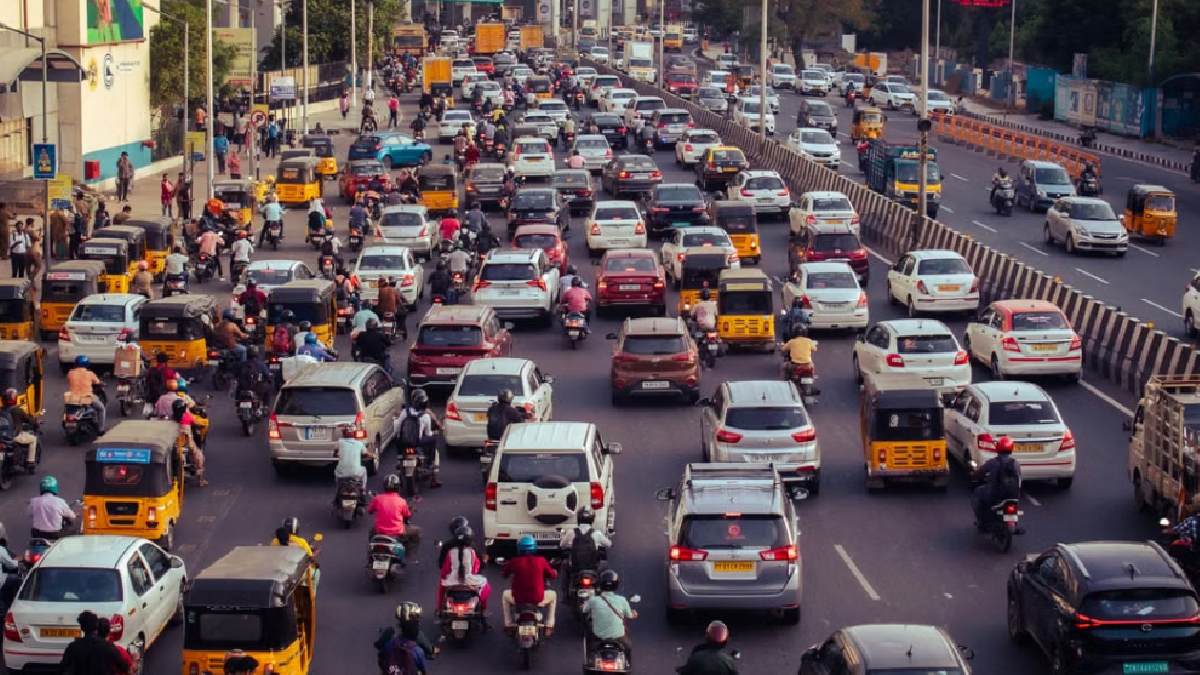
Traffic bottlenecks on the Outer Ring Road, Bellandur, Marathahalli, Silk Board, Sarjapur Road and routes leading to Electronic City make even short trips all too unpredictable.
In the morning and evening, that’s when many employees leave home much earlier than they should, while unexpected delays can stop them from going for meetings and going to work.
Bengaluru’s traffic problems are not just about how many vehicles are on the road; they are also about how efficiently people can travel from their homes to their workplaces.
The impact is not limited to days sitting in a car. Long commutes can be a driver’s curse and have tired people with little time to travel and do exercise, spend time with family and just be themselves. Those who arrive at work late might not be able to wake up feeling fresh and energized when they return home. And when traffic is bad on a road trip and it is then blocked, it is hard for employers who need to make it to work.
Bengaluru's role as a technology and business centre makes reliable mobility crucial, since companies need reliable transportation for employees to get to work. The Economic Survey 2025-26 has also highlighted the high economic cost of congestion-related delays in cities and the need for better urban mobility planning.
Work From Home and Flexible Office Timings Could Help
For short-term solutions, you could have employees in the same place at the same time. A hybrid work arrangement or work-from-home days could be an option that the business might prefer. Staggered office hours could also reduce peak-hour vehicle volume in areas where high numbers of technology and corporate employees are working in the same office.
If companies let teams work in different places at different times, the morning rush can be more distributed and less concentrated in a small window. These would require coordination between employers, technology parks and traffic authorities, but they may provide some relief while infrastructure development takes place in the longer term.
Flexible working arrangements need not be considered a substitute for better transport infrastructure. Not all work can be done from home, and many employees working in healthcare, retail, manufacturing, hospitality and essential services need to travel to their jobs. Companies could also improve employee transport by making office shuttles available, encouraging carpooling and coordinating with neighbouring businesses.
Major technology parks could also assess employee commuting habits and provide transport services on routes that are most in demand. Better communication about traffic conditions, flexible arrival windows and realistic attendance policies could also reduce the pressure on employees who would be stuck in traffic and have to deal with the inevitable backlog.
Public Transport is Central to the Solution
Public transport needs to be improved to solve the chronic congestion problems in Bengaluru. A reliable system of buses and metro services can reduce dependence on private cars and two-wheelers when commuters are able to travel comfortably and get to their destinations without complicated transfers.
Metro services made available by Bangalore Metropolitan Transport Corporation (BMTC) are needed to link residential areas to employment centres, and metro expansion and better integration of bus and rail services can make public transport a more practical option for daily travel.
Safe pedestrian pathways, reliable bus stops, clear passenger information and dependable last-mile connectivity are equally important. If commuters are not able to easily access a bus stop or move from a metro station to their office, they will continue using private vehicles even when public transport is available nearby.
Authorities can also consider measures to improve traffic management at congested junctions. Better signal coordination, stricter enforcement against illegal parking, designated bus bays and effective management of roadwork can help reduce avoidable bottlenecks. The provision of dedicated bus lanes can also enhance the reliability of public transport on suitable corridors if proper planning and enforcement are done.
Construction and utility agencies should collaborate to avoid repeated road excavation and disruption. Urban mobility experts have also argued that Bengaluru needs integrated planning that prioritises the movement of people rather than relying exclusively on road widening and flyovers.
Bengaluru Needs Coordinated Action
The loss of 21 potential working days is a good way to assess the human cost of repeated traffic delays, but this is a less exact figure to be taken into account and based on 168 hours and an 8-hour workday, not 21 full days of constant absence from work.
It is also worth mentioning that the individual commuting losses will differ and that the estimate is not representative of the full amount of time every Bengaluru employee loses. But the calculation does illustrate why commuting time is an important issue for workers and businesses.
Addressing this issue will require sustained cooperation between the Karnataka government, city authorities, traffic police, public transport agencies, employers and residents.
Better public transport, flexible working arrangements, staggered office hours, improved traffic enforcement and coordinated infrastructure projects can complement one another. There is no point in adding more road space if the number of private vehicles continues to rise and alternatives remain inconvenient.
Bengaluru needs a transport system that allows people to move safely, predictably and efficiently across the city. Until that happens, employees are likely to continue paying the price through lost time, rising stress and reduced quality of life.





Comments