
A customer care number search for customer care numbers online can be dangerous if people accidentally come into contact with cybercriminals who pose as customer service representatives. In a shocking case in Bengaluru, a 56-year-old homemaker was reported to have lost ₹98,000 after she tried to get a refund for a spoiled curd packet purchased through Blinkit.
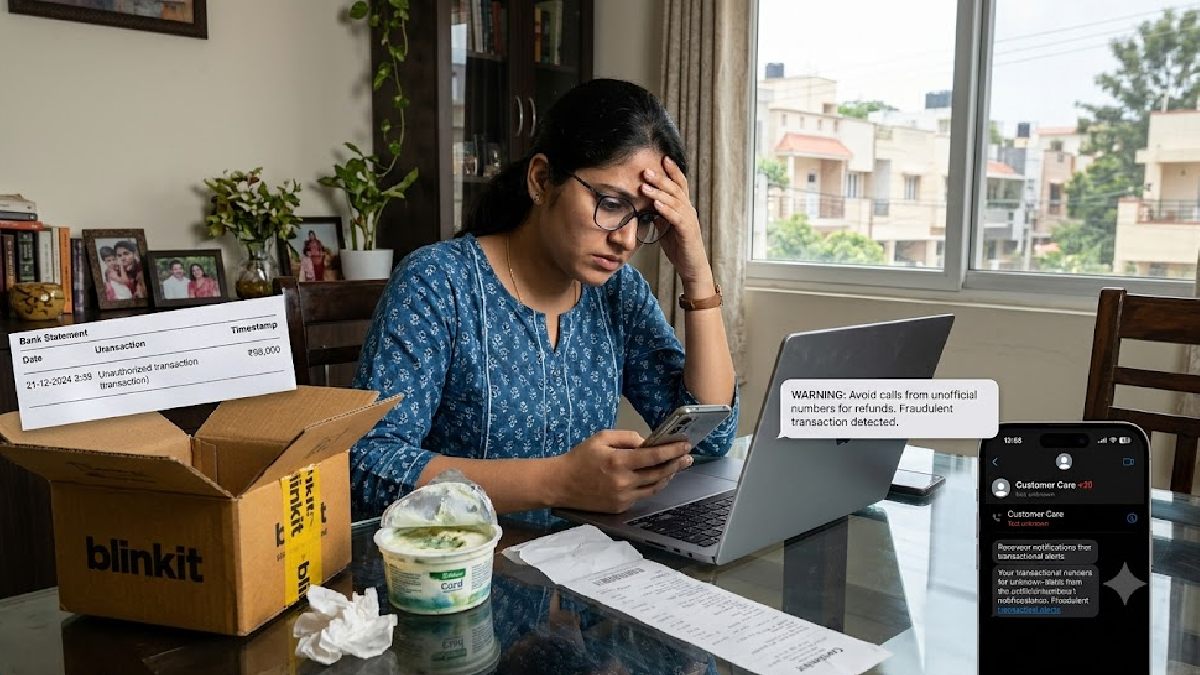
The woman tried to get a refund for a spoiled curd packet on what she thought was the customer support service of the company at the time and she got caught by an online scam where WhatsApp links and access to her digital payment account were compromised. It has once again raised the risk of searching for customer service numbers through unofficial websites and trusting unknown people who promise refunds again.
The victim, Soundarya (name changed), lives in an apartment near Palace Cross Road in Vasanth Nagar, Bengaluru. She received a damaged curd packet from Blinkit and attempted to contact customer support for a refund. The Central Cyber Crime Police Station has registered a case and started an investigation to locate the individuals involved in the alleged fraud.


Spoiled Curd Packet Leads to Online Customer Care Search
According to the complaint, Soundarya placed an order for curd through Blinkit on October 17. But when the delivery arrived at her house, the packet was said to be in a bad state. Concerned about the quality of the product, she contacted the delivery agent and explained the problem.
The delivery agent told Soundarya to approach the customer service centre for a refund and resolve the problem. Soundarya then searched for Blinkit customer care contact details online. She came across a phone number on the internet and picked it up, thinking she was talking to the customer service team at the company.
The person who answered the call told her that the refund could be processed and directed her to follow a few guidelines. The woman did as directed and proceeded as instructed by the caller. What was at first a customer complaint turned into a cybercrime incident.


Fraudsters Send WhatsApp Link to Process Refund
After a conversation, the fraudster sent Soundarya a link through WhatsApp and advised her to upload a picture of the damaged curd packet. The caller said that the photo was needed for the refund.
The woman followed the instructions and uploaded the photo of the spoiled product through the link she received. After that, she said another person contacted her and claimed that the refund process was ongoing.
The second caller asked Soundarya to check her digital payment account and verify the account balance. The fraudster explained that checking the account was part of the refund procedure and instructed her to open the relevant application.
Believing that the callers were genuine customer service representatives, Soundarya accessed her account. She was asked to log in to her account and then enter her password while checking her balance. The instructions seemed to be related to the refund procedure she had initiated, and she obeyed them without realizing she was being targeted by cybercriminals.
Banking Application Goes Down and ₹98,000 Debited
According to the complaint, Soundarya entered her password as instructed by the caller. Shortly after, she noticed the application on her mobile phone had suddenly disappeared from the screen.
She was shocked when she realised that ₹98,000 had been taken from her bank account. She said the money was transferred without her intention or consent while she was attempting to obtain a refund for the damaged curd packet.
The homemaker was shocked, as her original complaint involved a fairly small grocery purchase. Instead of receiving the expected refund, she allegedly lost a substantial amount of money through the fraudulent process.
The complaint indicates that the callers used the promise of a refund to gain the woman's trust and guide her through a series of instructions. The WhatsApp link, photograph upload request, and account verification process allegedly played a role in the fraud.
However, the exact technical method used to access the woman’s banking account and transfer the money is not clear in the information provided. Police are now investigating how the fraud was carried out and who was responsible.
Central Cyber Crime Police Register Case
After discovering the unauthorised transaction, Soundarya realised that she had been cheated and approached the police. The Central Cyber Crime Police Station in Bengaluru registered a case based on her complaint and began investigating the incident.
Investigators are expected to examine the phone numbers used by the alleged fraudsters, the WhatsApp communication, the suspicious link, and the financial transaction details. These could help establish how the money was transferred and identify the accounts involved in receiving the amount.
The incident serves as a warning to consumers who search for customer care numbers online. Fraudsters may create misleading contact details or impersonate representatives of popular companies to exploit customers who are seeking assistance with refunds, deliveries, or payment problems.
How to Stay Safe From Customer Care Cyber Fraud
Cybersecurity experts generally advise consumers to contact companies only through their official applications, verified websites, or recognised customer support channels. Searching for customer care numbers through random websites can expose users to fraudulent phone numbers operated by scammers.
Consumers should avoid clicking on suspicious WhatsApp links, particularly when they are sent by unknown individuals claiming to process refunds. A genuine product refund should not require customers to disclose their banking passwords, OTPs, or other confidential payment credentials to an unknown caller.
Users should also be cautious when asked to install unfamiliar applications, share their screens, or enter sensitive information while following instructions from someone they have never verified. Any unexpected disappearance of a banking application or suspicious transaction should be treated as a possible security incident.
If money is lost through cyber fraud, victims should immediately contact their bank and report the transaction. They can also call India's national cybercrime helpline 1930 or file a complaint through the official website cybercrime.gov.in.
The Bengaluru incident highlights how a simple grocery delivery complaint can become an opportunity for cybercriminals when customers rely on unverified customer care numbers. Consumers are advised to verify contact details through official channels and avoid sharing sensitive banking information while seeking refunds.








Comments