
Karnataka’s traditional food products are now getting new markets outside India — fresh business opportunities for small food-processing units, farmers and rural entrepreneurs. North Karnataka’s famous jowar rottis, millet-based products and cold-pressed oils traditionally prepared here are attracting attention as consumers look for traditional nutritious food options.
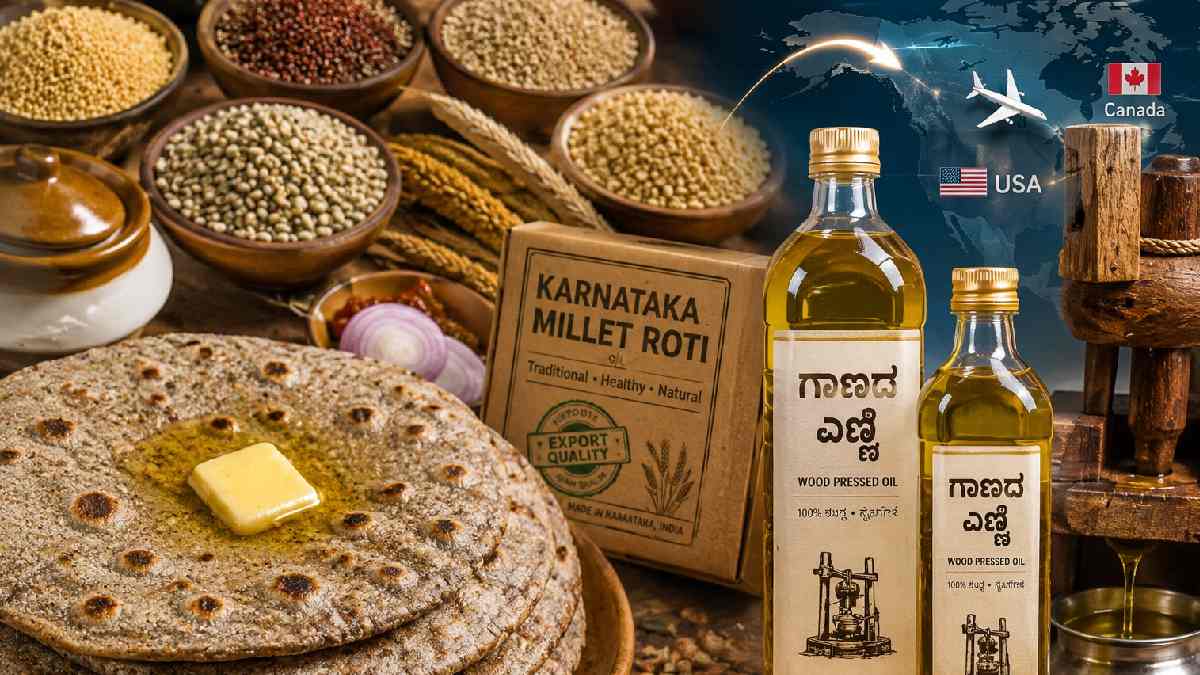
Small businesses in the state are taking local food products to international markets (US and Canada). Demand among Indians and Kannadigas living abroad is increasing, so traditional foods can reach customers far from their place of origin.
Government support, food-processing technology, better packaging and better market connections are also helping small entrepreneurs grow their businesses.
North Karnataka's Jowar Rotti Finds Buyers Overseas
Jowar rotti, khadak rotti and other millet-based foods from North Karnataka are also getting attention from international markets. Small entrepreneurs are packaging these traditional products and exporting them to the US and Canada, among others.
The demand is particularly linked to overseas Indian communities who want familiar regional food products. For many customers, these are a link with traditional Karnataka cuisine.
But exporting traditional food is not easy. Entrepreneurs need to make sure products have a shelf life, are of consistent quality and packaging, and export standards, and develop preservation methods suitable for the products and distribution networks.
PMFME Scheme Supports 11,384 Beneficiaries in Karnataka
Government assistance is helping to expand Karnataka’s small food processing businesses.
Under the PMFME (Pradhan Mantri Formalisation of Micro Food Processing Enterprises) scheme, financial assistance and loan support are being provided to small food processing entrepreneurs who are eligible.
According to KAPPEC figures cited in the report, Karnataka has 11,384 beneficiaries under the initiative. Of these, 5,114 are millet- and oilseed-based businesses.
The figures include:
- 3,329 loans for millet-based food businesses.
- 1,785 loans for oilseed-based enterprises.
The funds can be used to buy machinery for small units, increase production capacity, upgrade packaging and reach new markets.
₹589 Crore Government Support Over Five Years
The report says that entrepreneurs received a combined ₹589 crore assistance from the Central and Karnataka governments over five years.
Of the supported businesses, 25 entrepreneurs have reached the stage of exporting their products to international markets.
Millet-based food products have a prominent place in this expanding export activity. Ragi, jowar and bajra (millet) are being given new impetus as consumers become more interested in traditional food choices and nutritional diversity.
These grains were once most often associated with rural diets, but they are now being used in packaged snacks, ready-to-cook products flour and other processed foods.
Cold-Pressed Oil Businesses See Growing Interest
Millet products as well as traditionally prepared oils are also more popular in domestic markets.
Cold-pressed oils are made by pressing seeds to extract oil through a traditional (relatively slow) press. Sesame, groundnut, and sunflower seeds are some of the sources used by small manufacturers.
People interested in traditional food products are trying these oils, and that’s opening up opportunities for local producers to sell into urban markets.
For small businesses, product quality, sourcing transparency, packaging and customer awareness are still key to building a sustainable market.
Jawari Foods: A Small Business Expands Its Reach
Jawari Foods founded by Shilpa Mantangani in 2016 is given as an example of a Karnataka food business that has expanded beyond its local market.
The company started exporting to Singapore in its first two years and later opened up opportunities in the US, UK and Australia.
The report says financial support under the PMFME scheme helped upgrade technology in the business; exhibitions also helped it find new customers and expand its market.
Director Channayya Y. Hiremath said that the company’s annual turnover increased from ₹40 lakh to ₹1 crore.
In this case the example shows how traditional food products can be marketed to wider markets if businesses invest in production technology, packaging and marketing.
New Opportunities for Farmers and Rural Women
The growth of food-processing businesses could also bring opportunities for farmers, women’s self-help groups and Farmer Producer Organisations (FPOs).
Instead of selling agricultural produce only as raw commodities, farmers can market value-added products like millet flour, ready-to-cook rotti mixes, traditional snacks and edible oils.
Such processing activities can provide additional income opportunities in rural areas too. Women self-help groups and small rural enterprises can also participate in production, packaging and local distribution.
Karnataka's Traditional Foods Look Towards Global Markets
The overseas demand for jowar rotti and expansion of millet and cold-pressed oil businesses indicate new possibilities for Karnataka’s food processing sector.
But growth will only be sustained if food safety standards are maintained, shelf life extended, export requirements met internationally and dependable supply chains created.
Government support and better access to technology and markets would enable traditional Karnataka food products to be present in both domestic and international markets (creating opportunities for small entrepreneurs and rural communities).






Comments