
The Supreme Court of India has given a green light to bike taxi services in Karnataka by dismissing the state government’s appeal against a Karnataka High Court judgment.
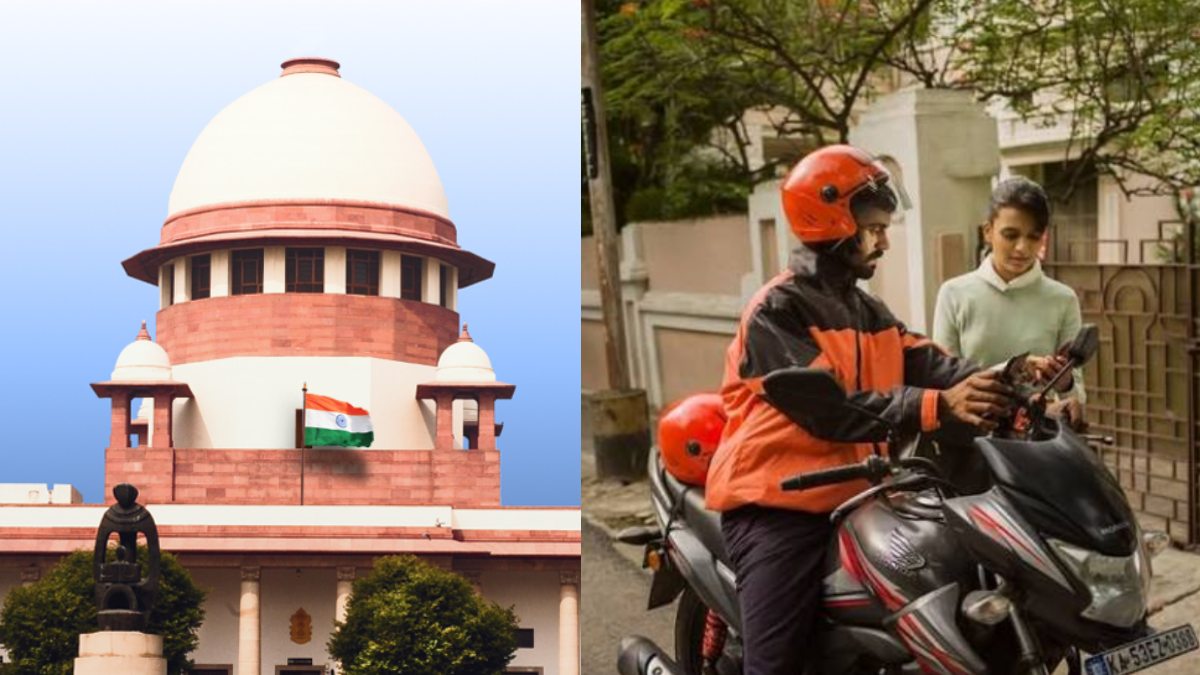
A bench of Justice Satish Chandra Sharma and N. Kotiswar Singh passed the order on November 20, 2026, upholding the High Court’s January 23 decision lifting the earlier curbs on such services. Aggregators Ola, Uber and Rapido, as well as individual motorcycle owners, can continue with bike taxis provided they get registrations and permits under law. The court said that instead of a total ban, bike taxi services should be regulated (lawfully).
Two-wheelers are transport vehicles under the Motor Vehicles Act, 1988, so they can be registered and operated as contract carriages; regulation is better than prohibition (as bike taxis already exist in 25 other states). During the hearing, Justice Sharma said bike taxis are an affordable and convenient option for women commuters also, and GPS tracking adds another layer of safety.
He also cited feedback from young women who preferred bike taxis over autorickshaws because they were so much cheaper. The order gives a big boost to ride-hailing platforms and bike taxi operators but a hammer blow to the Karnataka government and some auto and cab associations which had opposed the services.
State counsel said bike taxis were unsafe; harassment of passengers (especially women) was possible; insurance coverage in case of accidents would not be there; earlier rules for electric bike taxis had problems and environmental concerns too existed. High Court division bench Chief Justice Vibhu Bakhru and C.M. Joshi had earlier set aside a single-judge order that directed suspension of bike taxi operations until the state framed a policy.
That bench held that the government could impose conditions on regulation but could not refuse permits just because vehicles were motorcycles. Appeals against the single-judge restriction were filed by ANI Technologies (Ola), Uber, Rapido, motorcycle owners and Bike Taxi Welfare Association.
High Court had directed transport authorities to consider applications for registering two-wheelers as transport vehicles and granting contract carriage permits under the Motor Vehicles Act. Now that the Supreme Court has refused to interfere, those directions stand.
Operators and aggregators can approach authorities for permissions; the state government retains the power to frame and enforce the appropriate regulatory norms (safety and insurance requirements, etc.). This will give operational certainty to the bike taxi ecosystem in Karnataka after a long period of legal uncertainty.
Commuters in congested cities like Bengaluru will get affordable two-wheeler ride options to improve last-mile connectivity. But regulation rather than prohibition also means that it is up to the state government to come out with clear guidelines on safety, insurance, driver verification and passenger protection while allowing services to function within the existing legal framework.
The SC order effectively closes the book on the state’s attempt to reinstate a full ban and shows that lawful regulation is preferable to outright prohibition when the parent statute already recognises two-wheelers as eligible transport vehicles.





Comments