
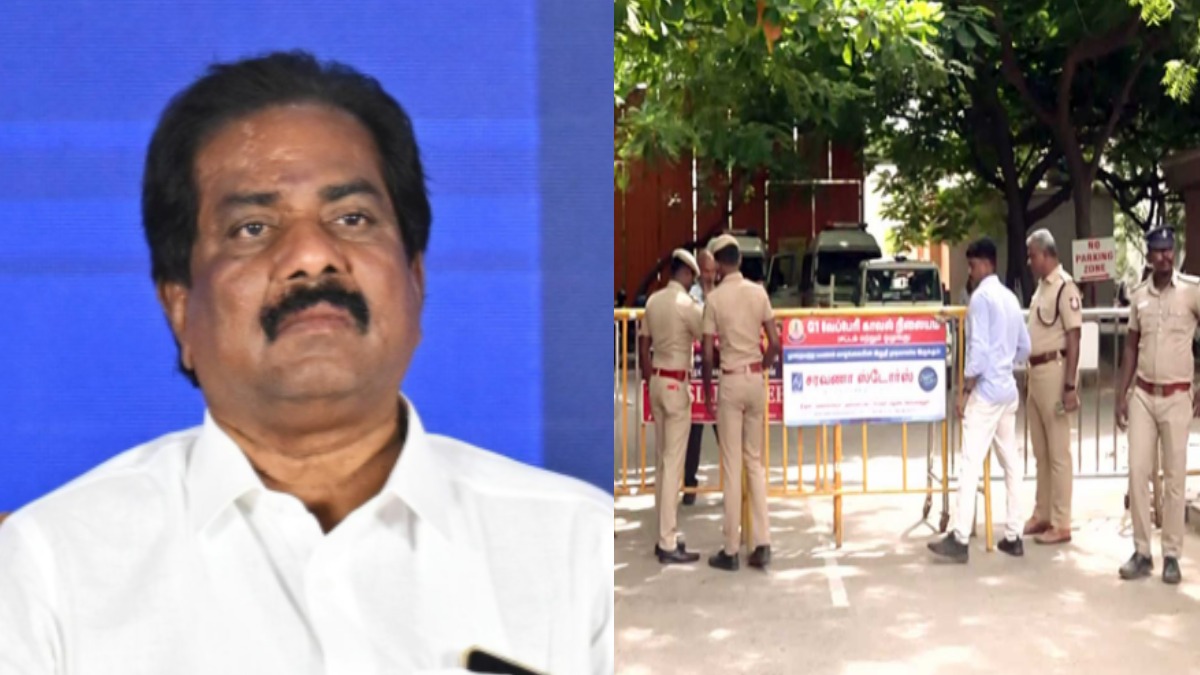
The political temperature in Tamil Nadu has risen after Central Crime Branch Police reportedly raided the residence of former DMK minister Moorthy at Madurai over alleged irregularities pertaining to quarry operations.
The development has created a lot of buzz in political circles as investigation has opened up questions about whether there are violations in quarry activities and who is involved in it.
Since Moorthy is one of the prominent political leaders from Dravida Munnetra Kazhagam (DMK) police action was significant because Moorthy is also a politician. With the raid new political discussions have begun in the state now on what was searched for, what allegations were made and if any more action will follow.
Central Crime Branch Police Raids Former DMK Minister Moorthy Residence in Madurai Over Alleged Quarry Irregularities. https://t.co/hXJ0JdJ9Ps
— Vignesh Theni (@Vignesh_twitz) November 20, 2026
The Central Crime Branch Police raided Moorthy’s residence as part of an investigation into alleged quarry irregularities. Investigations can cover several aspects permissions for quarries, licensing procedures, extraction activities and transportation of minerals, royalty payments etc but the allegations against former minister and evidence investigators are looking at have not been independently established in the information available so far. So raid should be seen as an investigative action rather than proof of wrongdoing.
The involvement of the Central Crime Branch has made the development more significant. Criminal investigation teams look for documentary records, financial transactions, official permissions and other material that could show whether violations have taken place or not.
During searches connected to suspected quarry irregularities investigators may look for records relating to land ownership; mining licences; contracts; financial dealings between concerned parties etc. Documents or other materials recovered during operation could become relevant to investigation depending on how they relate to allegations.
The searches were reportedly conducted at the former minister’s residence in Iyer Bungalow area on Roja Street in Madurai. More than 50 police personnel (including District Crime Branch personnel) took part in the operation, local media reports said.
Police personnel were posted outside the house as search was on. Investigators were looking into documents related to stone quarry tenders and other records which might throw light on alleged irregularities. Whether any documents or electronic materials were seized is yet to be officially confirmed.
The case is reportedly about alleged violations in stone quarries and crushers in Palamedu and Alanganallur of Madurai district. Complaints were made that red soil and stones were extracted more than allowed under government regulations (excessive extraction can lead to environmental damage, loss of revenue etc.
violation of mining and quarrying rules). The District Crime Branch registered a case in this connection and the searches at Moorthy's residence followed.
P. Moorthy was Tamil Nadu’s Minister for Commercial Taxes and Registration under DMK government and is also a prominent political leader in Madurai district. The police operation has therefore been news beyond the immediate investigation because it involves a former minister and allegations of quarry activities.
The latest development comes at a time when Tamil Nadu is being probed for alleged irregularities in mining and quarrying. Investigations on sand mining, red soil extraction and stone quarry permissions have become political and administrative issues in the state. But the case against Moorthy pertains to allegations against quarries in Madurai and not other separate mining investigations.
For now the focus is on what documents investigators are looking at and what comes next in the case. Will the searches lead to more questioning, additional evidence collection or other legal proceedings?
The former minister has not been found guilty of the allegations but the investigation will have to establish whether violations or criminal offences can be proved. The police are expected to give further information as the case develops.





Comments