
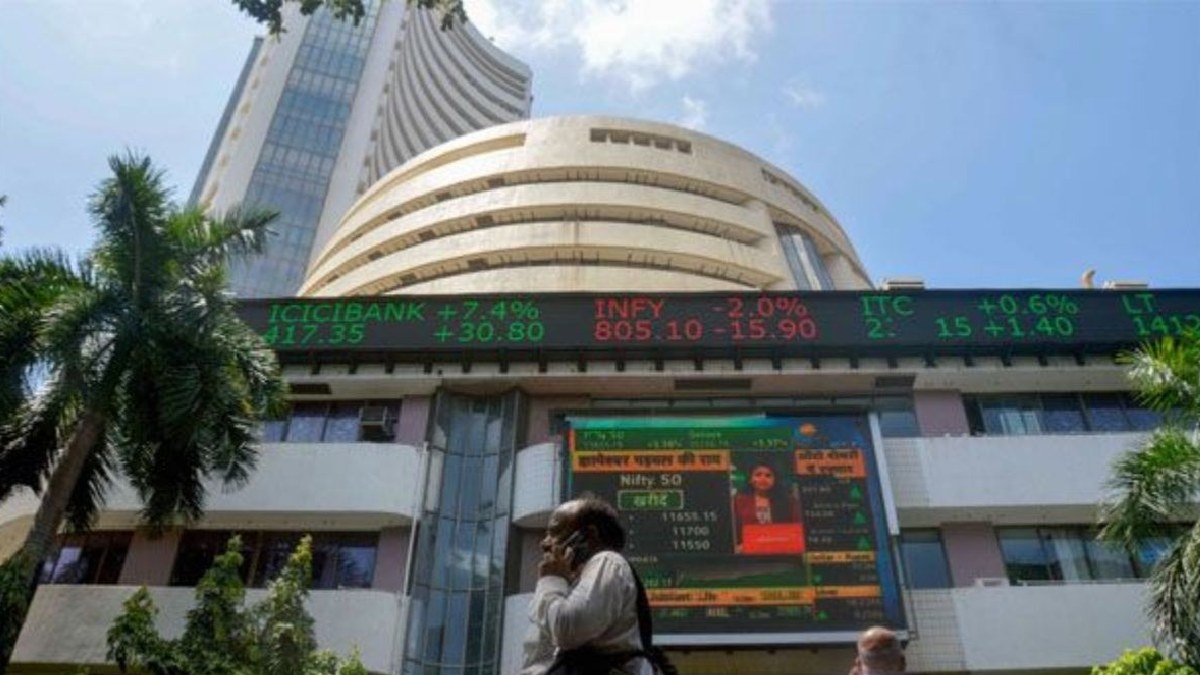
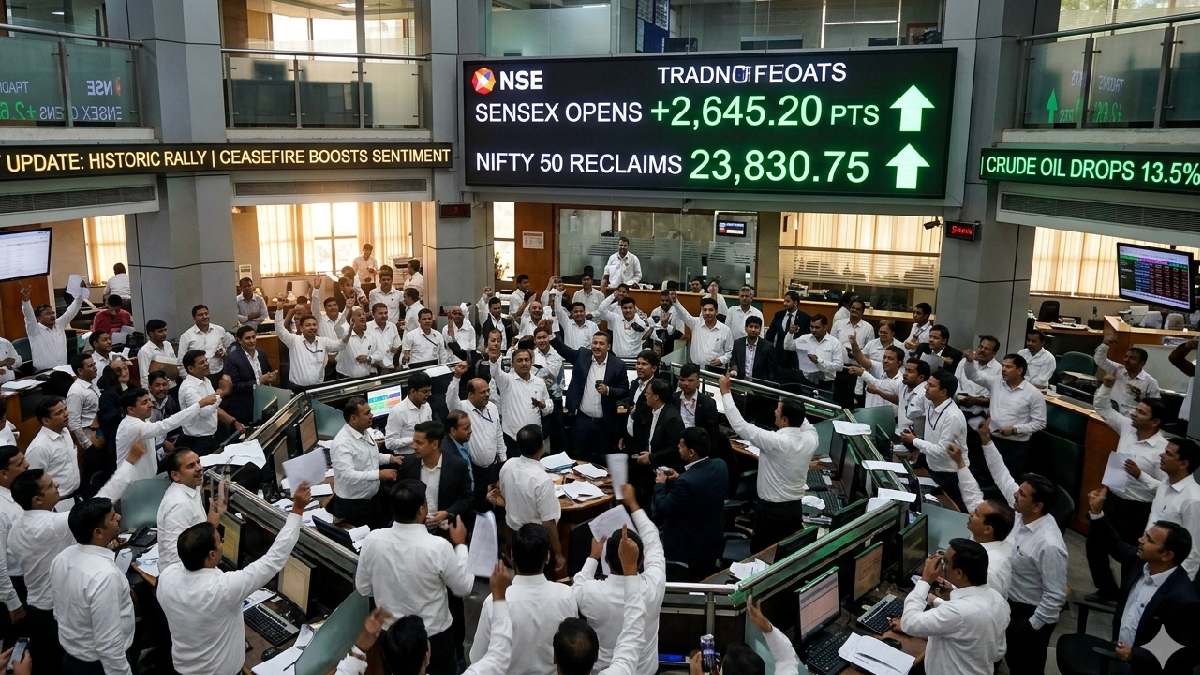
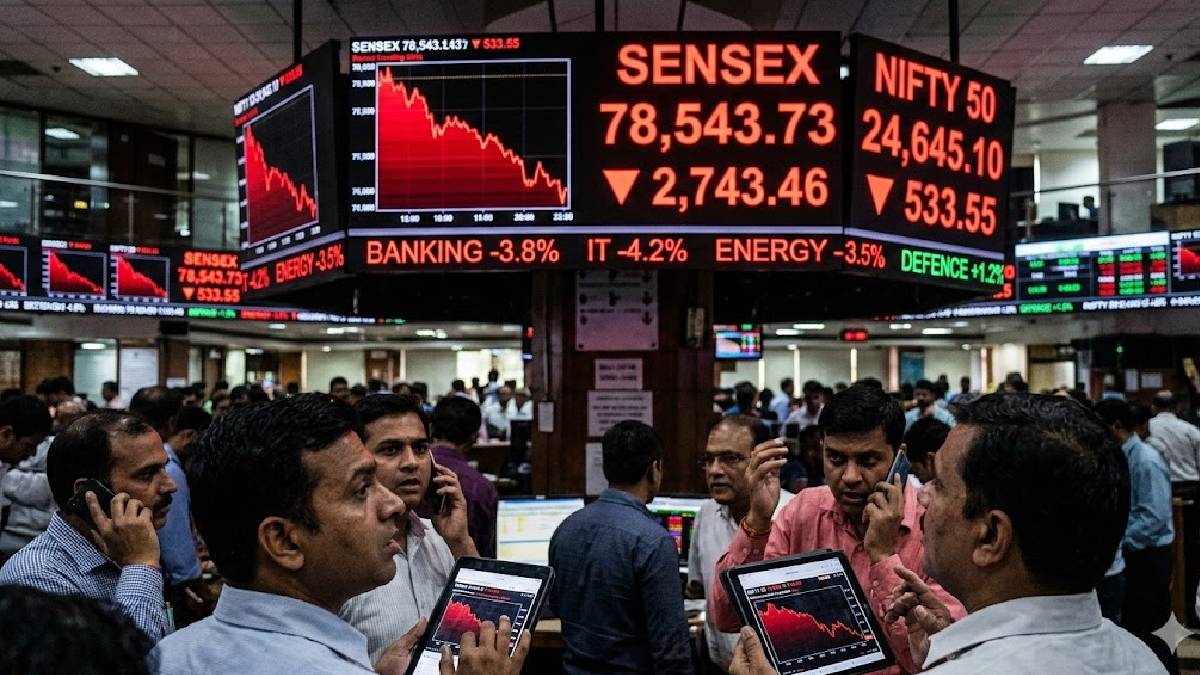
The Indian equity markets are going through a kind of “bloodbath” that began on Tuesday 24th February that had the benchmark indices out of their 2-day winning streak. The BSE Sensex fell more than 695 points to trade around 82,600, while the NSE Nifty 50 was down almost 200 points at 25,511.
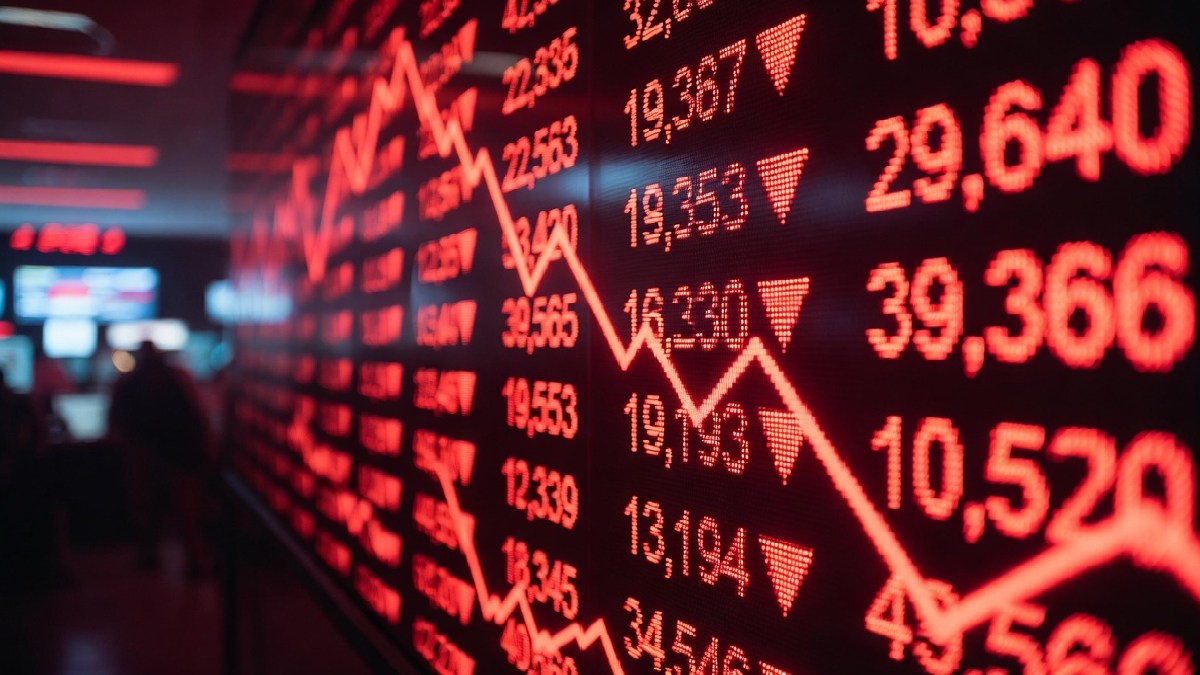
In the first hour of trade, over ₹4 lakh crore in investor wealth was consumed by the overnight sell-off, largely as a result of a Washington-induced “tariff shock” and escalating geopolitical tensions.
The Tariff Trigger: Trump’s 15% Global Levy
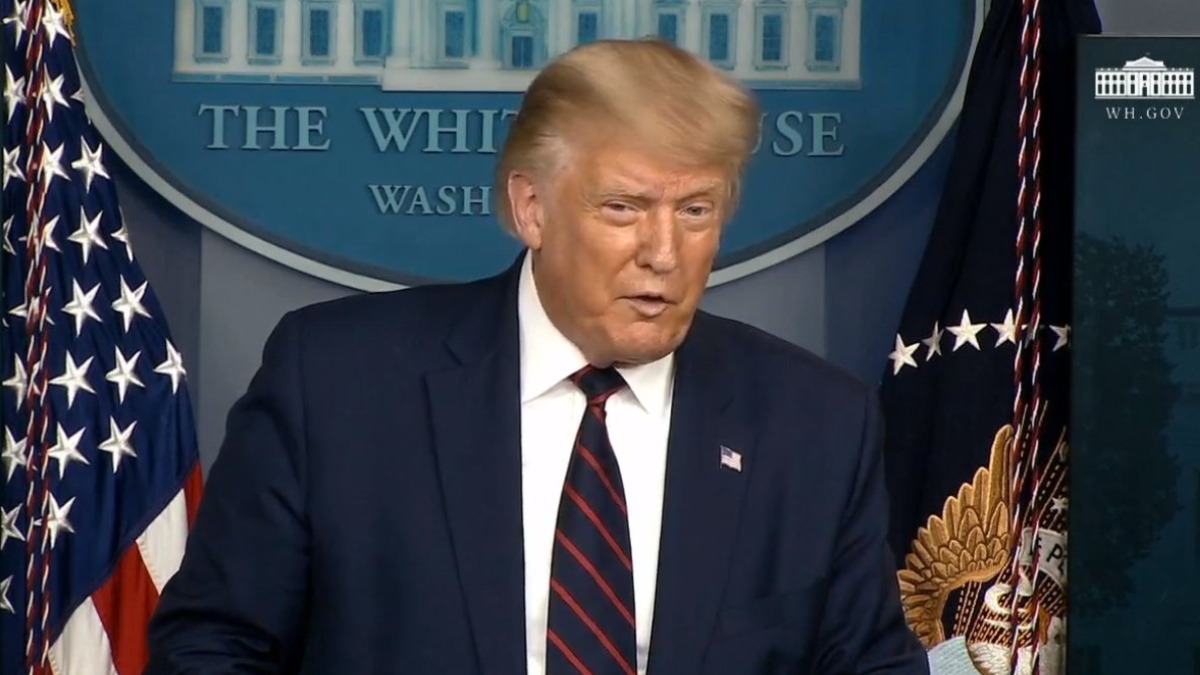
The central trigger of the market’s slide was a renewed threat to the economy by their U.S. President Donald Trump. Following a U.S. Supreme Court decision overturning his previous emergency tariffs, Trump claimed he would slap a global import levy of 15%, under Section 122 of the 1974 Trade Act, and announced his plans over social media.
The possibility of a full-scale trade war rattled export-oriented sectors particularly IT and Pharma which rely heavily for their trade on the U.S. market as a whole. heavyweight enterprises such as Infosys, TCS, and Tech Mahindra were the number one laggards, pulling the Nifty IT index back further.
Key Factors Behind the Fall
- US-Iran Tensions: Geopolitical tensions in the Middle East continue to keep global markets on edge, resulting in a ‘flight to safety’ as investors pull capital from emerging markets like India.
- FII Selling Spree: Foreign Institutional Investors (FIIs) were net sellers still from January onwards, and continued on their January patterns. On Monday, provisional figures showed FIIs dumping shares amounting to over ₹3,400 crore, mounting pressure for domestic liquidity on an ongoing basis.
- Rupee Weakness: Indian Rupee reached a low at 90.95 to the US Dollar, making inflation and corporate profitability outlook even more complex.
- Profit Booking: With a cumulative improvement over the last two sessions of over 1 per cent, traders did not have new domestic triggers as yet to ignite them; hence they "sold into strength" profit and committed themselves to locking in.
Sectoral Impact
The middle-cap and small-cap indices meanwhile showed a bit of resilience, even ending the session on the higher side, as retail investors looked for value in the market as a whole. The banking sector on the other hand turned negative again – though IDFC First Bank still looked a little bit in trouble from the recent fraud story, some PSU banks like SBI, saw modest backing at lower values.
As the day wears on, market participants are closely monitoring President Trump’s State of the Union address, looking for information on trade policies that could calm or raise tensions among global equity markets.





Comments