
Budgeting does not need to be complicated or daunting. The 50/30/20 rule is a simple approach that can be applied to how you manage your income well by maintaining an ideal balance of responsibilities, enjoyment, and future security. It makes for particularly useful assistance to those just getting started out who want to have structure and don’t want to keep track of every penny spent. With this rule you can determine how much you will get for outlay from your monthly income in three basic categories.
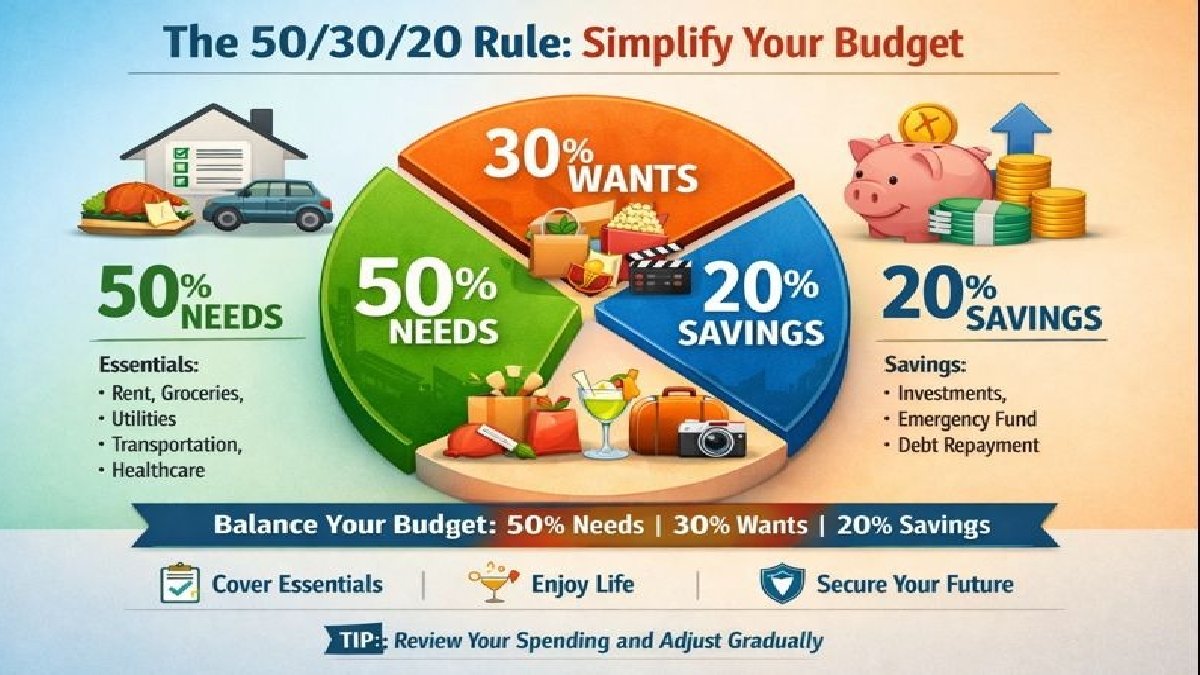
50% for Needs – These are essential expenses you cannot avoid. That’s rent or home loan EMIs, groceries, electricity and water bills, transportation, insurance, and basic healthcare. These costs allow your everyday life to run effectively.
30% for Wants – This section is for things of the lifestyle and enjoyment variety. Dinner out, shopping, entertainment, subscriptions, hobbies, travel, upgrades. Giving space for desires enables you to experience life without guilt.
20% for Savings – This is for your future. That translates to saving for an emergency fund, investing, retirement planning, and debt repayment (with a side of doing it faster). Consistent savings, even in small but substantial amounts, leads to economic stability.
The genius of the 50/30/20 rule is that it is so far-balanced. It makes sure that your everyday necessities are met, that you get to enjoy your money, and can help prepare you for the unknown and in the long term. Although the figures might vary depending on income, family size or city of residence, the framework is a solid starting point.
First of all, find out your monthly income and divide it by the rule. Then compare that with spending. If one category crosses a certain number, roll it out slowly - small, steady adjustments are much easier to sustain than big cuts.
I like to use the 50/30/20 rule to show mindfulness, order and flexibility. When it works, time is also a key to change life on a long basis, the way a person looks after his money and relieve financial stress.
Tip: Find the percentage of current spending you spend today and get a simple change you can make this month.








Comments
Leave a Comment