
Artificial intelligence is making significant progress in mathematical research, and that has renewed concerns about the long-term safety of encryption systems used across the world.
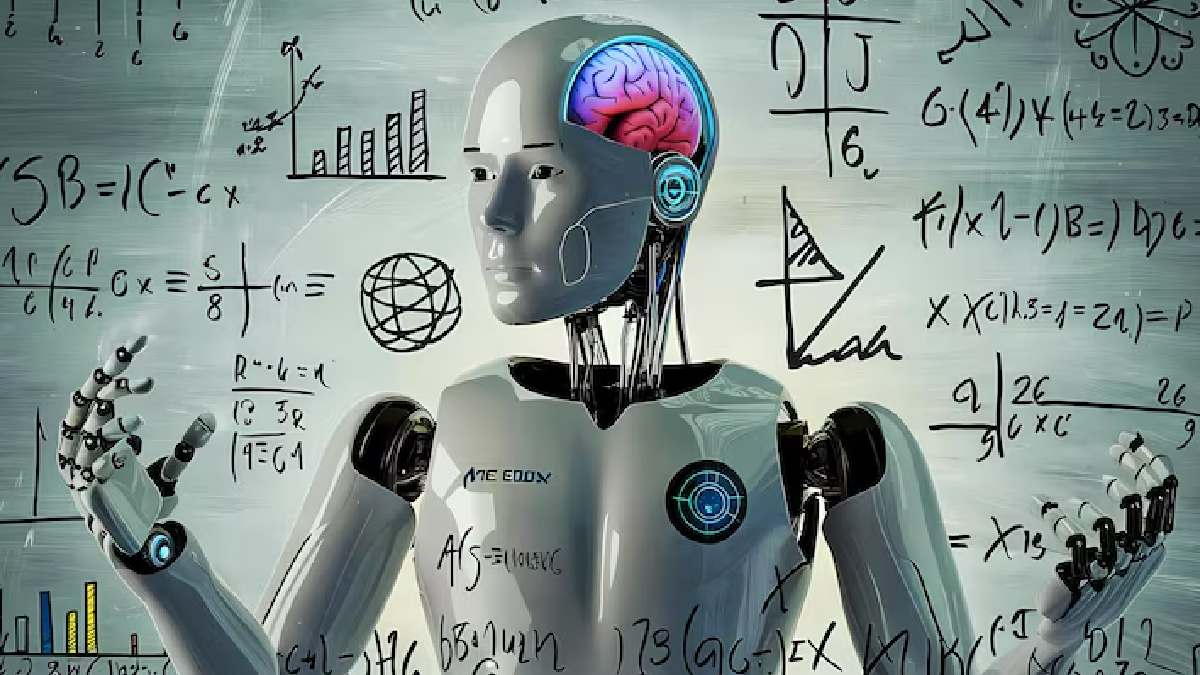
These systems secure sensitive digital information - online payments, private exchanges of information, corporate data and government communications. As AI becomes better at solving complex mathematical problems, researchers are wondering if future advances could expose weaknesses in the technology that makes modern digital infrastructure more secure.
Encryption works by translating information into a code that is hard to read without the correct key. Most security systems today are based on mathematical problems that are still hard to solve for conventional computers. These problems protect all information that people, businesses and institutions exchange.
But more sophisticated AI models are emerging as new areas of mathematical research. Their ability to recognize patterns, solve challenging problems and contribute answers has led to speculation that some old cryptographic processes could ever come under greater pressure.
Why AI Advances Matter for Cryptography
Cryptography is the backbone of the Internet and the world financial system. Public-key encryption, for example, can help establish secure communications between parties that have not previously exchanged a secret key. These and related technologies also enable digital signatures, online banking and secure connections to websites.
A big mathematical breakthrough could also become a problem if researchers or attackers can solve a problem underlying a widely used cryptographic algorithm more efficiently than ever before. Such a development could force organisations to re-evaluate their security methods for protecting their information.
But solving a mathematical problem in the research context does not immediately lead to a practical attack. Any proposed approach to do this has to be tested to determine the effectiveness and limitations and to see if the technique is relevant to the real world.
What Recent AI Research Reveals
In July 2026, Anthropic reported that its Claude Mythos Preview model had helped researchers in improving attacks against HAWK, a candidate post-quantum digital signature scheme, and a reduced version of the Advanced Encryption Standard, commonly known as AES.
The work did not make the full AES cipher public nor did it prove that production systems had been compromised. Instead, it showed how AI-based research could contribute to the examination of cryptographic weaknesses and the testing of existing security tools.
We think these findings are the start of a conversation about how rapidly AI can impact cybersecurity. Some experts believe that future mathematical discoveries could upend current encryption methods but the timing and scale of such a threat is unknown.
It is important to distinguish genuine technical findings from predictions about what AI might eventually achieve. The current progress does not mean that all encryption systems are vulnerable or that protected digital information can suddenly be accessed.
How Organisations Can Prepare
Government institutions, banks, and technology companies in general can reduce the risk of cybersecurity when they regularly review their cryptographic systems. Keeping algorithms updated, protecting encryption keys, and applying security updates as necessary are all ways to secure digital security from cyber attacks.
Post-quantum cryptography is also an important field of preparation. Such cryptographic techniques are designed to resist attacks from sufficiently powerful quantum computers. Their continued evaluation is important as researchers develop new tools and methods to study mathematical security.
It is important for companies to set up plans for updating cryptographic systems if weaknesses are identified. AI developers, independent researchers, and cybersecurity teams can also work together to identify significant discoveries and take responsibility.
The Future of Digital Protection
AI could be both a challenge and a resource for cybersecurity. Advanced models can identify weaknesses in cryptographic methods but can also help test systems, identify vulnerabilities and build stronger defenses.
In the short term, it is not that global encryption has already failed, but that technological progress could change the assumptions on which some security systems rely. Research will have to continue and independent testing and upgrades will be essential.
AI is constantly developing. Early detection of potential threats and a timely response to them will be critical for digital communications, financial activities and sensitive information protection across the world.






Comments