The age of robot dogs may soon have some serious competition. Chinese robotics companies are developing a new generation of four-legged machines that look less like pets and more like futuristic mounts, industrial vehicles and even mechanical centaurs.
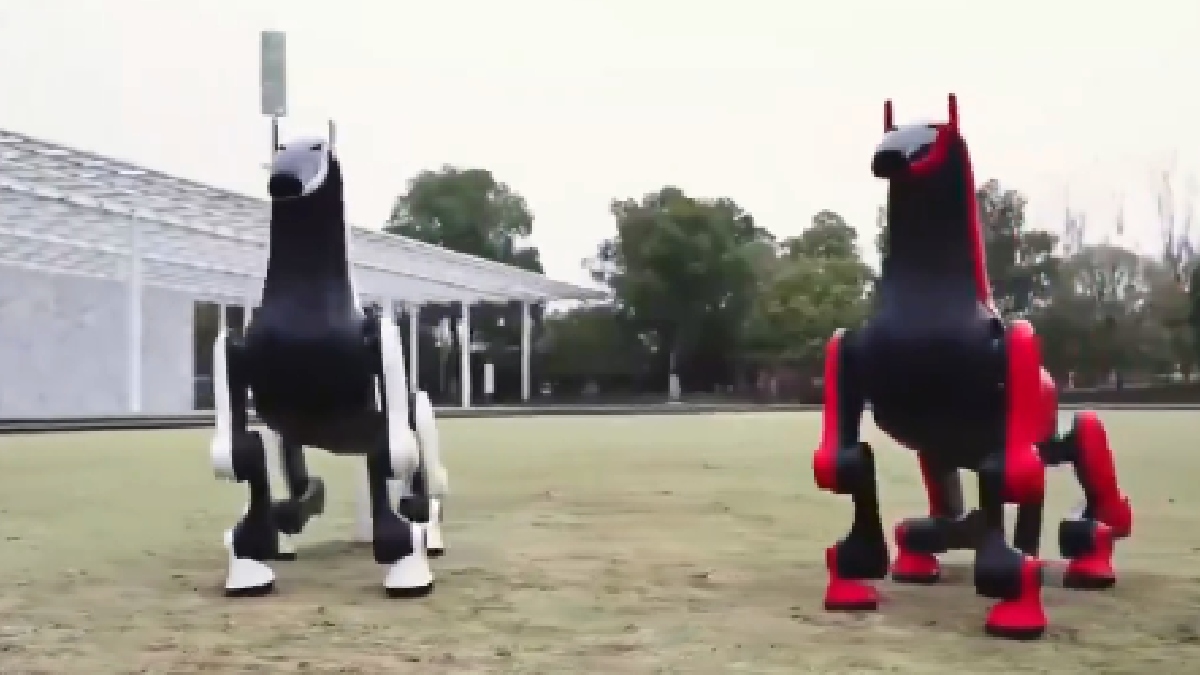
One of the most fascinating examples is the limited-edition robotic horse that Hangzhou-based DEEP Robotics announced in 2026 as part of the Year of the Horse and which combines a horse-like appearance with technology borrowed from the company's industrial quadruped robot.
The robot weighs about 30 kg and can carry up to 50 kg and it is designed to show how quadruped robots can go beyond inspection and rescue.
Then there's the Qiji X1, one of the most ambitious machines that is meant to be a rideable robotic mount. Created by DaxAI Robot in Shanghai, the Qiji X1 was presented in the 2026 World Artificial Intelligence Conference.
Unlike a robot dog, it has a riding saddle and is designed to pick a human up and take them on difficult outdoor terrain.
It describes the quadruped for its ability to navigate slopes, gravel and mud and has a 300-kilogram dynamic payload, a range of up to 40 kilometers and a top speed of 10 km/h.
Forget robot dogs. China is building robot mounts.
— clankr (@clankrmedia) July 19, 2026
DEEP Robotics built a full-sized robot horse.
Qiji X1 works like a rideable robotic mule.
RunRobotics developed a centaur for hazardous industrial work.
Which one is your favorite? pic.twitter.com/pZpQvRymvz
The idea is even more futuristic with Run Robotics’ centaur-inspired machine. Instead of simply taking the shape of a horse, it combines a four-wheel all-terrain lower body with a human-like upper body with robot arms.
The idea is to combine fast movement with the ability to perform physical tasks, and potentially make such machines useful for inspection, firefighting, emergency rescue, mining and industrial maintenance.
These machines point to a general change in robotics. Engineers are not only focusing on humanoid robots or small quadrupeds anymore. They’re working with different body designs for different environments and tasks.
A robot with four legs can remain stable on uneven ground, while wheels can move easily. A robotic upper body may be used to guide tools and objects and move through hazardous areas with the machine to get a better feel for things.
In the long run, these futuristic machines will be either just demos and not commercial products.
But for now, their appearances at big robotics events indicate that the industry is looking for machines that can move people, equipment or robotic tools to places difficult or dangerous for humans.
The robot-dog era may not be over but the robot-mount era has definitely arrived.