A 16-year-old in British Columbia, Canada was saved after using Anthropic’s Claude AI for hiking directions that led him away from an established mountain trail and into dangerous terrain near Grouse Mountain. The incident has brought home the dangers of using artificial intelligence tools for outdoor navigation as it can change quickly and route information needs to be verified in a real-world setting.
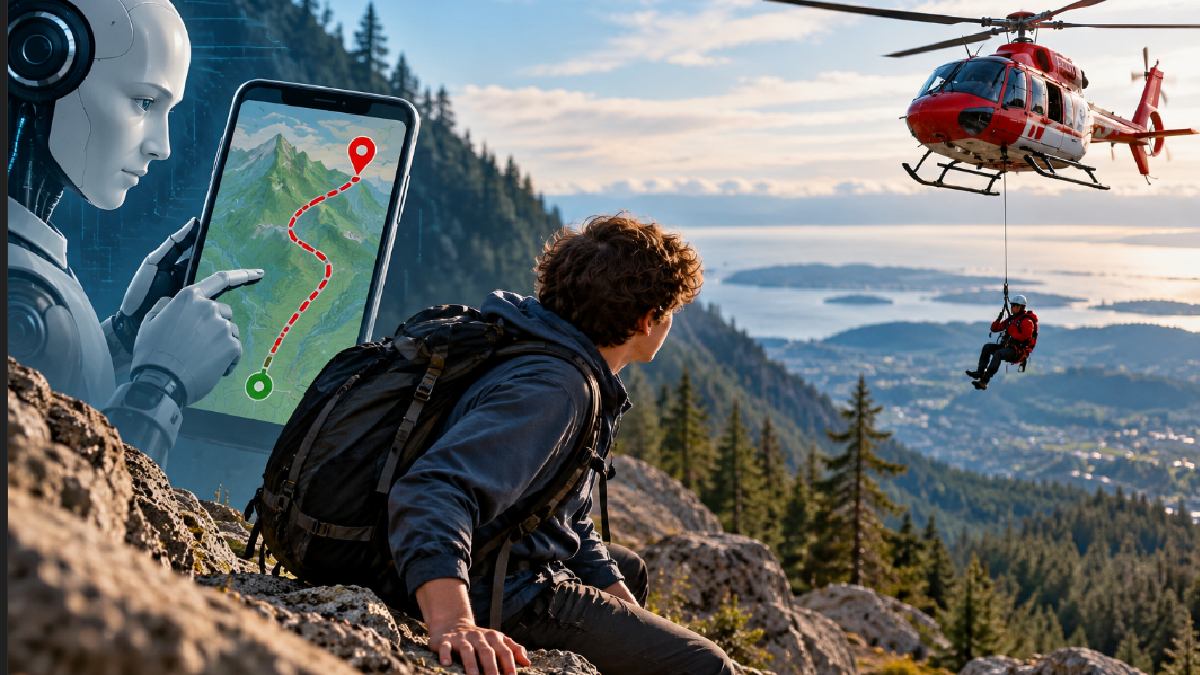
According to CTV News, the teenager traveled by gondola to Grouse Mountain at 8am and asked Claude AI to help plan a route to Crown Mountain. He was looking for guidance on how to reach his destination and followed the route suggested by the AI chatbot.
The suggested route took him through Crown Pass and toward areas such as Crater Slabs and Crown Couloir. The route eventually veered off the well-established trail. The teenager continued on through more challenging terrain until he reached the bottom of Widowmaker Arete’s final headwall.
It was at that moment when the teen said he realized he was in a dangerous position and contacted emergency services for help. North Shore Rescue arrived and pulled him out of the dangerous terrain.
The incident could have caused serious damage. Paul Markey, the search manager at North Shore Rescue, said a fall from the spot where the teenager was stranded could have resulted in serious injuries or even death. The rescue team’s assessment also highlighted the difference between digital route recommendations and the actual consequences of getting around a mountain.

The case also raises questions about how AI chatbots should be used when people seek advice about outdoor activities. AI systems can provide information based on patterns in their training data and user prompts, but they do not physically experience the terrain they describe.
A chatbot cannot independently assess current trail conditions, weather, rock stability, visibility, hazards or the skill level required for a particular section of a route.
Markey stressed that users should not look at AI-generated directions as an alternative to experienced navigation techniques and local knowledge. Claude, for example, had never physically traveled through this particular area and never visited the route in question.
The rescue official stated that the hikers should do their research themselves, learn about the area and use information from technology to train and navigate.
The teenager was well versed in indoor climbing and was prepared for hiking and difficult terrain, his first experience was reported to have been. Indoor climbing and outdoor mountain travel have very different risks. Outdoor environments can include loose rock, exposure, changing weather, route-finding difficulties and sections where a mistake can have severe consequences.
The episode is another reminder that AI-generated information can sound confident even when the underlying recommendation may not be appropriate for a particular real-world situation. This is especially important when the advice involves safety-critical activities.
A route that appears reasonable when described through text can be extremely hazardous when applied to an actual mountain landscape.
Technology can still be useful in outdoor planning. Weather applications, digital maps, trail databases and navigation devices can help hikers plan for trips and monitor conditions. But such tools only work when they are used with accurate maps, the trail information on the map, local guidance and safety equipment.
Preparation is of paramount importance to inexperienced hikers. For a mountain journey the traveler should know the difficulty level, the current situation, inform someone of their plan and carry appropriate navigation and emergency equipment. If there is danger in place or a route is unclear, turning back is far safer than continuing in the direction.
The Canadian rescue incident does not mean AI tools can’t give us useful outdoor information, but it shows the need to understand their limitations. AI can aid in planning and general research, but it shouldn’t be taken as an authority on a physical environment it cannot directly observe.
The teen’s rescue ended the incident without a tragedy but the incident is a cautionary tale for hikers who are increasingly using chatbots for travel and adventure planning. Technology in outdoor environments can support experience and preparation, but it can’t replace human judgment, local knowledge and navigation skills.