
Sakurajima volcano in Japan erupted today spewing a massive column of ash and volcanic debris into the sky over Kagoshima Prefecture. The explosive eruption happened around 2:35 pm local time and has drawn attention to ongoing volcanic activity in the area.
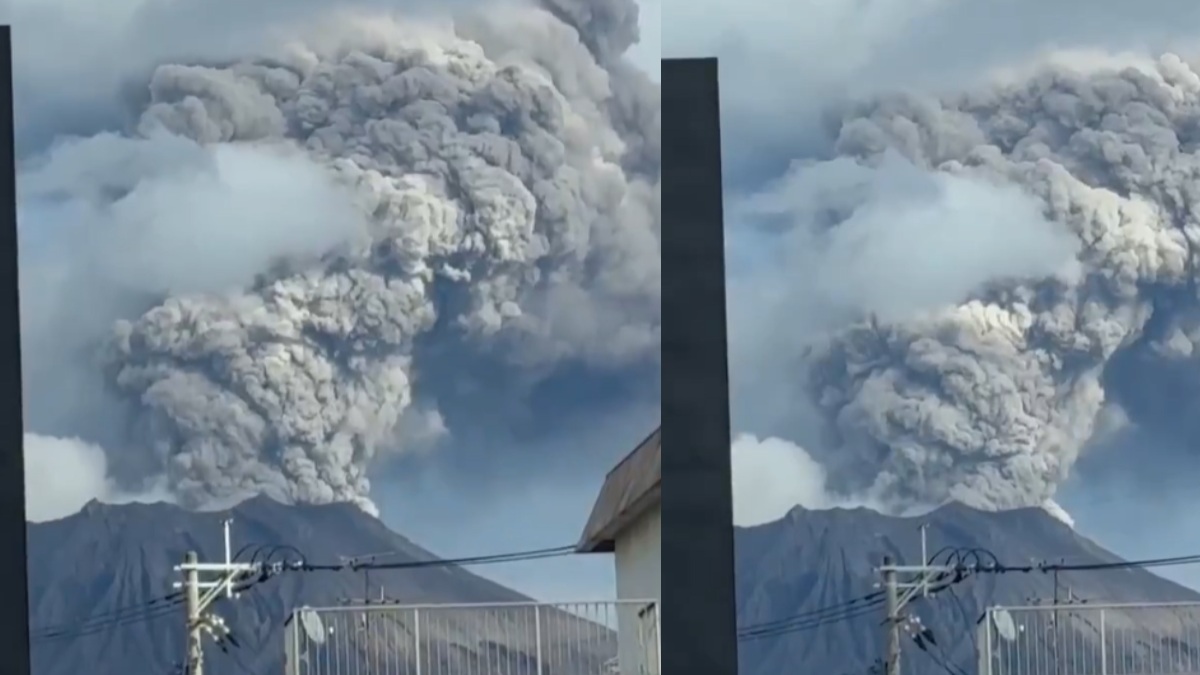
According to the Japan Meteorological Agency (JMA) the first observation showed an ash plume rising about 1000 metres above the crater, but later update put it at around 1200 m above rim of crater.
The eruption demonstrates that one of Japan’s most closely watched volcanoes is still active.
Sakurajima Volcano Produces Explosive Eruption
The eruption occurred at the summit crater of Minamidake on Sakurajima in Kagoshima Prefecture on Japan's southwestern island Kyushu.
The explosion produced a column of volcanic ash that rose high above the crater and drifted southeastwards. The Tokyo Volcanic Ash Advisory Centre also issued an advisory on the eruption at 05:35 UTC on November 21.
Sakurajima is one of Japan’s most active volcanoes and produces explosive events (ash, volcanic gases and rocks) regularly; its activity is closely monitored because it is close to populated areas around Kagoshima Bay.
JMA Maintains Volcanic Alert Level 3
After the eruption, JMA kept Volcanic Alert Level 3 for Sakurajima.
Japan has a five-level volcanic warning system (Level 3 means do not approach volcano). People have been told to stay away from areas within two kilometres of the Minamidake and Showa craters.
The main safety concerns are falling volcanic rocks, pyroclastic flows and volcanic ash carried by the wind.
Residents and visitors in surrounding areas have been told to listen to official announcements and watch ashfall forecasts. Volcanic ash can impact visibility, road conditions, agriculture and air quality.
Why Is Sakurajima Volcano Frequently Active?
Sakurajima is part of the Aira Caldera system in southern Japan. Underground magma flow continues at this location and frequent volcanic eruptions result.
The volcano has been erupting continuously for decades with explosions from its craters. Some eruptions produce relatively small ash columns, others larger plumes that can affect surrounding communities.
The Japan Meteorological Agency monitors the volcano by seismic observations, volcanic gas measurements, ground deformation monitoring and visual surveillance.
In its November 20 update, the agency noted that volcanoes continued to erupt and sulfur dioxide emissions were high. These observations suggest volcanic unrest is an important issue.
🚨 SAKURAJIMA VOLCANO ERUPTS IN SOUTHERN JAPAN 📍Sakurajima, Kagoshima Prefecture, Kyushu, Japan 🇯🇵 Sakurajima, one of Japan's most active volcanoes, erupted again, sending a powerful plume of ash and smoke into the sky over Kagoshima Bay. The eruption produced a visible ash column rising above the Minamidake crater, with ash drifting with the wind across surrounding areas. The Japan Meteorological Agency continues to monitor the volcano closely. The alert level remains at Level 3 on a 5-level scale, which restricts access within about 2 kilometers of the crater. No injuries or major damage have been reported. Sakurajima is located just across Kagoshima Bay from the city of Kagoshima, about 8 kilometers from the summit. The volcano has been in a state of ongoing eruptive activity, with frequent explosions and ash emissions recorded in recent weeks. Authorities are urging residents and visitors to stay away from the restricted zone and to follow official updates on ashfall forecasts.
— 🥷🏽 (@Whi_rlz) November 21, 2026
What Are the Possible Risks for Local Residents?
Volcanic eruptions can pose several problems for communities near Sakurajima ashfall may cover roads, vehicles, buildings and agricultural land; airborne particles can cause breathing difficulties and reduce visibility.
Authorities also warn that large volcanic rocks may travel beyond the immediate crater area and smaller pyroclastic flows.
Residents should follow local emergency instructions; avoid restricted areas and use appropriate protection during ash fall.
Japan Continues to Monitor Volcanic Activity
The November 21 eruption is another reminder of Sakurajima’s ongoing volcanic activity. The ash plume recorded was large but should be viewed alongside other monitoring reports rather than as evidence of a major volcanic escalation.
The Japan Meteorological Agency monitors the volcano and issues updates on its activity and potential hazards.
Residents and travellers in Kagoshima should be alert and follow official safety advice as authorities continue to monitor developments.




Comments