The Global Positioning System (GPS) is one of the most critical technologies that keep us modern. From helping commuters navigate busy streets to enabling aircraft, ships, financial institutions, emergency responders, and military forces to operate efficiently, GPS is so much more than a “little thing” that a lot of people don’t know about. But experts say that this dependence has also been a major vulnerability: If GPS were to fail even temporarily the consequences might be far more profound than drivers going off the road.
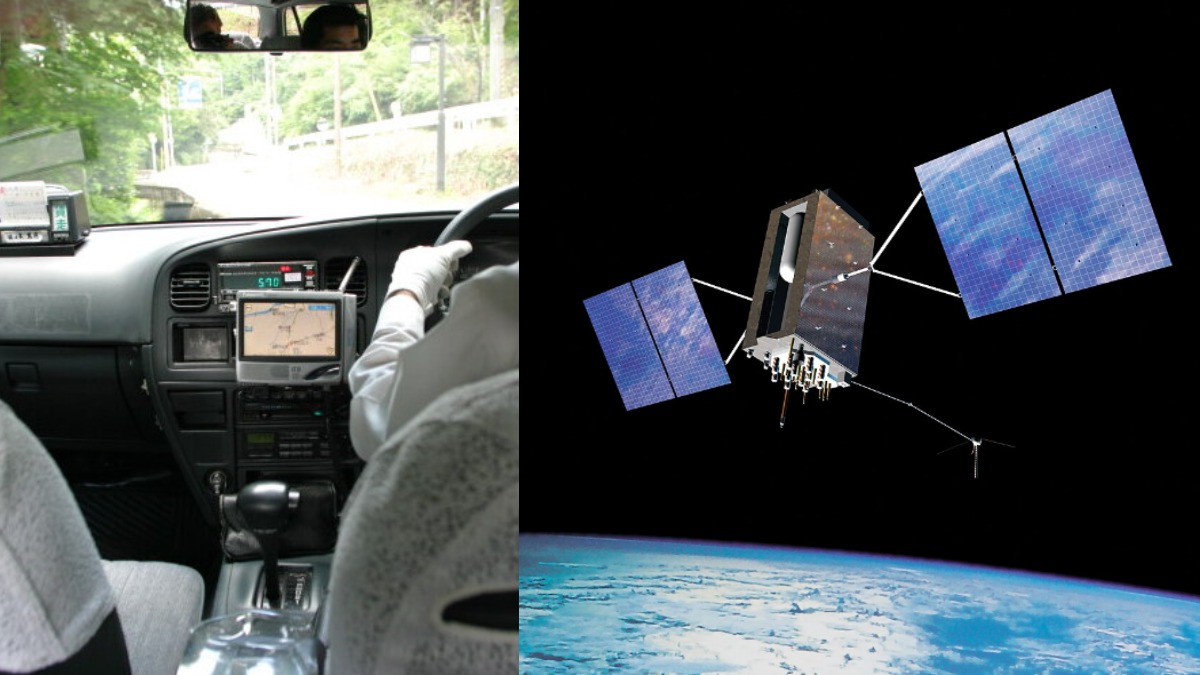
GPS has become a cornerstone of critical infrastructure but is surprisingly vulnerable to interference, Zak Kassas, professor of electrical and computer engineering at The Ohio State University, says. As GPS jamming and spoofing become more prevalent in various parts of the world, researchers believe governments and industries have to accelerate efforts to build more resilient navigation systems that don’t depend on a single technology.
GPS works with a network of satellites orbiting Earth that constantly send timing and positioning signals to the smartphones, vehicles, aircraft, ships, and many other devices that receive them to find their location and synchronize time with accuracy. It is just as important as navigation in that global financial transactions, telecommunications systems, and power grids all depend on very accurate clocks that are synchronized with GPS.
If GPS signals disappeared suddenly, one of the first visible impacts would be on transportation. Navigation apps would stop providing accurate directions and travel would be more difficult in new places. Commercial airlines and cargo companies would face operational difficulties, but aviation had many backup systems in place to keep things safe. Maritime shipping would also experience problems, particularly on busy waterways where precise positioning is crucial.
Emergency response agencies could encounter delays in finding incidents and quickly relocating resources. To cut response times, ambulances, fire departments, and police forces are using GPS systems to help them. But a prolonged outage could complicate rescue efforts in natural disasters or other crises when every minute counts.

The financial sector is another industry that would be impacted in a major way in a matter of seconds. GPS can provide very accurate timing signals for banking transactions, stock exchanges, and payment networks that help synchronize banking transactions, stock exchanges, and payment networks in a very efficient way using accurate timing. Financial institutions may not be able to validate transactions on time themselves, with errors and delays being very high. There are backup systems in place in many organizations, but a major GPS disruption would still be difficult on the ground.
Telecommunications systems also depend on GPS timing. Mobile phone towers need synchronized clocks to coordinate data transmission. A long-term GPS failure could affect network performance, potentially causing slower communication services for some parts of the country or even service outages in others.
Power grids are another important concern. Electrical utilities use GPS timing to monitor and manage electricity distribution across complex networks. Losing correct synchronization of power grids will make grid management difficult and can cause localized disturbances in the event of no other timing system.
GPS has long been a strategic asset to the military, and so is frequently used as a target in war. Today’s defense systems operate on satellite navigation for troop movements, precision-guided weapons, surveillance, and secure communications.
GPS interference has become more common in war zones with advancements in electronic warfare, and there’s no doubt that as electronic warfare has grown, we are now more sophisticated and more and more satellite signals are being detected. It is a reality that we need to have navigation technology that can persist even if satellite signals are destroyed.
One of the biggest threats to GPS today is jamming. In this case, when an attacker sends powerful radio signals that overwhelm the real GPS signal, the device cannot detect its location. Another threat is spoofing, where fake GPS signals trick the device into thinking that it is somewhere else. Unlike jamming, spoofing is hard to detect because the device is still receiving what appears to be valid navigation signals.
Zak Kassas and other researchers are currently developing positioning technologies to enhance or replace GPS when satellite signals do not exist. These are navigation systems based on terrestrial radio signals, cellular networks, low-Earth orbit satellites, and advanced onboard sensors. If we combine different positioning methods, we can build navigation systems that are robust enough to maintain accuracy even when one source fails.
Many governments are also investing in Positioning, Navigation, and Timing (PNT) resilience initiatives. Experts recommend not using GPS as the sole platform of choice but rather a more robust system involving diverse solutions with many technologies and not only GPS. They also suggest that there are solutions that integrate multiple technologies to avoid one point of failure, ensuring that one point of failure will not disrupt essential services.
A temporary GPS outage would be the average consumer’s inconvenience, and navigation apps and location-based services would probably suffer. If more significant and prolonged, the disruption would be felt in transportation, communications, financial services, emergency preparation, logistics, and national security. With the increasing use of digital infrastructure, reliable navigation and timing systems are now more essential.
The growing concerns over GPS do not indicate that GPS is failing in any way, but the technology is failing in this sense. Such fears in future scenarios should be taken as a reminder to develop robust backup systems to prevent future threats. As reliance on satellite navigation is only going to increase, we should not ignore the fact that the next priority for governments, researchers, and technology companies worldwide should be resilience as well not only accuracy.