
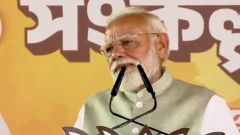
Prime Minister Narendra Modi said India had reduced extreme poverty significantly in the past 10–12 years. About 50 crore people have come out of extreme poverty during this period, he added — evidence that the country was tackling poverty not through political promises but by practical measures.
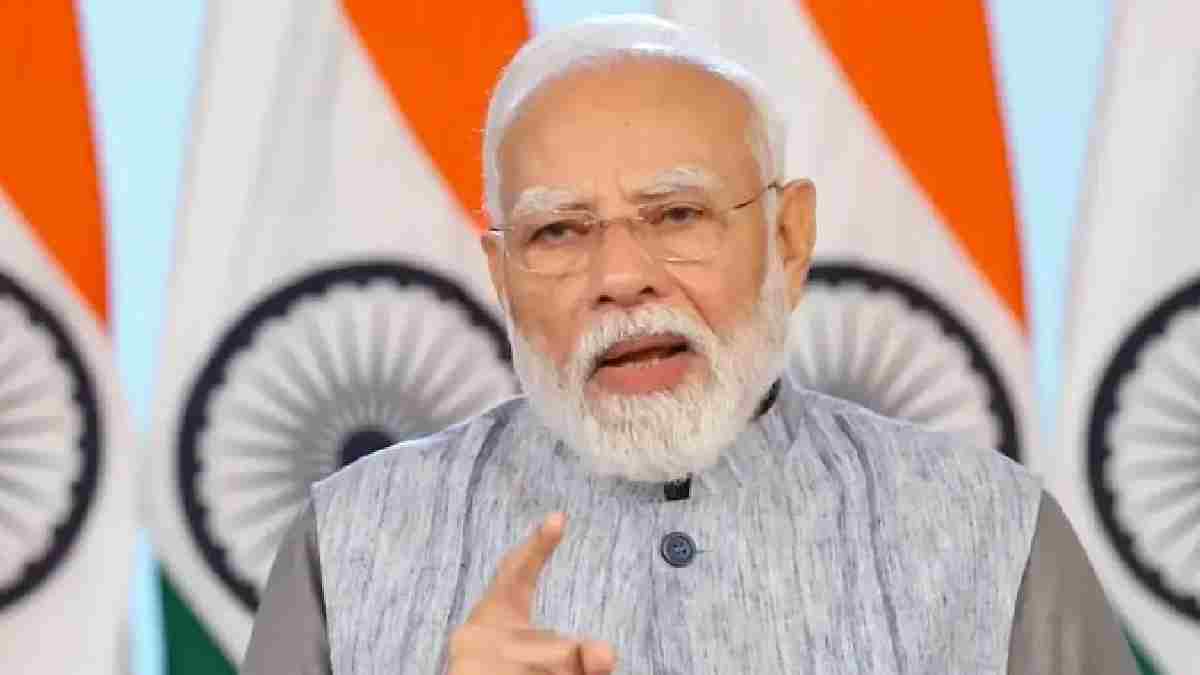
Modi made the statement after virtually inaugurating Pune Metro Line 3 (Pink Line). He cited a World Bank report published recently to back his claim that economic growth and poverty reduction go hand in hand: “Infrastructure and welfare programmes have improved the living conditions of millions of people,” he said.
The Prime Minister also talked about how the government wanted people to be empowered so that they could improve their financial circumstances through better access to opportunities, essential services and employment.
What Did the World Bank Report Say?
50 crore Indians had moved out of extreme poverty over the past 10–12 years, Modi quoted figures as saying.
A report that the Prime Minister referred to said that India’s extreme poverty rate had declined between 2011 and 2023 — from 27.1 per cent using the World Bank international poverty line ($3 per person per day) in 2011 to 2.6 per cent in 2023.
These figures show that the proportion of India’s population living in extreme poverty has fallen significantly.
The World Bank has also pointed to factors that have made this possible: stronger consumption growth; more employment opportunities (especially for women); expanded social protection measures (food subsidies).
However, poverty estimates vary according to what income or consumption threshold is used. The World Bank’s higher poverty benchmark of $4.20 per person per day showed that 16.1% of India’s population was below it in 2023 (see chart above). So the extreme-poverty figure should not be confused with the broader poverty estimate.
Modi Highlights Infrastructure and Welfare Schemes
During his address, Modi said infrastructure development had helped improve people’s lives and created employment opportunities.
He spoke of investments in roads, railways, airports and metro networks as well as projects for electricity, drinking water and gas connections. “These are developments which are linking communities together, giving access to services and opportunities for economic activity”, he said.
The Prime Minister also referred to government schemes which provided houses, toilets, tap water and LPG connections to economically weaker sections of society.
These facilities had helped families save time, improve living conditions and explore additional income opportunities, he said.
Modi said the government’s philosophy was to empower people rather than rely on financial assistance alone. He called it power to empower — people should get resources and opportunities to overcome poverty themselves.
Direct Benefit Transfers and Financial Support
The Prime Minister also spoke about how government assistance should reach the intended beneficiaries.
He said improvements in welfare delivery had reduced leakages and ensured funds got to eligible people directly.
Modi recalled the Garib Kalyan Mela he had launched when he was Gujarat Chief Minister. The programme connected beneficiaries with government welfare schemes and helped them access support available to them.
He said the broader goal was to boost people’s confidence and make them financially independent.
The government has also emphasised social protection programmes, housing assistance, food distribution and access to essential services in reducing deprivation.
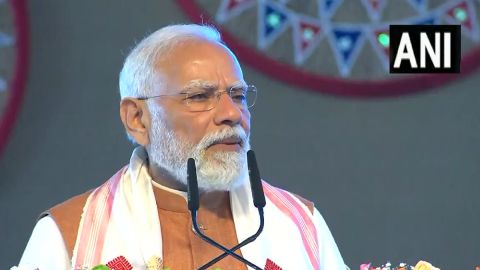
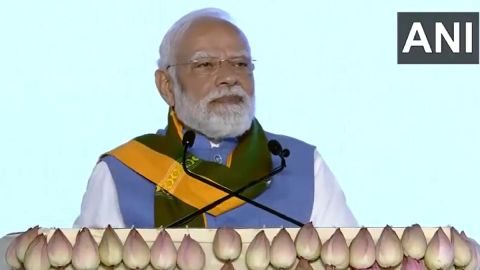
Pune, Maharashtra: Prime Minister Narendra Modi says, "Today, India is being widely discussed across the world for two more reasons. First, India has continued to maintain the fastest pace of economic growth in the world, even amid challenging global circumstances. Second, within just 10–12 years, 50 crore people in India have overcome extreme poverty. This has been highlighted in the latest World Bank report. Generations of people in this country have grown up hearing promises and claims about eradicating poverty. Earlier, the fight against poverty remained limited to slogans. Today, India is defeating poverty on the ground..."
— IANS (@ians_india) November 3, 2026
Economic Growth and Poverty Reduction Are Connected
Modi said India’s growth and poverty reduction go hand in hand. Infrastructure investment creates jobs, connectivity and business support; welfare programmes allow poor households to get necessities.
He said families moving out of extreme poverty expand the middle class and increase purchasing power in the economy.
The Prime Minister said the country’s development journey needed collective participation from citizens, businesses, institutions and governments.
Modi Assures Support to Maharashtra Farmers
At the same function, Modi also spoke about the drought situation in Maharashtra. He assured farmers that the National Democratic Alliance government would give all possible help during this difficult phase.
He asked people to remember drought-hit farmers and rural families during the festive season so that they too could experience the happiness of Diwali.
The Maharashtra government had declared large parts of the state drought-hit and announced interim financial assistance for affected farmers.
Modi said farmers were important contributors to India’s journey towards becoming a developed country and the Centre was committed to supporting the agricultural community.
His remarks dealt with three main themes — poverty reduction, infrastructure-led growth and support to farmers under difficult circumstances. The Prime Minister’s reference to World Bank figures has brought India’s poverty trends and welfare programmes into the national conversation once again.


Comments