Xiaomi is getting into foldable smartphone race with the Xiaomi 18 Fold, a large, book-like device which will launch on September 7, 2026 in China. The company showed an early glimpse of the new flagship at IFA 2026 in Berlin, but visitors could not touch the phone. The device was kept inside a glass display case and so was only the design and specifications.
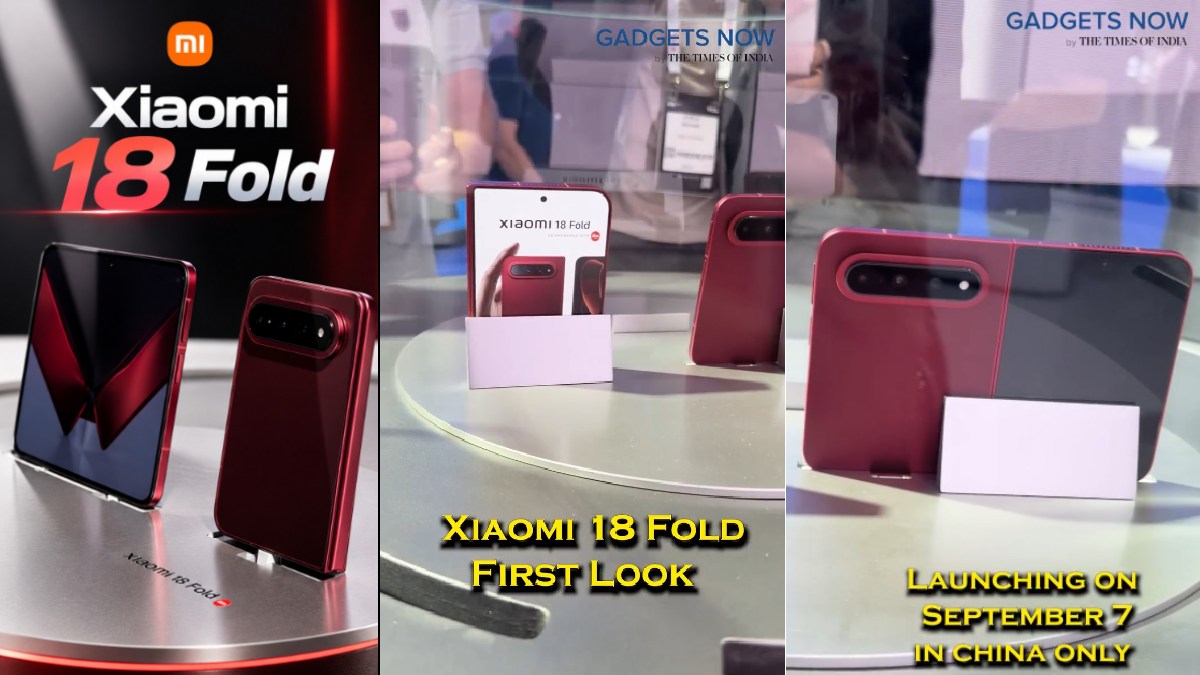
Despite its lack of hands-on access, Xiaomi 18 Fold is already getting attention with its redesigned shape and Leica-backed cameras and Xiaomi's new in-house XRING O3 processor. The smartphone sports a 5.38-inch cover screen and a bigger 7.58-inch foldable screen, making it considerably broader than Xiaomi Mix Fold models.
The design is indeed a departure from the tall and narrow design with the previous Xiaomi Foldables. When closed, the 18 Fold has a shorter and wider profile and when opened, it shows a wider internal screen that is similar to Samsung with its latest Galaxy Z Fold models. The wider form could also be important as Apple is expected to enter the foldable market with a similar booklike design.
Xiaomi 18 Fold Gets a Wider Foldable Design
Xiaomi’s new “mid-fold” design is the most noticeable change on the 18 Fold. The 5.38-inch outer screen is meant to make the device more practical as a smartphone, and the 7.58-inch internal panel gives it more space for multitasking, entertainment and productivity.
The proportions put Xiaomi's upcoming foldable in similar territory to Samsung's Galaxy Z Fold8, which also adopts a wider form factor. This suggests that the foldable smartphone market could be moving towards a common design philosophy: a usable cover display on the outside combined with a relatively broad tablet-like screen on the inside.
The internal display also appeared to have an exceptionally subtle crease during Xiaomi's IFA presentation. Even from the viewing angles through the glass case the fold line was hard to see. But this should not be taken as proof of a completely crease-free panel. Without being able to hold the device it is hard to evaluate the crease from different angles, under direct reflections or during actual use.
Leica Camera Bar Becomes a Major Design Element
In addition to the rear camera arrangement, the Xiaomi 18 Fold has a large horizontal camera bar that spans the width of much of the rear panel. Xiaomi has opted for three cameras and an LED flash and Leica branding on the front and rear sides which is the company's partnership with the German camera maker.
The display model marks a focal length range of about 17mm to 80mm. Xiaomi has not yet disclosed every detail of the camera hardware, including the final sensor specifications and apertures. In the September 7 China launch, that will be clearer.
The horizontal camera treatment gives the 18 Fold a different look and might also be an important point of comparison with Apple's expected foldable iPhone. Reports around Apple's first foldable have suggested a horizontal rear-camera layout, but the Apple device is expected to use two rear cameras rather than Xiaomi's triple-camera system.
Deep Red Finish Adds to the Flagship Look
Xiaomi introduced the 18 Fold in a deep crimson-red finish immediately at IFA. The colour looks much darker than the bright red on some smartphones, with a rich burgundy tone in the exhibition lighting.
And the finish is coming at a time when deep-red shades are also associated with Apple’s upcoming iPhone 18 Pro series. Apple’s rumored foldable is not necessarily expected to have the same colour, but the similarity could make Xiaomi’s device more similar to Apple’s expected entry into the foldable category.
The colour also gives the 18 Fold a more premium visual identity, especially when combined with its broad camera module and relatively compact closed form.
XRING O3 Could Be Xiaomi's Biggest Statement
Even outside of the design, the processor inside the Xiaomi 18 Fold could be the most strategically important part of the device. Xiaomi is the first smartphone to use Xiaomi's second-generation in-house XRING O3 chipset in-house.
With a 3nm manufacturing process, XRING O3 features a 10-core CPU with clock speed up to 4.35GHz. The processor consists of two C1-Ultra cores, four C1-Premium cores and four C1-Pro cores, with graphics running on 16-core G2-Ultra NX graphics. The four-core NPU is rated at 200 TOPS for artificial intelligence.
The chip supports LPDDR6 memory and Xiaomi uses memory provided by Chinese manufacturer CXMT. This makes the 18 Fold a great showcase for Xiaomi's push to develop more of its own semiconductor technology and less rely on external chip platforms.
The pre-release benchmark results have placed XRING O3 around 3,945 in Geekbench 6.5 single-core testing and around 15,221 points in multi-core testing. AnTuTu 11 testing has also produced around 5.23 million. However, these numbers should be treated cautiously until independent testing is performed on commercial machines.
Thermal Performance Will Be Crucial
For a foldable smartphone, peak performance is only part of the story. Foldables, unlike regular smartphones, must accommodate hinges, multiple display components and complex battery arrangements within a relatively thin body.
That makes sustained performance especially important for the XRING O3. A chipset can deliver impressive benchmark results but still experience thermal throttling during prolonged gaming, video editing or AI workloads if the device cannot dissipate heat effectively.
The Xiaomi 18 Fold therefore represents a significant test for the company's processor strategy. Xiaomi is not just putting XRING O3 inside a typical flagship; it is using the chip in a premium foldable where internal space and thermal management are considerably more challenging.
What Remains Unknown About the Xiaomi 18 Fold
The IFA showcase provided a good look at the phone's exterior but several important questions remain unanswered. There was no chance to test the hinge, compare the device's weight distribution, feel the internal display, and look at the cover screen in everyday life or how it works.
Camera performance also remains unknown. Leica branding and the visible focal length markings show Xiaomi targets a premium imaging experience, but the actual image quality cannot be judged from the hardware visible from the hardware on display case.
Battery life, charging speeds, speaker performance, software features and sustained XRING O3 performance will also need to be evaluated once review units become available.
The crease is another area which deserves closer inspection. Although it seems very subtle at IFA, for real-world viewing conditions it can be difficult to see display flaws that are not visible to the eye in controlled exhibition lighting.
Xiaomi's Timing Puts It Ahead of Apple's Foldable Reveal
The timing of Xiaomi's launch is especially interesting. Xiaomi 18 Fold will be launched in China on September 7, just a couple of days before Apple's September 9 event, where the company will likely show its new iPhone line and maybe its first foldable iPhone. This gives Xiaomi a small window of opportunity to establish its device as one of the first major foldables to arrive ahead of Apple's expected entry into the category. The similarities in overall proportions, camera design direction and display philosophy could make the two products natural subjects of comparison.
Xiaomi's initial market strategy is much more narrow. The company has confirmed the 18 Fold for China only, but no news of a global launch has been announced. So international buyers may have to wait until Xiaomi unveils its new foldable to see if it will also be available in India, Europe or other markets.
The Xiaomi 18 Fold is a huge stack of wide-format foldable hardware, Leica imaging and proprietary silicon at the moment with the IFA showing Xiaomi is serious about getting to the top of the foldable industry, but the real verdict will come when the smartphone is out and in real-world testing.
If the XRING O3 can deliver excellent performance without excessive heat, the crease remains as subtle on retail units as it appeared in Berlin, and the Leica camera system delivers flagship-level results, Xiaomi could have a compelling rival to Samsung and a timely response to Apple's expected arrival in the foldable segment.