
Telangana is all set to overhaul its education system by putting Classes 11 and 12 in the regular school syllabus. Chief Minister A Revanth Reddy said that from the academic year 2027-28 onwards Intermediate education will be done on a 10+2 pattern (instead of present separate administrative system).
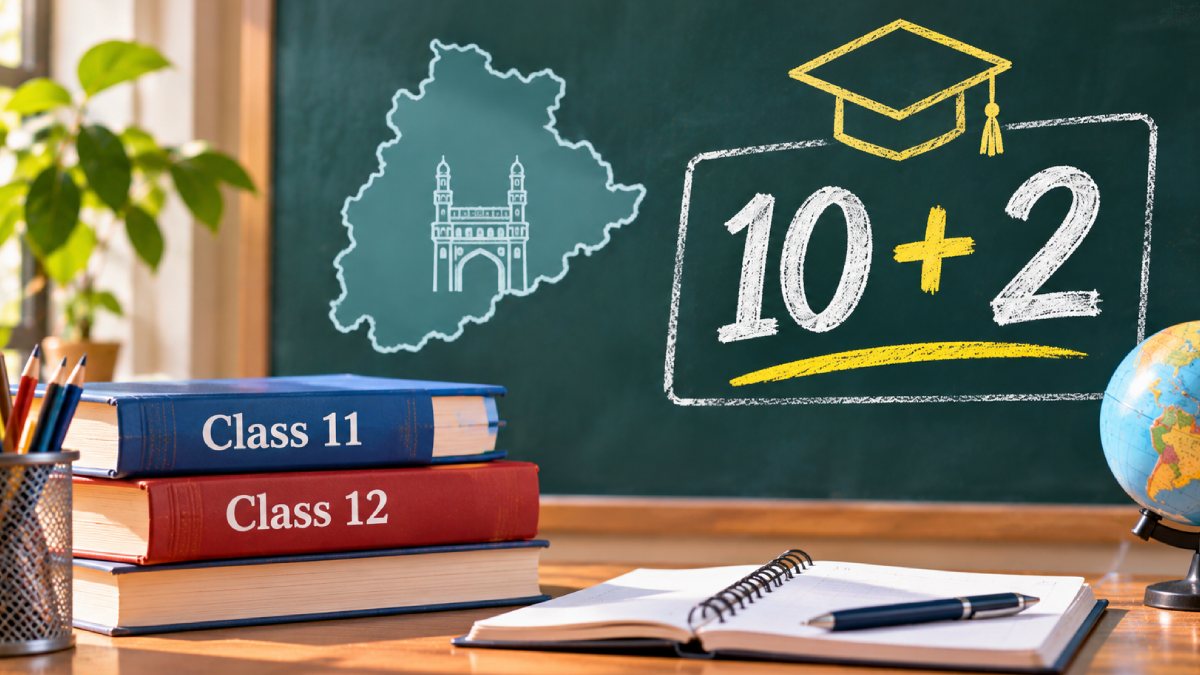
The decision was announced after a high-level review meeting of Education Department chaired by Chief Minister on 11th November 2026 at MCR HRD Institute in Hyderabad.
Under the proposed scheme education will be divided into three stages primary from Nursery to Class 4; secondary from Classes 5 to 8 and senior secondary from Classes 9 to 12.
The reform is intended to create a structure of continuous education, increase retention of students and reduce the number of dropouts after Class 10.
The announcement signals a major shift in Telangana education administration but details of implementation guidelines are awaited.
Telangana to Introduce 10+2 Education System From 2027-28
As per the announcement of state government Classes 11 and 12 will be part of School Education Department instead of continuing under separate Intermediate education framework.
Chief Minister Revanth Reddy directed officials to take steps for implementing the new structure from next academic year 2027-28.
The proposed structure of education will have three stages:
- Primary Education: Nursery to Class 4.
- Secondary Education: Classes 5 to 8.
- Senior Secondary Education: Classes 9 to 12.
With this arrangement the government wants to bring education under one administrative umbrella from early schooling years through senior secondary education.
The Chief Minister also stressed the need for developing students’ language, communication and information skills before they reach Class 12.
He said students should be given the opportunity after senior secondary education to choose subjects of their interest and develop expertise in their fields.
Why Is Telangana Replacing the Separate Intermediate System?
One of the reasons for the proposed reform is the concern that students discontinue education after Class 10.
40% of students leave the education system after Class 10 rather than continuing their studies in Intermediate colleges says the Chief Minister.
Girls and students from Dalit, tribal and minority communities form a large proportion of those who drop out.
The government feels bringing Classes 11 and 12 into the school education framework would enable students to continue with their studies without having to face challenges of moving over to a separate education system.
Revanth Reddy also mentioned Kendriya Vidyalayas, Jawahar Navodaya Vidyalayas and Kasturba Gandhi Balika Vidyalayas which provide continuous education up to Class 12.
These institutions have comparatively lower dropout rates, said the Chief Minister.
The state government wants to create a similar structure of continuous education so that student retention and access to senior secondary education could be improved.
Telangana's 55-Year-Old Intermediate Education System Set for Major Change
The reform being proposed would be a radical departure from an education system that has been in place for about 55 years.
The Intermediate system was introduced in the erstwhile Andhra Pradesh during 1969–70 academic year as part of 10+2+3 education structure.
Under the present system, students pass SSC examination after Class 10 and move to junior colleges for two-year Intermediate course.
Intermediate education is separate from regular school education (administrative structure and examination board exist separately).
After Andhra Pradesh was bifurcated in 2014 Telangana continued with its own Intermediate education administration under the Telangana Board of Intermediate Education.
The restructuring proposed above seeks to bring Classes 11 and 12 under the broader school education structure.
This will be a major administrative change in how senior secondary education is managed in the state.
What Will Happen to Junior Colleges in Telangana?
The proposed reform has also raised questions about the future of junior colleges across Telangana.
Students now generally go to separate junior colleges after Class 10 to take up their first and second year Intermediate courses.
Under the new system Classes 11 and 12 will be part of school education.
However, the administrative merger does not necessarily mean all junior colleges will close immediately.
Some junior colleges may continue to operate while the administrative control and affiliation arrangements are re-organised.
The Telangana Board of Intermediate Education may also continue to carry out examination related work under the new structure but the board’s final role and arrangements for issuing certificates have not been officially decided yet.
The government will need to set clear guidelines on:
- The future administrative organization of junior colleges.
- Admissions for Classes 11 and 12.
- Examination procedures and certification.
- Curriculum and academic regulations.
- Infrastructure requirements.
- Teacher recruitment and deployment.
Students and parents should wait for official government notifications before making decisions based on the proposed changes.
Telangana Government Assures Protection of Junior College Staff
The merger has also raised questions about the future of lecturers and non-teaching staff working in junior colleges.
To allay these fears Chief Minister Revanth Reddy said the service conditions and retirement benefits of junior college lecturers and non-teaching staff would not be affected.
The assurance is meant to assuage employees who might be impacted by the administrative restructuring.
The government will need to work out how staff are deployed, responsibilities are divided and administrative control is exercised as the new structure of education takes shape.
More details about these arrangements will come through official government instructions.
Telangana Plans Wider Education Sector Reforms
Apart from Intermediate system restructuring, the Chief Minister discussed other education related issues in the November 11 meeting.
The government also discussed improvements to infrastructure at welfare hostels and residential schools.
Revanth Reddy told officials to shift welfare hostels and residential schools run by government out of rented buildings and construct permanent facilities with proper infrastructure.
He also stressed on provision of drinking water facilities and toilets in residential educational institutions.
Young India Integrated Residential Schools
The Chief Minister reviewed the progress of Young India Integrated Residential Schools and directed officials to speed up construction work.
He also stressed the need for quality standards in school infrastructure (interiors, digital equipment, sports facilities, landscaping and kitchen facilities) as well.
Recruitment in State Universities
The government also looked at recruitment of faculty in state universities.
Revanth Reddy asked officials to expedite recruitment of Assistant Professors and Associate Professors on the prescribed procedures.
Upgradation of ITIs and Polytechnic Colleges
The meeting also discussed upgradation of Industrial Training Institutes (ITIs) into Advanced Training Centres (ATCs).
The Chief Minister said the upgradation had increased student enrolment and job opportunities for trainees.
He also directed officials to speed up the release of funds needed for upgrading polytechnic colleges.
These are part of the plan to improve education infrastructure and strengthen technical and higher education in Telangana.
What does the new structure of education mean for students?
The proposed 10+2 system is expected to change the way students progress through secondary and senior secondary education in Telangana.
Some of the expected implications include:
- Continuous education: Classes 11 and 12 will come under the larger school education framework.
- Administrative restructuring: Intermediate education will come under School Education Department.
- Improved student retention: The government wants to reduce dropouts by having a structure for continuous education.
- Better skill development: More emphasis will be given to language, communication and information skills.
- Subject flexibility: After Class 12 students will be encouraged to choose subjects on the basis of their interest.
- Staff protection: The government has ensured protection of existing junior college employees’ service and retirement benefits.
However, the impact will only be real if the government implements these changes properly and schools and junior colleges have the infrastructure (buildings and equipment), teachers and academic resources.
When will Telangana’s new 10+2 education system be implemented?
The state government said the new structure of education is to be implemented from 2027-28 academic year onwards.
The Education Department was asked to make arrangements for the transition.
The government will have to work out administrative responsibilities, examination arrangements, curriculum requirements and institutional affiliations before implementation.
Exactly how existing Intermediate students are treated, new admissions and future operation of junior colleges will become clearer once detailed guidelines are issued.
Students currently enrolled in Intermediate courses should continue with the existing academic and examination schedule unless otherwise announced by government.
Final Takeaway
Telangana’s move to replace its separate Intermediate education administration with a 10+2 structure is a major step in education policy of the state.
By bringing Classes 11 and 12 under the School Education Department government intends to create a more continuous education system, reduce dropout of students and increase access to senior secondary education.
The reform will also involve a lot of administrative coordination, infrastructure development and clear arrangements for teachers and non-teaching employees.
While the government has announced the proposed structure to be implemented from 2027-28 academic year admissions, examinations curriculum and junior college administration guidelines are awaited.
Students, parents and educational institutions will have to wait for further announcements from the Telangana government to know how they will be affected.

Comments