
The Cockroach Janata Party (CJP) has called for a new protest at Delhi’s Jantar Mantar on Sunday (October 11), after Delhi Police detained its founder, Abhijeet Dipke, and co-convenors Saurav Das and Ashutosh Ranka. It said its top leaders had not spoken with each other for more than 12 hours after Delhi Police detained them at Indira Gandhi International Airport on Saturday.
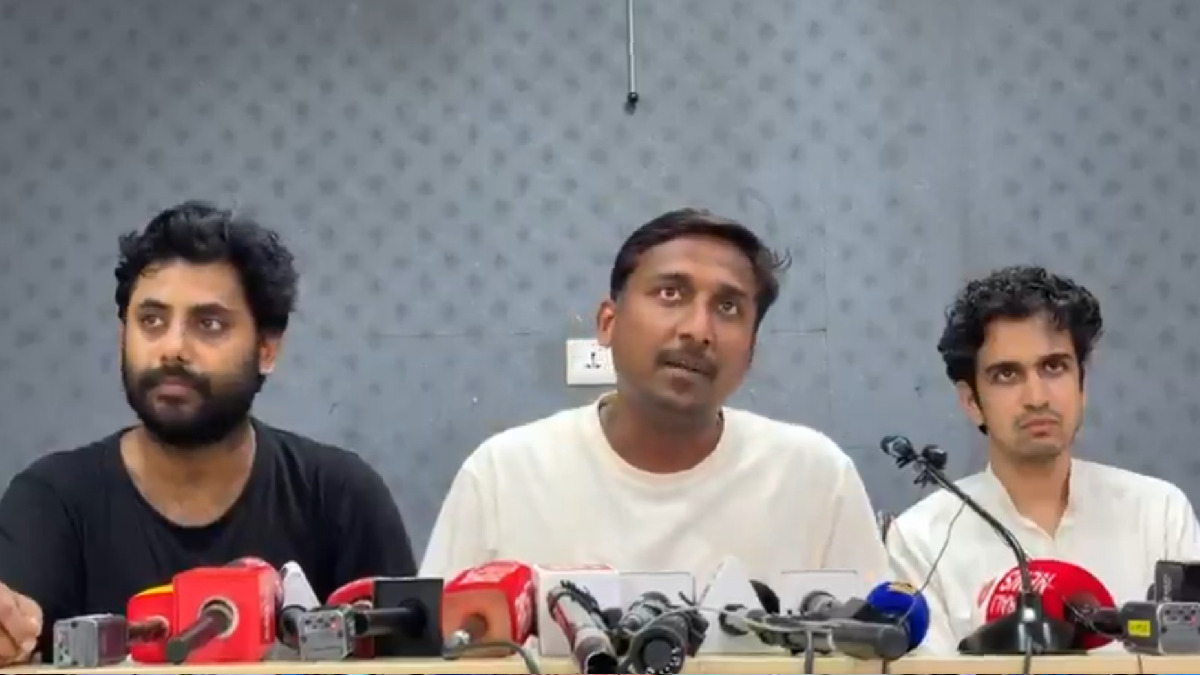
The protest call came at a time when the capital is on edge, and protests for the resignation of Chief Election Commissioner Gyanesh Kumar are on the rise. Ajinkya Shinde, CJP leader, has taken charge of galvanising supporters and announced a new gathering at Jantar Mantar (10 am Sunday) to press forward despite the fact that the party’s senior leadership has not been available.
The detention of the three CJP leaders has also been a major source of contention between the organisers and the authorities, the organisation said. The leaders were arrested on Saturday as they made their way to Delhi airport from CJP, it said.
The party accused the government of trying to prevent them from being in the demonstration. Nevertheless, the claims made by the organisation about the handling of its leaders should be distinguished from the independent factual information, and the lack of contact does not in itself imply the legal status of the detainees.
CJP’s new demonstration is a continuation of its campaign against the Election Commission of India and its demand to remove Chief Election Commissioner Gyanesh Kumar. The protest movement has been against the Special Intensive Revision (SIR) of electoral rolls - a process to update and revise voter lists. The names of electoral voters lists have been removed from this exercise by the government, and the revision has been questioned as a way of doing so.
The Election Commission’s role in making sure that electoral rolls are accurate has become a political issue. CJP and its supporters are demanding better accountability and action to address the concerns, and the wider issue also involves opposition leaders, student groups, activists, lawyers and digital content creators at work.
The planned demonstration was accompanied by heavy police deployment and restrictions in Delhi. Many protesters were detained before they could make it to Jantar Mantar, and people were caught at other venues such as transport hubs and roads to the capital. Thousands of people were detained during the operation, but estimates were divided by news organisations as well as by time of day.
Delhi Police said about 3,000 people who had been arrested under the Delhi Police Act were released on Saturday evening, as per the report. The security operation also affected not only CJP members, but also other politicians, activists and supporters who wanted to take part in the protest. The size of the detentions and restrictions on the demonstration turned the planned demonstration into a broader conversation about policing, public assembly and the treatment of political dissent.
Several opposition figures and civil society representatives were also arrested at Saturday’s protests. The protests were being organised as a result of the protest aimed at the country’s chief election authority and the demands for the judiciary to keep public order and democracy and the political system transparent, and for people to vote and to take part in the elections.
Critics of the police action said such protests and political expression should be allowed to be peaceful and political expression should be guaranteed, while the government was maintaining a high level of security in place to prevent the gathering from proceeding as planned. The event also brought into question the conflict between maintaining public order and the rights of citizens to gather and express their opinions. The legal aspects of the detentions - such as the reasons for holding particular people and the procedures followed - are of course very important in assessing the event.
With the latest call for a Jantar Mantar gathering, CJP is trying to keep pressure on the Election Commission and to keep up public focus on its demands. Ajinkya Shinde’s mobilisation effort is at a crucial moment for the organisation as its founder and two co-convenors have been removed from contact after their detention. The 10 am gathering on Sunday will be a means to highlight the status of the detained leaders, the party’s demands for Gyanesh Kumar’s resignation and its concerns over the voter-roll revision process. How much participation and the police reaction will determine the flow of the demonstration.
The recent developments underscore the growing tensions involving electoral roll changes, political protest and law enforcement in the national capital. For CJP, the immediate point is to contact its detained leaders and continue its campaign. For authorities, the problem is to manage public order in the face of a politically charged demonstration. The leaders’ status in detention, their access to communication and the administration’s reaction to the new protest call will be essential for the next stage of the dispute.




Comments