
Elon Musk has stepped up his criticism of India’s regulatory process for satellite internet services, taking a sarcastic swipe at Reliance Industries chairman Mukesh Ambani over the delay in launching Starlink commercially in the country. In an X post on October 9, the SpaceX chief addressed Ambani as “Prime Minister Ambani” and questioned whether Starlink would be allowed to compete in India’s telecommunications market.
The comments have resulted in a public debate between Musk, Union Communications Minister Jyotiraditya Scindia and Congress leader Rahul Gandhi. The issue at the heart of the dispute is the time required to complete the security and regulatory requirements satellite communication companies must meet before offering commercial services.
Musk thinks satellite internet will help in expanding the range of internet access in underserved areas so children have access to online education and small businesses can sell to customers outside their local markets. But the Indian government has denied any preferential treatment of satellite operators, saying all licensed satellite operators should meet all the conditions before starting services.
Why Elon Musk Addressed Mukesh Ambani As ‘Prime Minister Ambani’
Musk used sarcasm to suggest that Ambani had too much control over the telecoms business in India. He questioned whether Starlink was being kept out of the market to protect the interests of existing businesses.
Musk’s comments followed an earlier post in which he accused unnamed business interests of blocking Starlink's entry to preserve their market position. His October 9 message directly named Ambani and called for Starlink to be allowed to compete.
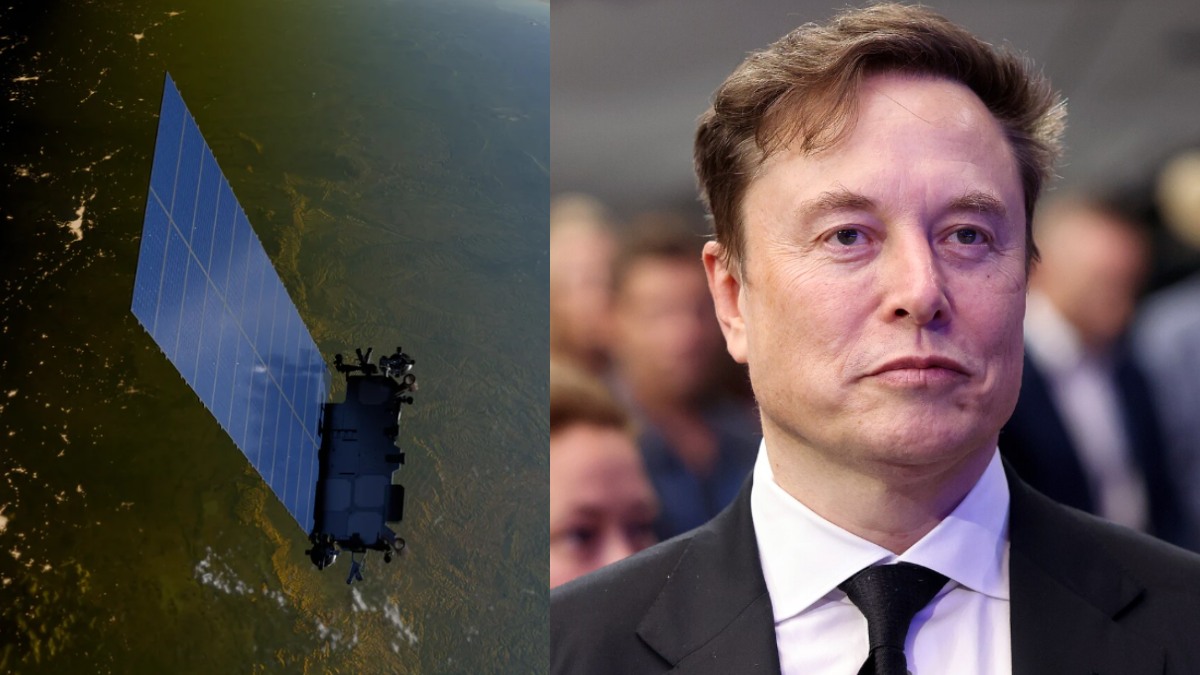
The SpaceX boss also pointed out the benefits of satellite connectivity. Musk said the service would provide access to internet service to communities that don’t have reliable terrestrial networks, increase access for education and allow small businesses to be more easily involved in global commerce.
He also pointed out the role satellite communications can play in natural disasters and that common mobile and internet services can be lost in the case of disasters, or that the mobile and internet networks can be disrupted.
But Musk’s comments are evidence of his allegations and arguments for market access. They do not show that Ambani or Reliance Industries has influenced the government’s security clearances going forward. The government has denied that Starlink is being singled out for discriminatory treatment.
Jyotiraditya Scindia Rejects Monopoly Allegations
Union Communications Minister Jyotiraditya Scindia spoke up about the controversy at the India Mobile Congress 2026 in New Delhi. He said India does not permit monopolies and emphasized that three companies have received satellite communication licences.
The licensed operators are Starlink, Jio Satellite Communications and Eutelsat OneWeb, which is backed by Bharti Enterprises. Scindia said the companies must individually satisfy the required security conditions and other regulatory requirements before starting commercial operations.
The Minister also said security clearance falls under the Ministry of Home Affairs. That means the Department of Telecommunications issuing a licence doesn’t give an operator permission to start providing services to customers.
The government has said the regulatory framework is fair and non-discriminatory and security compliance is required from every licence holder. They also said spectrum will be assigned under the applicable framework once the relevant process is finalised.
Starlink Has A Licence, But Commercial Launch Is Still Pending
The difference between getting a licence and all the things that are required to start commercial operations is one of the basic differences in the current dispute.
Starlink has secured a satellite communication licence for India, but it still needs to complete the outstanding security requirements and meet the applicable spectrum-related conditions. The same broad regulatory requirements apply to the other licensed operators.
The government has said the three companies are in a similar stage of the regulatory process. Its position is that the delay is the result of pending requirements, not Starlink being blocked from entering the market.
The spectrum framework is also important. Satellite internet providers need access to the necessary spectrum to provide services, and the specific allocation and charging arrangements are to be determined. Scindia has said that the government intends to be technology-neutral and that customers should be able to opt for different kinds of connectivity.
Rahul Gandhi Joins The Musk-Ambani Exchange
Congress leader Rahul Gandhi also entered the debate on October 8, after Musk questioned if powerful business interests were blocking Starlink’s entry into India.
Gandhi welcomed Musk to India in his post on X and added, “Wait till you discover the other guy.” The comment intensified the political context of the dispute, though Gandhi did not identify who he was talking about.
Musk later thanked Gandhi and termed the situation as troubling. Scindia had also criticised the Congress party’s position during the exchange, turning the conversation into a broader political debate around competition, business influence and the government’s strategy with regard to satellite communications.
What Starlink Could Mean For Internet Access In India
Starlink uses satellites to provide internet service and is an alternative to fibre broadband and conventional mobile networks which are difficult to scale and expensive to use.
Remote villages, mountainous areas, islands and areas affected by natural disasters could potentially benefit from satellite-based services. Connectivity has been shown to be crucial in online education, digital payments, telemedicine, government services and small businesses that need internet access.
Satellite internet is not equivalent to fibre or mobile broadband in every scenario. The price of equipment, weather conditions, service capacity and local regulatory requirements can have an effect on its suitability. Its potential role will therefore be dependent on individual users and existing networks.
India's large population and diverse geography make the space for satellite communication providers very attractive. But the extent to which Starlink can expand connectivity will depend on the final regulatory clearances, commercial terms and the service's affordability for Indian consumers.
Dear Prime Minister Ambani, Please accept my humble apologies for not realizing that you are the real boss of India. Naturally, you would prefer to maintain your monopolistic exploitation of the great people of India, but would you nonetheless consider allowing Starlink to compete? There are many areas of India, as there are in all countries, with no Internet access, which denies children the opportunity for education and for small businesses the opportunity to sell their goods to a global market. Starlink would change their lives for the better. Thank you 🙏
— Elon Musk (@elonmusk) October 9, 2026
What Happens Next In The Starlink India Launch Row?
The immediate question is when Starlink will be available to Indian customers. The government has not announced a commercial launch date, and we still have some work to do on security and spectrum.
The approval process has been the subject of renewed scrutiny, and Musk’s critical comments and Scindia has reminded all three licensed operators that they must meet the required conditions. But there is a tension between faster market entry calls and the government’s duties to maintain security and regulatory standards for the sector.
For now, Musk, Ambani and Indian political leaders have thrown Starlink's delayed launch into the national telecom debate. But it is not clear if the controversy will lead to a quick resolution. The next significant thing will be to get the clearances and the commercial services done.




Comments
Leave a Comment