
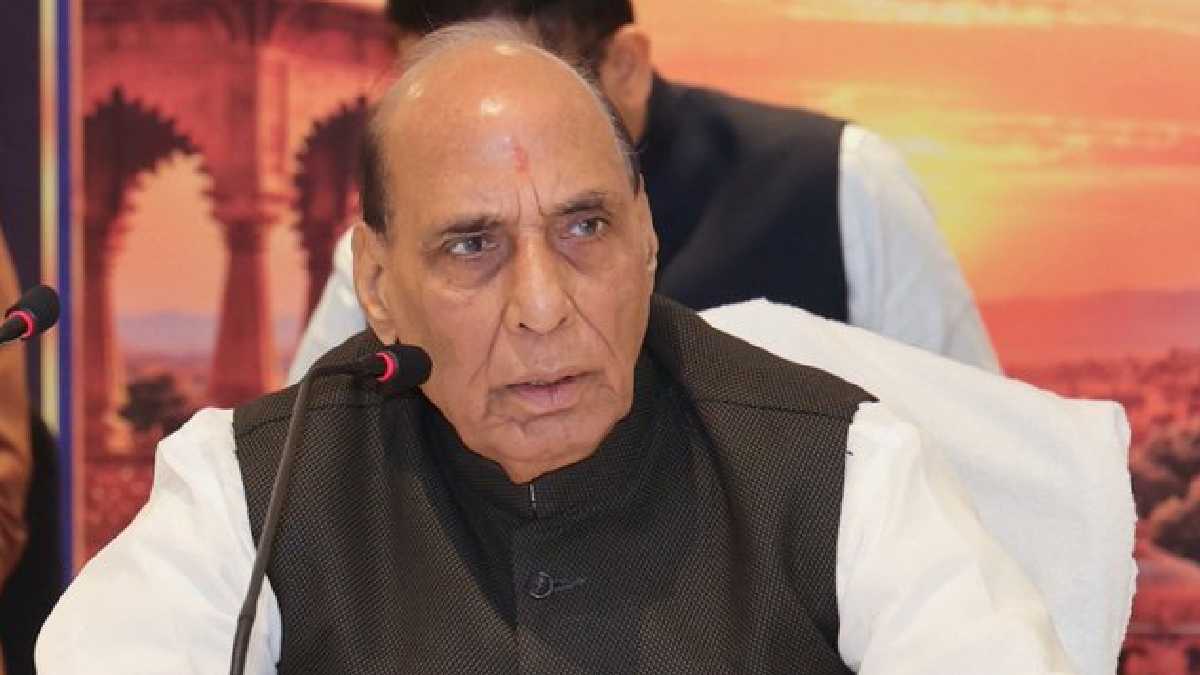
India has set ambitious targets to strengthen domestic defence manufacturing, with Defence Minister Rajnath Singh stating that the country aims to achieve ₹3 lakh crore in defence production and ₹50,000 crore in defence exports by 2029
The government wants India to become more self-reliant in military equipment manufacturing as well as expand its presence in global defence market.
Rajnath Singh announced the targets while chairing a meeting of Consultative Committee of Ministry of Defence in Jaisalmer, Rajasthan today.
The meeting discussed modernisation of Indian Armed Forces, new security challenges, technology and need to build military which can meet future threats.
The Defence Minister says India has made a lot of progress in strengthening its domestic defence manufacturing capabilities over the last decade. From Rs 46,429 crore in 2014-15 financial year, defence production rose to record Rs 1.78 lakh crore in 2025-26.
Similarly, India’s defence exports have grown too. From less than Rs 2000 crore in 2014 exports now are around Rs 40000 crore (government wants to take it up to Rs 50000 crore by 2029).
“We want defence production of Rs 3 lakh crore and defence exports of Rs 50,000 crore by 2029,” Rajnath Singh said.
The Defence Minister also spoke about the role of financial resources in improving the country’s military capabilities. He said the defence budget for 2026-27 has been increased to a record Rs 7.85 lakh crore. Of this Rs 2.19 lakh crore is capital outlay (for modernisation and capital procurement).
Singh said modernisation should not be limited to buying advanced weapons and military equipment. It must include operational preparedness; indigenous technologies development; long-term defence capabilities building etc.
Technology was another major topic of discussion. Defence Minister emphasised that artificial intelligence, autonomous systems, unmanned platforms, cybersecurity, space technology, electronic warfare and advanced communication systems are becoming increasingly important in modern conflicts.
He also said that stronger cooperation should be ensured between the DRDO, armed forces, defence public sector undertakings, private companies, start-ups and academic institutions.
The government is pushing for more participation by domestic industries (micro, small and medium enterprises MSMEs) in research, innovation and manufacturing. “Creating opportunities for private companies and start-ups will build a stronger defence ecosystem,” Singh said.
The meeting also focused on jointness and integration among Army, Navy and Air Force. Better coordination between the three services, operational planning and next generation military platforms development were important priorities identified.
Singh also emphasised human resources: a country’s military power is not only based on technology and financial resources but also capabilities and preparedness of personnel.
He talked about new Indian Army formations Asani, Bhairav and Shaktiban platoons are being developed to meet changing operational requirements.
Government believes that increasing domestic production and reducing dependence on foreign suppliers will strengthen India’s strategic autonomy and national security.
With 2029 targets in mind India wants to expand the defence manufacturing base, foster technological innovation and become a stronger supplier of military equipment to international markets.



Comments