
Narendra Modi, the prime minister of India, has said that young Indians must constantly improve their skills and adapt to new technology as the job market undergoes a rapid transformation. At the WorldSkills Competition in Shanghai, Modi said that high technology skills, practical training and the ability to learn new tools will be fundamental to young people looking to work in an increasingly technology-driven economy.
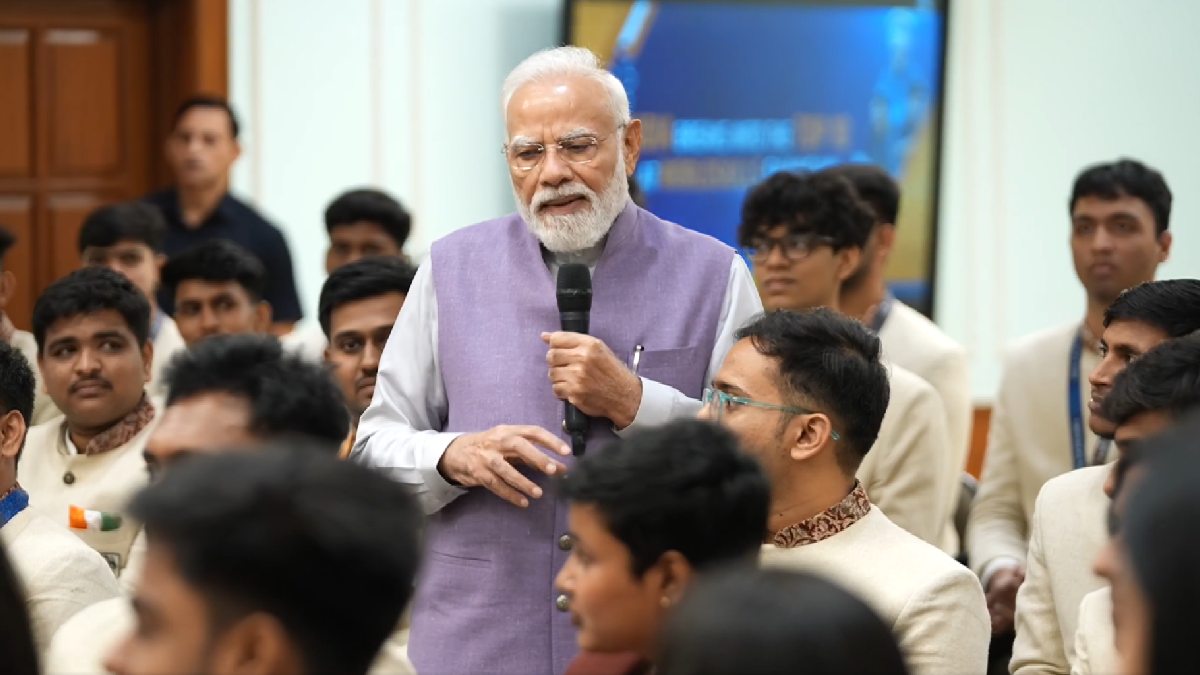
The Prime Minister also stressed that cooperation between the government, young professionals and skill-training institutions has to be strengthened to ensure the country's workforce is strengthened. He said he wanted the participants to share what they got out of the international competition in order to support the country’s vocational education and training system.
The interaction is happening at a time of increasing demand for specialized skills in industrial areas such as manufacturing, engineering, information technology and other technical fields. With automation, artificial intelligence and advanced digital systems in the market today, workers are going to be required to develop and update their skills throughout work life not just in the context of formal education.
Modi Highlights The Need To Keep Pace With Technology
Modi stressed that such technological change and technology is making continuous learning more critical. Young people need to develop new capacities, improve their existing skills and be adaptable to new tools and technologies, he said.
Tech knowledge is not enough in the current job market. And workers have to learn new software, use modern technology, solve problems, adapt to the changing workplace culture. Young professionals need the speed to learn and implement new knowledge to be able to stay relevant in what is going on in the industry.
Modi also called on the participants to fit into the global market. India’s workers need to be trained up to international standards and can be employed in sectors that need specialised technical skills he said.
This approach is the real-world approach for students and job seekers and shows the value of mixing the academic with the practical. Vocational training, industry-based projects, apprenticeships and regular upskilling can help bridge the gap between classroom education and employers’ needs and job requirements.
WorldSkills Participants Share Their Experiences
The interaction brought Indian representatives together in the Shanghai WorldSkills Competition, an international event showcasing vocational and technical skills among young professionals.
WorldSkills brings professional competitors from different countries together to show their skills in a range of occupational domains. The competition allows them to test their skills against international benchmarks, experience different training and learn about the tools used by professionals in other countries.
They were informed that they may not be able to use all the new tools and software they need to adapt to the competition in relation to the government and the Prime Minister in their interaction with the Prime Minister. Such exposure can also help young professionals to appreciate technical standards and workplace practices that are different in different industries and countries.
International competitions can also provide insights into areas where domestic training programmes can be improved. Returning students who have learned the new equipment, technology and assessment methods can be able to share that with other students and training institutions.
Modi told the young professionals to communicate their suggestions to the government. Their feedback could help identify opportunities to improve training content, access to modern equipment and the practical preparation offered to students pursuing technical careers.
Skill Training Institutions Are As Important As IITs And IIMs
The Prime Minister also underlined the importance of India’s skill-development institutions, saying they are no less important than premier educational institutions like the Indian Institutes of Technology (IITs) and Indian Institutes of Management (IIMs).
The comparison indicates the role of vocational education and conventional academic pathways. Universities and management institutions prepare students for a range of professional careers, but skill training centres focus on practical skills for specific professions and skills required in them.
India’s workforce needs both forms of education. Advanced manufacturing, construction, automotive technology, electronics, healthcare support and many other sectors depend on workers who can apply specialised knowledge in real-world settings.
Vocational institutions can help young people develop employable skills and provide employers with workers who are better prepared for operational needs. They can also provide a path to employment for students who are more interested in hands-on learning than just a purely academic course.
For skill-training institutions to be able to meet these expectations, their programs must keep pace with advancements in technology. Updated curricula, modern laboratories, trained instructors and a much closer relationship with employers can help students learn the skills that are relevant to present workplace conditions.
Government, Industry And Youth Need To Work Together
Modi's message also stressed the need for coordinated efforts between the government, training institutions and young people. Building a workforce that can compete internationally is not just about the training. We have to make sure that education, equipment, industry involvement and training opportunities for workers and so on are there.
Employers can contribute by identifying capabilities needed for new jobs and working with training providers on training providers to develop appropriate courses. Educational institutions can embed practical projects and modern technologies into their programmes and students can take more responsibility for learning and for learning.
The feedback of WorldSkills participants might be especially useful because they have experienced an international skills competition first-hand. Their observations could help identify differences in training practices, technical preparation and the use of equipment.
A closer link between vocational education and industry requirements could also help reduce the mismatch between available jobs and the skills possessed by applicants. But to achieve that goal will take sustained investment, constant assessment and opportunities for students to gain practical experience.
Why Upskilling Matters For India's Future Workforce
Demand for adaptable workers is getting stronger as companies introduce new technologies and reorganise the way work is done. Automation does not only change the routine of work but can take on new responsibilities with the digital tools so that workers interpret information, operate equipment and handle technical issues for new tasks.
Hosted the bright youngsters who took part in the 48th WorldSkills Competition held in Shanghai. Proud of them! https://t.co/5lzQwcer6h
— Narendra Modi (@narendramodi) October 9, 2026
Thus lifelong learning is an essential part of career development for young Indians entering the workforce. A course, or qualification, can be a foundation, but professional growth depends on the ability to build on that basis and as job requirements change, professional development is increasingly on how to build on that foundation.
Upskilling can also assist experienced workers to take on new responsibilities or to adopt technologies that are already in place in their existing businesses. Other forms of learning can be delivered in short term training programs, technical workshops, apprenticeships and online courses. At the same time, quality training is still essential. Workers need affordable learning opportunities, reliable guidance and programmes that are recognised by employers. And also training needs to be tied to actual work so students can see how skills that they have will come to fruition in the workplace of tomorrow.
Modi’s interaction with WorldSkills participants makes the case for young people to be prepared for a changing job market. His calls for continuous education, better training institutions and inter-professional engagement are very much at the heart of vocational education in India’s efforts to develop a skilled workforce.
As technology continues to reshape industries, the challenge will be to turn these priorities into accessible training opportunities and stronger employment pathways. In a similar way, the experiences of the WorldSkills participants in India could help us to get into that process by providing international exposure and practical insights into the country’s skill-development system.





Comments
Leave a Comment