
South Korea’s biggest shipbuilding company Samsung Heavy Industries is looking at investment opportunities in India’s shipbuilding industry and there are hopes that it could boost the country’s maritime industry.
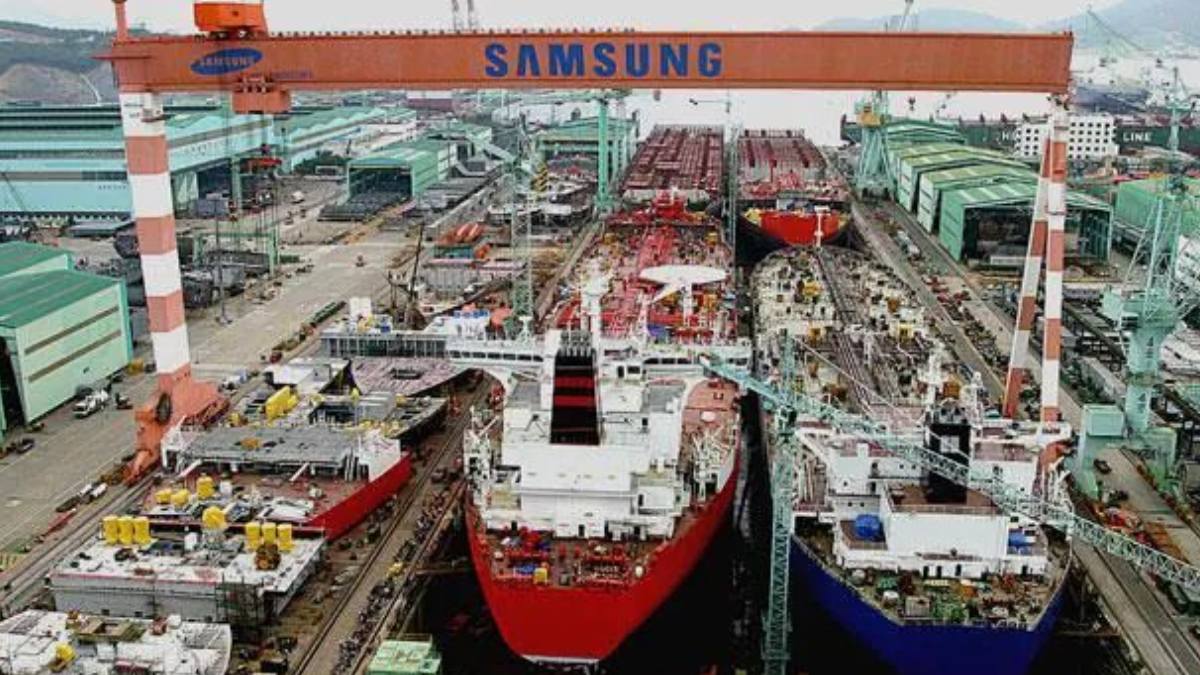
The South Korean company is reportedly considering setting up or investing in a shipbuilding facility in India. It would be an important step to strengthen industrial cooperation between India and South Korea as well as support India’s ambition of becoming major global shipbuilding and maritime manufacturing hub.
While the company is looking for investment opportunities no details have been given so far on where they proposed to set up the facility, how much they planned to invest, when will the project start and how many ships they plan to produce.
Samsung Heavy Industries (SHI) is one of the world’s leading shipbuilders it builds advanced commercial vessels, offshore facilities and specialised ships; its international reputation has been built on work on large container ships, LNG carriers, oil tankers and offshore engineering projects.
India is interested in SHI because it is trying to expand domestic shipbuilding capacity as well as attract international companies with advanced manufacturing technologies into India. An investment by a global shipbuilder could give India access to specialised expertise, modern production systems and international industry practices.
India has been strengthening its maritime infrastructure as part of a broader manufacturing and economic development strategy. Shipbuilding is considered strategically important because it supports international trade, port operations, defence requirements, energy transportation and logistics.
🚨 Breaking News: South Korea's Samsung Heavy Industries (SHI) is exploring investments in a shipbuilding facility in India. https://t.co/25OTAOkUsf
— Indian Tech & Infra (@IndianTechGuide) November 18, 2026
A strong domestic shipbuilding industry can reduce dependence on foreign shipyards and create opportunities for Indian companies in steel production, marine equipment, engineering, electronics and other supporting industries. Samsung Heavy Industries’ investment could therefore generate interest across many sectors related to maritime manufacturing.
One of the biggest opportunities from this investment is technology transfer. Advanced shipbuilding requires sophisticated engineering skills, specialised equipment, skilled workers and coordinated manufacturing processes.
South Korean shipbuilders are internationally known for their technological capabilities (LNG carriers, complex offshore vessels). If Samsung Heavy Industries sets up a manufacturing presence in India domestic companies can benefit from collaboration, technical partnerships and opportunities to participate in international supply chains. Cooperation could also encourage Indian manufacturers to raise production standards and develop specialised marine components.
The investment might also create jobs. A large shipbuilding facility needs engineers, naval architects, welders, technicians, designers, project managers and workers with specialised industrial skills.
In addition to direct employment the development of a shipyard could provide jobs through suppliers, transportation companies, equipment manufacturers, maintenance services and other supporting businesses. Local manufacturing clusters would benefit if the project attracted a wider network of domestic and international suppliers. This could stimulate industrial development in the region chosen for the proposed facility.
India’s ambition to become a major shipbuilding destination also comes at a time when global shipping and maritime industries are changing dramatically. International shipping companies want more efficient vessels, better fuel performance and environmentally friendly technologies; demand for specialised ships (LNG carriers, vessels for alternative fuels) is creating opportunities for shipbuilders with advanced engineering capability. India’s ability to attract experienced international companies could help it participate more actively in these emerging segments of the global maritime market.
The government’s broader programme of port modernisation, maritime infrastructure and domestic manufacturing could also help shipbuilding. Programmes to improve port connectivity, strengthen coastal infrastructure and encourage private investment are expected to be key in expanding maritime capabilities. A partnership with Samsung Heavy Industries could add to these efforts by bringing international experience and advanced manufacturing expertise into the Indian market.
However, to build a major shipbuilding facility there would be several things to consider. Land availability, access to deep water ports, transportation infrastructure, skilled labour, power supply and supporting industries would all influence feasibility of the project.
Shipyards also need long term capital investment and steady pipeline of orders to run efficiently so company would have to weigh these factors before deciding on final investment decision. Details on government incentives, Indian partners etc will also help in understanding scale of opportunity.
For India, attracting a company like Samsung Heavy Industries could be more than just an industrial investment it could strengthen the country’s position in the global maritime supply chain, encourage domestic manufacturing and create opportunities for technological collaboration. For South Korea, India could be a growing industrial market; access to an expanding maritime ecosystem; and opportunities to develop long-term business partnerships.
The development is therefore being seen as potentially important for India’s shipbuilding ambitions. Investment is still at the exploratory stage and final project details have not been announced but investors, industry players and policymakers will be watching for further announcements about the proposed facility, its location, investment size and implementation timeline. If plans go ahead Samsung Heavy Industries entering India’s shipbuilding space would be a game changer for country’s maritime manufacturing sector.





Comments