
In a shocking case of alleged billing irregularity, a 75-year-old man living in a small hut without electricity has reportedly received an electricity bill for more than ₹1.39 lakh. The incident took place in Behariya Sani village in Madhya Pradesh’s Sagar district, and the elderly man was unable to understand how he was charged such a huge amount when he did not have any electricity connection.
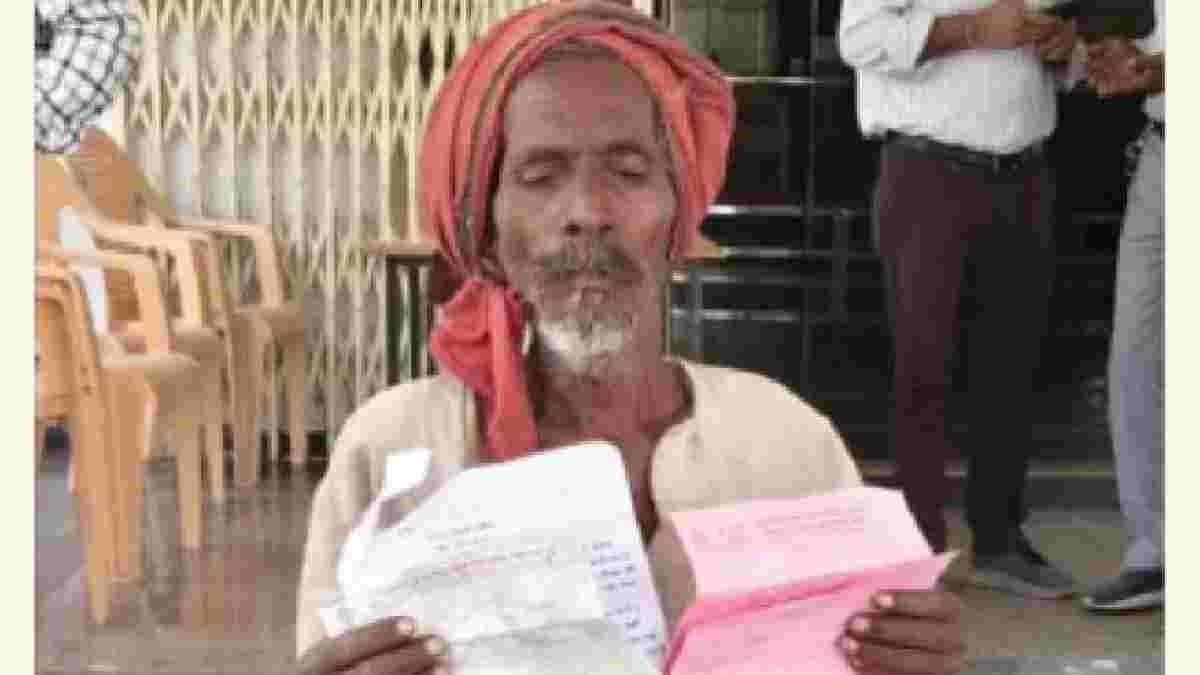
Dulichand, the elderly man, says he has been living without electricity for seven years. He claims that his hut does not have a television or a fan, nor is there an electrical connection in it. The electricity department allegedly issued bills in his name and demanded payment.
The incident has also raised questions about how the department bills residents and how economically vulnerable residents fare.

Seven Years of Living Without Electricity
Dulichand lives in a small hut built on someone else’s land. He complains that he has lived there for about seven years without basic electricity facilities.
He says he never applied for an electricity connection for the hut. No electrical appliances or power supply; his nights are in darkness.
The elderly man was therefore surprised when the electricity department demanded a huge amount of money from him. He has asked how the department could issue such a bill if his hut doesn’t have any working electricity connection.


Alleged Installation of a Non-Functional Meter
In his complaint to the district administration, Dulichand alleged that electricity distribution centre employees from Bamhori installed a non-functional electricity meter at his hut in 2020 without getting his permission.
He says that electricity bills have been issued in his name since August 2020, but there has been no supply to his house.
The bills started out small but then grew larger over time. He has asked why he should pay charges for a meter which he says was never actually connected or worked properly.
Electricity Bill Rises From ₹4,226 to ₹1.39 Lakh
The dispute reportedly dates back to December 2022 when Dulichand received a notice from the electricity board demanding ₹4,226 in unpaid electricity dues.
But the amount has reportedly now risen to more than ₹1.39 lakh, which is very worrying for the elderly resident.
For someone living in a small hut without basic facilities, paying such a huge amount is virtually impossible. Dulichand has asked the authorities to check billing records and cancel charges if they find them wrong.
मध्य प्रदेश के सागर जिले से चौंकाने वाला मामला सामने आया है। जिले के बेहरिया सानी गांव के 75 वर्षीय दुलीचंद को बिजली कंपनी ने 1 लाख 39 हजार 232 रुपये का बकाया बिल और वसूली नोटिस भेजा है। पढ़े पूरी खबर- https://t.co/jAfgaSD8i0 #MPNews #ElectricityBill #AmarUjala [Electricity Bill, 1.39 Lakh Electricity Bill, Elderly Man, 75 Year Old Man, Electricity Department, Electricity Bill Notice, Wrong Electricity Bill]
— Amar Ujala (@AmarUjalaNews) November 18, 2026
Elderly Man Alleges Threats of Jail
Dulichand has also alleged that electricity department employees came to him and forced him to clear the outstanding amount. He says he was threatened with imprisonment if he did not pay the bill.
Worried about the demand and threats, he went to the district collector’s office for justice.
On 17 November, during a public hearing, he was said to have submitted a written complaint to Sagar District Collector Dilip Kumar Yadav, asking him to intervene and cancel the disputed bill.
District Collector Orders Investigation
After hearing the complaint of the elderly man, Collector Dilip Kumar Yadav reportedly directed senior electricity department officials to look into it.
Officials were asked to go to the site and see how such a large bill was generated for a hut which is said not to have an electricity connection.
The collector has also asked the department to take appropriate corrective action if any error is found in the billing process.
The investigation should determine whether the problem was caused by incorrect meter installation, faulty billing records or some other administrative error.
For now, Dulichand is waiting for the authorities to sort it out. The case has once again reminded us that accurate electricity billing and grievance redressal on time are essential for vulnerable consumers.








Comments