
A teenage entrepreneur from the US is being hailed for tackling food waste through a community composting program. Anthony Woo, co-founder of Torus has helped build a youth led nonprofit in New Jersey that diverted more than 300,000 pounds of food waste from landfills.
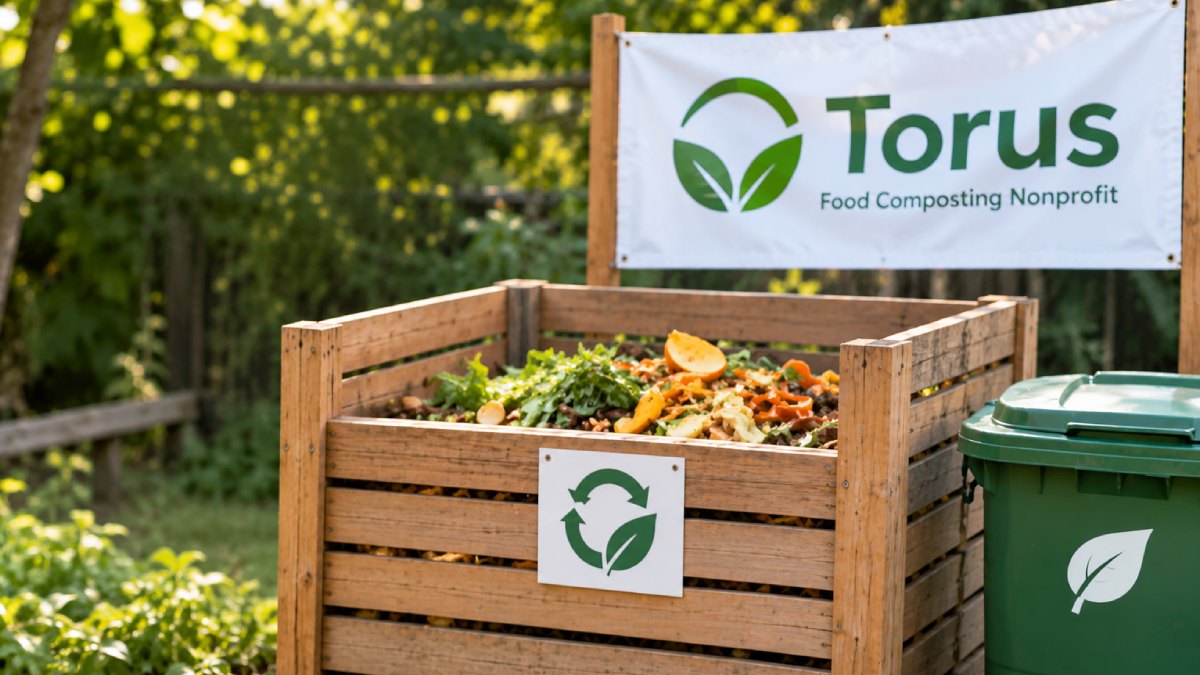
Torus is based in West Windsor, New Jersey and offers curbside food-scrap collection service to make composting easier for households and local businesses. The company says it has served more than 1,000 households and businesses across the state so far a convenient way to keep food scraps out of conventional waste disposal systems.
The initiative shows how young people can turn environmental issues into real community projects with measurable outcomes.
Who Is Anthony Woo?
Anthony Woo is co-founder and CFO of Torus, a non-profit organisation founded by students at The Lawrenceville School in New Jersey.
The organisation was founded in late 2023 by four students Matthew Gao, Anthony Woo, David Chen and Zikang Jiang. Their shared interest in environmental sustainability inspired them to find ways to reduce food waste and make composting more accessible.
Woo got involved when she saw how much edible and leftover food was being thrown away (including in school dining halls). The experience inspired them to move beyond awareness campaigns and develop a collection system.
Woo’s job at Torus is financial planning, fundraising, donor outreach, partnership development and tax compliance. The organisation says Woo has raised more than $150,000 to fund its work.
He was also named runner-up for the 2025 Gloria Barron Prize for Young Heroes which recognises young people who make a difference in their communities and environment.
What is Torus and how does its composting service work?
Torus is a youth-founded nonprofit that makes composting easy for residents and businesses in New Jersey.
Its model is based around a simple doorstep collection system. Instead of households having to maintain their own composting facilities the organisation provides collection buckets and arranges pickups on regular basis.
The process generally involves three steps:
1. Bucket Delivery
Households take home a bucket for collecting food scraps. Residents can put kitchen waste (e.g. meat) in the bucket instead of mixing it with normal rubbish.
2. Regular Curbside Collection
Participants leave their filled buckets outside their homes every other week for collection. Torus arranges for the collected material to be transported to a processing facility.
3. Food Waste Processing
The scraps are taken to Trenton Renewables where organic waste is processed. The program prevents food waste from going into landfills (where decomposing organic material can produce methane).
The service is free for participants but Torus says a separate refundable bucket deposit may apply (location dependent).
Torus Has Diverted More Than 300,000 Pounds of Food Waste
One of the initiative’s biggest successes is how much food waste it has kept out of landfills.
According to figures published by Torus it has:
- Diverted more than 300,000 pounds of food waste from landfills.
- Served over 1000 households and local businesses.
- It expanded into more than 20 cities in New Jersey.
- Reduced greenhouse gas emissions by more than 1.14 million pounds of carbon dioxide equivalent.
These numbers combine households participating in the study, businesses, volunteers and organisational partners.
The impact is also about making sustainable practices easy to do. Regular collections from Torus mean less effort from residents and more people separate food scraps from regular waste.
How Torus Supports Environmental Sustainability
Food waste is a major environmental problem because organic material that is disposed of in landfills can decompose without enough oxygen and produce methane.
Methane is a powerful greenhouse gas that causes global warming. Keep organic waste out of landfills and send it for processing where appropriate.
Composting and other organic waste management processes also allow food scraps to be turned into resources rather than being treated as rubbish.
Torus works to make it easier for communities to do this regular collection, public awareness and partnerships with local organisations.
Its work also reflects a broader approach to sustainability: environmental action doesn’t always have to involve big infrastructure projects. Community participation and simple systems can deliver measurable results when scaled up.
Funding and Partnerships Help Keep the Service Accessible
Running a regular collection programme needs funding for logistics, equipment, operations and community outreach.
Torus has been supported by organisations and institutions such as Google, Walmart, Clif Family Foundation, Joseph Robert Foundation and local community partners.
Educational and environmental groups have also supported the organisation; they have helped it to expand its operations and promote food-scrap collection.
This funding has allowed the student-led initiative to move beyond its neighbourhood activities and establish a presence across New Jersey.
Recognition for Its Environmental Work in 2026
Torus received the New Jersey Department of Environmental Protection’s 2026 Rising Star Recycling Award for work to improve food-scrap collection and community recycling.
The award was presented on October 28, 2026 at the Association of New Jersey Recyclers' annual recycling symposium in Monroe, New Jersey. Anthony Woo received the award on behalf of the organisation.
Torus was also named a finalist in the 2026 Emerging Composter Challenge run by US Composting Council and shortlisted for the Shift Impact Grant.
These awards have also drawn attention to the way in which the organisation works with young people on environmental action.
A Student Initiative With a Growing Environmental Impact
Torus started as an idea by students who wanted to solve a problem they could see around them. It’s now a nonprofit serving more than 1,000 households and businesses.
Anthony Woo’s involvement shows how young entrepreneurs can contribute to environmental solutions through organisation, fundraising, partnerships and community engagement.
The initiative’s success also shows that reducing food waste is not just about individual choices: accessible collection systems and reliable processing facilities are needed to help households adopt sustainable habits.
Torus continues to expand its reach and model a model showing how local participation can support broader environmental goals.

Comments