
Households in Canada are being told to prepare for emergencies by having supplies on hand that will allow them to survive at least 72 hours without electricity or running water. The advice is part of the country’s emergency preparedness guidance but is getting renewed attention as extreme weather, infrastructure failures and cybersecurity threats become more prevalent.
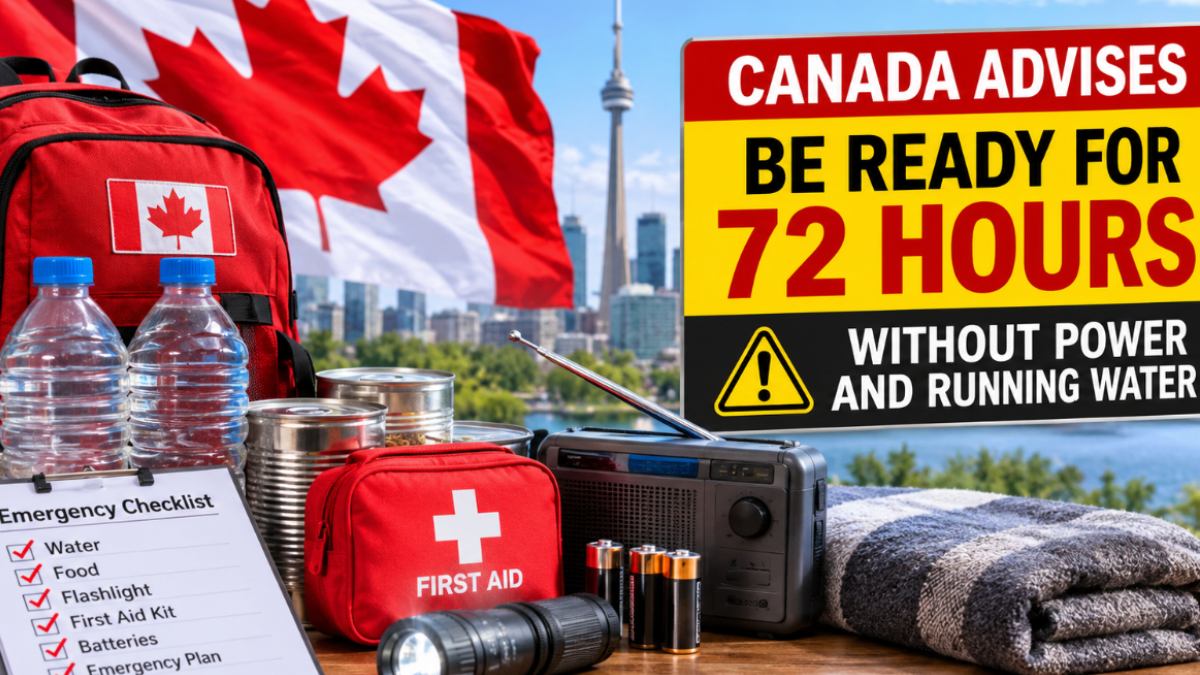
“For emergencies, households should be able to survive independently for at least three days,” says Canada’s official government website. Authorities say stock up on supplies because emergency services may not be available immediately during a major disruption.
Canada Recommends 72-Hour Emergency Preparedness
The Public Safety Department of Canada says residents should keep emergency kits with supplies for at least 72 hours.
The government’s emergency kit guidance states that households may have to live without electricity or tap water after an emergency.
The supplies recommended are drinking water, non-perishable food, flashlights, batteries, first aid materials and battery operated or wind up radios.
The government also recommends preparing an emergency plan for children, older people, pets and people with medical requirements.
This is not a new nationwide emergency order. Canada’s 72-hour preparedness recommendation has been part of its official guidance for years.
Why are governments emphasising emergency preparedness?
Extreme weather events can disrupt essential services and cause problems for households.
Freezing rain, hailstorms, strong winds and wildfires can damage electricity infrastructure in Canada’s official power outage guidance. Longer outages also impact communications, water supplies, food safety and access to essential services.
The government therefore tells residents to understand the risks in their communities and prepare before an emergency happens.
European Union Also Promotes 72-Hour Preparedness
Canada is not the only country that recommends emergency supplies.
On 26 March 2025 the European Commission published its Preparedness Union Strategy which called on households to stockpile supplies so that they could be self-sufficient for at least 72 hours in case of emergencies.
The strategy addresses several potential risks (natural disasters, geopolitical tensions, cyberattacks and other disruptions).
It also looks at strengthening essential services, early warning systems and cooperation between governments and emergency response organisations.
The strategy calls for preparedness across European Union member states rather than announcing one mandatory emergency stockpiling order for every citizen.
Cyberattacks and Infrastructure Disruptions Are Important Risks
Emergency planning today also takes technological threats into account alongside natural disasters.
Cyber attacks can affect digital infrastructure, communications and services that rely on connected systems. Power failures and interruptions to essential services also impact everyday life.
The EU’s preparedness strategy states specifically cybersecurity threats and other emerging risks as areas where stronger planning is needed.
What Should Families Keep in an Emergency Kit?
Families can start preparing by putting basic necessities in a place where everyone can find them.
Drinking water, packaged food, flashlights spare batteries first aid supplies medicines hygiene products and emergency contact information.
The amount of supplies needed should be based on the number of people in the household and local emergency preparedness recommendations.
Preparedness Is Not a Warning of an Imminent Crisis
The 72-hour recommendation does not mean Canada or the EU have predicted an immediate blackout or nationwide water shortage.
Instead these guidelines urge households to become more resilient and prepared for emergencies.
Having supplies on hand can help families cope with temporary disruptions while authorities work to restore services and provide assistance.




Comments