
China has developed helmet technology with built-in airbags a new dimension for road safety and personal protective equipment. It’s been covered because it takes a different tack to protecting riders in accidents.
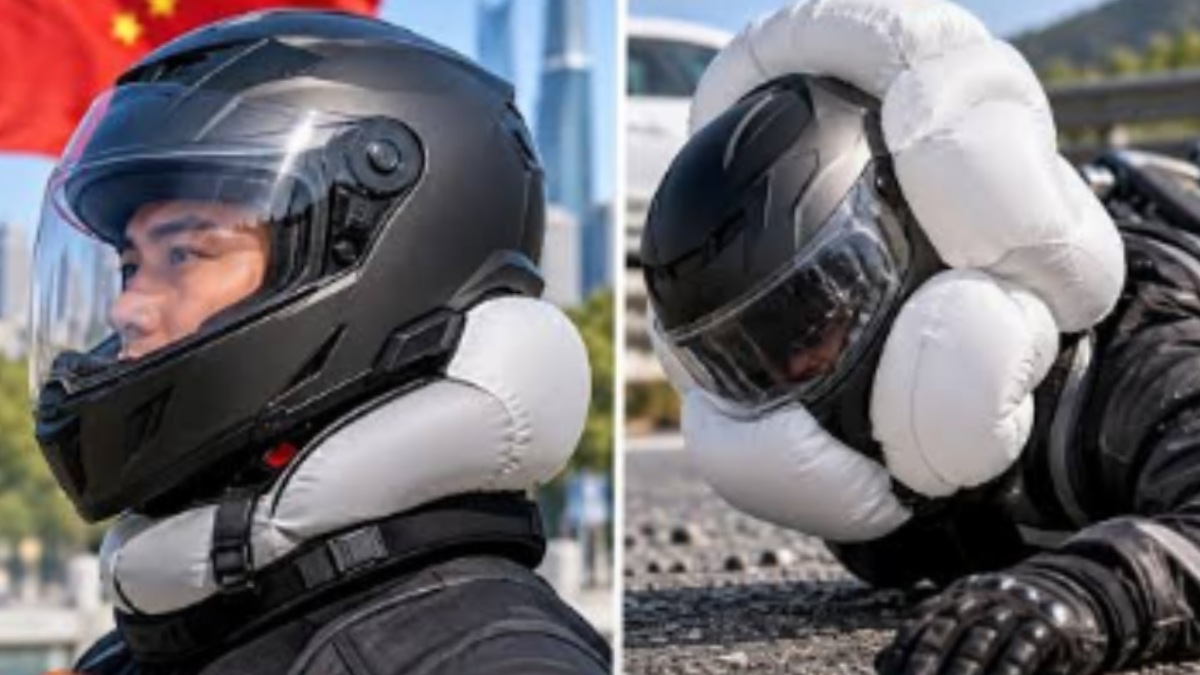
Rather than the outer hard shell and internal cushioning of traditional helmets absorbing impact, airbag helmets use inflatable components to add another layer of protection. They reduce head injuries by cushioning the impact when the rider collides or falls. Road accidents involving motorcycles and bicycles remain one of the biggest safety problems in many countries so innovations like these could be key to the future of protective riding gear.
Traditional motorcycle helmets protect the head through an impact resistant outer shell, energy absorbing inner liner and comfortable padding system. When a rider falls or collides with another vehicle or object, the helmet distributes the force of impact and reduces the amount of energy transferred to the skull but severity and direction of an accident vary so conventional helmets have challenges.
Airbag technology could potentially help some of these challenges by introducing an inflatable cushioning system that expands during an accident (depending on design). Around vulnerable areas of head and neck it might give extra protection.
The airbag helmets are particularly interesting because airbags are already a part of automotive safety systems. Cars have airbags in steering wheels, dashboards, side panels and other places to reduce injuries when they collide.
China launches helmets with air bags. Indian motorcyclists need them the most. China marches ahead. Let’s at least acquire these life savers @nitin_gadkari And please promote a different company for this than your own son’s. https://t.co/3AeOeF8b7j
— Yashovardhan Jha Azad (@yashoazad) November 16, 2026
Over the years airbag technology has also been looked at for motorcycle riders through wearable airbag jackets and protective vests these garments inflate when sensors detect a crash and help protect chest, back, shoulders and neck. Inflatable protection right into helmets is another step in rider safety equipment evolution.
One of the important things about such technology is that it can detect an accident and deploy the airbag at the right time. Depending on the system sensors could be triggered by sudden acceleration, unusual movement, impact forces or changes in riding position.
When the system detects a crash potential an inflation mechanism could deploy the airbag very quickly the idea being to create a cushion before the rider’s head hits hard enough. How effective this would actually be depends on sensor accuracy, deployment speed, airbag placement and overall helmet engineering.
How Could Airbag Helmets Work?
Airbag helmets can have different engineering approaches. Some designs place inflatable cushioning components inside the helmet; others use external airbags that deploy around head or neck. A Chinese patent (Helmet with Impact-Resistant Air Bag) published in August 2023 describes a helmet with multiple interconnected airbags, EPS cushioning layer, air pump and controller. The inflatable components are used to improve fit and cushion around rider’s head.
Google Patents
Another Chinese utility model (published in March 2025) shows a cycling helmet with an airbag protection device on the rear section of the helmet. The trigger mechanism is used to protect cyclist’s head and neck. These developments show that Chinese companies and inventors are trying different ways to integrate inflatable protection into helmets.
Eureka
Is the Airbag Helmet Technology Completely New?
Interestingly, China isn’t the first country to look at airbag-integrated motorcycle helmets. In November 2022 Italian helmet maker AIROH along with Swedish automotive safety company Autoliv showed a motorcycle helmet concept with an integrated airbag at EICMA motorcycle exhibition. The concept had an inflatable protection system to improve impact absorption around the head.
The collaboration showed how technology used in car safety could be adapted for motorcycles. It was interesting because it tried to take conventional helmet protection and add an inflatable safety mechanism but developing a prototype is one thing and bringing a commercially available certified product to market is another.
What Are the Challenges of Airbag Helmets?
Despite these benefits, airbag helmets have engineering and practical challenges. The first challenge is that the airbag only deploys at exactly the right time: if it deploys too early or unnecessarily then problems will occur for the rider; if it deploys too late then it may not provide protection in an accident.
Another consideration is weight and size of the helmet. Airbags, sensors, electronic controllers, inflation systems and power sources could make helmets heavier than conventional models. Manufacturers will need to ensure that additional equipment does not compromise rider comfort, visibility or movement; test technology under different weather conditions, riding speeds and accident scenarios; test it under various rider scenarios.
Safety certification will be just as important. Consumers won’t use these helmets if manufacturers can’t show that their products comply with impact protection and helmet safety standards; how they can be maintained, replaced or reset after deployment must also be established.
Will Airbag Helmets Launch in India?
The development could eventually be of interest in India where motorcycles and scooters are some of the most common modes of transport. Daily commuters, delivery riders and long-distance motorcyclists could all benefit from innovations that improve protective equipment. However there is no confirmation that the Chinese airbag helmet designs mentioned in these patent records have been launched commercially in India or got Indian road use certification yet.
Affordability will also be an issue for Indian consumers. Normal helmets are available in different price ranges whereas airbag systems may incur extra manufacturing and maintenance costs. Manufacturers would have to strike a balance between safety, durability and affordability so that the technology is accessible to everyday riders.
Overall airbag helmets are an interesting development in motorcycle and cycling safety technology. China’s patent work and international projects (AIROH, Autoliv) show growing interest in inflatable protective systems.
The technology is exciting but riders should still use properly certified conventional helmets and shouldn’t assume that because an experimental or patented airbag design exists it is a replacement for existing safety equipment.





Comments