
The 2026 US midterm elections are putting Indian-American voters into sharper focus as economic issues, healthcare, civil rights and other domestic issues become as important as immigration and H-1B visa policies.
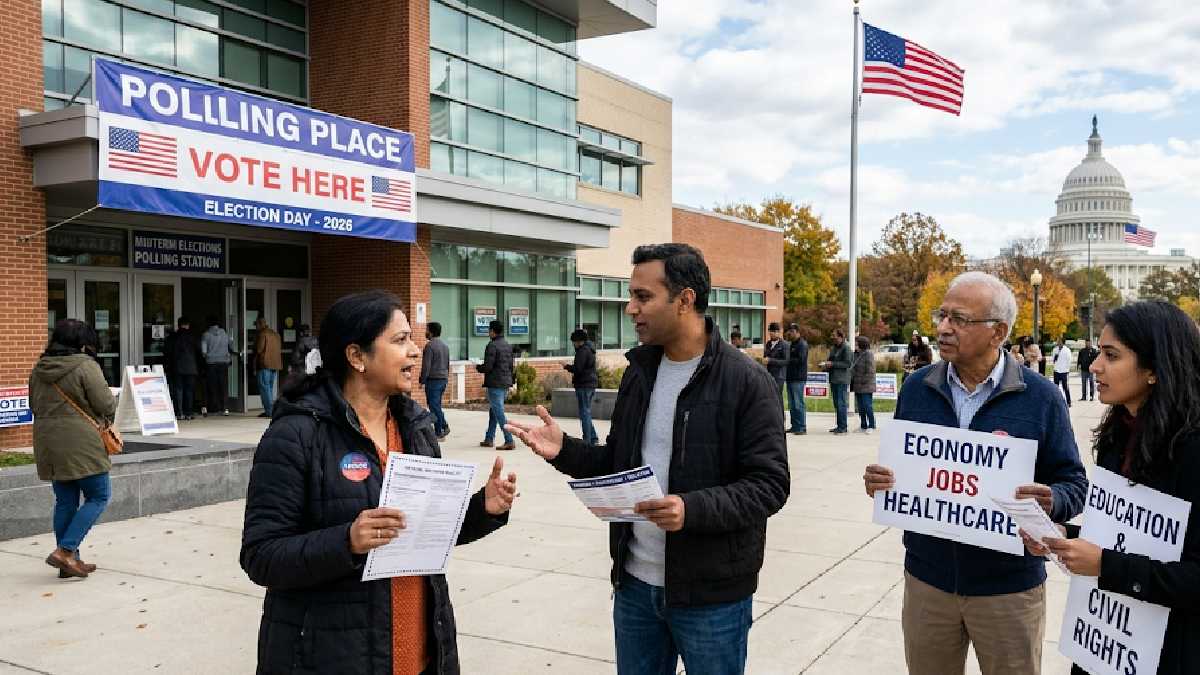
When Americans go to the polls on November 3 Democrats and Republicans alike will be trying to win support from a community that has become influential in several closely contested electoral districts.
Indian Americans have traditionally been Democrats (although Republicans increased their support in the 2024 presidential election). But recent surveys show that political preferences are changing within the community more and more voters are looking at candidates based on policies rather than party loyalty.
In the October 2026 Indian American Attitudes Survey, conducted by Carnegie Endowment for International Peace in partnership with YouGov inflation and prices are the biggest policy concern among Indian-American respondents. Here are seven issues beyond H-1B visas and immigration that could sway their voting decisions:
1. Inflation and Rising Cost of Living
The rising cost of everyday goods is a major concern for Indian-American households. Housing, groceries, transportation and other household expenses are influencing how voters view the government’s economic performance. 21% identified inflation and prices as their most important personal policy issue in the survey.
2. Jobs and the Economy
Employment opportunities, salary growth, economic stability and business conditions are also important. Many Indian Americans work in technology, healthcare, finance and other professional fields so economic policies could affect their choices at the ballot box as well. About 17% said jobs and economy was their top concern.
3. Healthcare and Medical Costs
Healthcare is another big issue (families pay insurance premiums, medical expenses and don’t have access to quality treatment). The survey found that 13% of respondents rated healthcare as their most important policy issue. Candidates’ positions on healthcare affordability and insurance coverage therefore matter a lot.
4. Civil Rights and Discrimination
Equal treatment, racial discrimination and civil liberties are questions that Indian-American voters care about more and more. Racism and the treatment of immigrant communities have also brought identity and belonging issues into politics.
5. Climate Change and the Environment
Pollution, extreme weather and long-term sustainability are top concerns for voters when it comes to environmental protection and climate policies. Around 6% of respondents said climate change and the environment was their most important issue.
6. Taxes and Government Spending
Tax policies, public spending and the management of government finances can directly impact household budgets and business owners. 5% of respondents said taxes and government spending were their biggest concern.
7. Crime, Public Safety and Education
Public safety and education also affect family decisions. Crime was cited as the #1 issue by 5% of respondents; another 5% selected education. School quality, college affordability and neighbourhood safety are still important factors for many households.
The results show that Indian-American voting decisions can’t be explained through immigration policy alone (H-1B visas and green card backlogs are still important but everyday economic pressures and domestic policy priorities are also at work).
Both major parties will be fighting for votes in the 2026 midterms so how much influence these changing priorities have on Indian-American voters and their political choices will become clear.




Comments