
A moderate earthquake of 5.3 on the Richter scale jolted Nepal early on Tuesday morning with its epicentre near Lelep in Koshi Province.
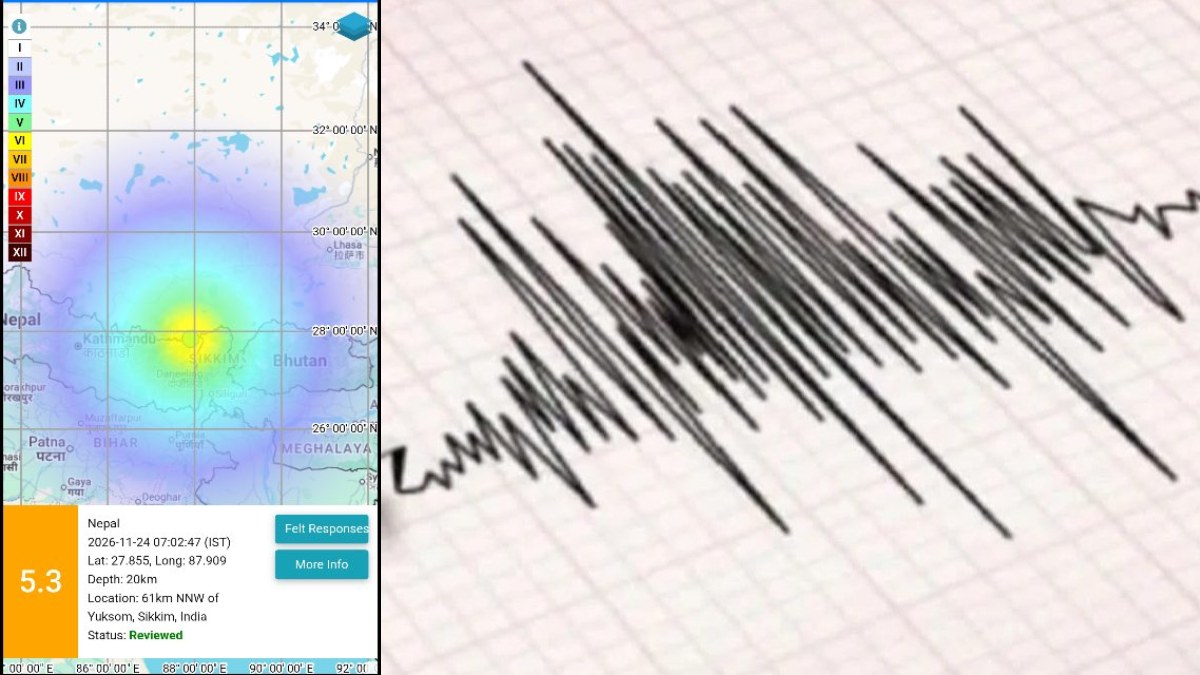
Tremors were felt in parts of India, Bhutan, Bangladesh and China; residents woke up to a shaking feeling in their homes. The National Centre for Seismology (NCS) in India said the quake struck at around 7:02 am local time (around 20 km deep).
Nepal’s National Earthquake Monitoring and Research Centre put the magnitude at 5.6 and the epicentre near the Olangchung Gola area of Taplejung district, close to the Nepal-Tibet border (The Kathmandu Post). People in Bihar, Meghalaya and West Bengal in India also felt the shaking, especially in areas closer to the Himalayan foothills.
There was no loss of life or injuries or major damage to property, though tremors were felt over a wide geographical spread. Local authorities in Nepal and India are assessing the situation, but so far there have been no major collapses of structures. The early morning timing of the quake meant people were still inside when it happened, so household items rattled, and buildings swayed briefly.
On the same day, a smaller tremor of magnitude 2.5 was felt in Assam’s Karbi Anglong district at 3:39 am. The National Centre for Seismology said the smaller earthquake occurred at a depth of about 15 kilometres. Though the Assam tremor wasn’t strong enough to have any impact, its occurrence on the same day highlighted seismic activity across the eastern Himalayas.
The Himalayas remain one of the world’s most seismically active zones because India and Eurasia tectonic plates keep colliding with each other continuously. Indian plate is moving northward and pushing against the Eurasian plate; this stress builds up along fault lines and suddenly releases energy when an earthquake happens. This is why moderate to strong tremors are relatively common along the Nepal-India border as well as across the Himalayan belt.
Authorities have asked people in affected areas not to panic. Standard safety measures during an earthquake are to get to a safe place without panicking; take cover under a sturdy table (if indoors); protect your head and neck; avoid windows and heavy objects; don’t use lifts; move to open ground only after shaking stops. Officials say no major damage was caused by the latest quake in Nepal but are monitoring for aftershocks and asking people to follow established guidelines for earthquake preparedness.






Comments