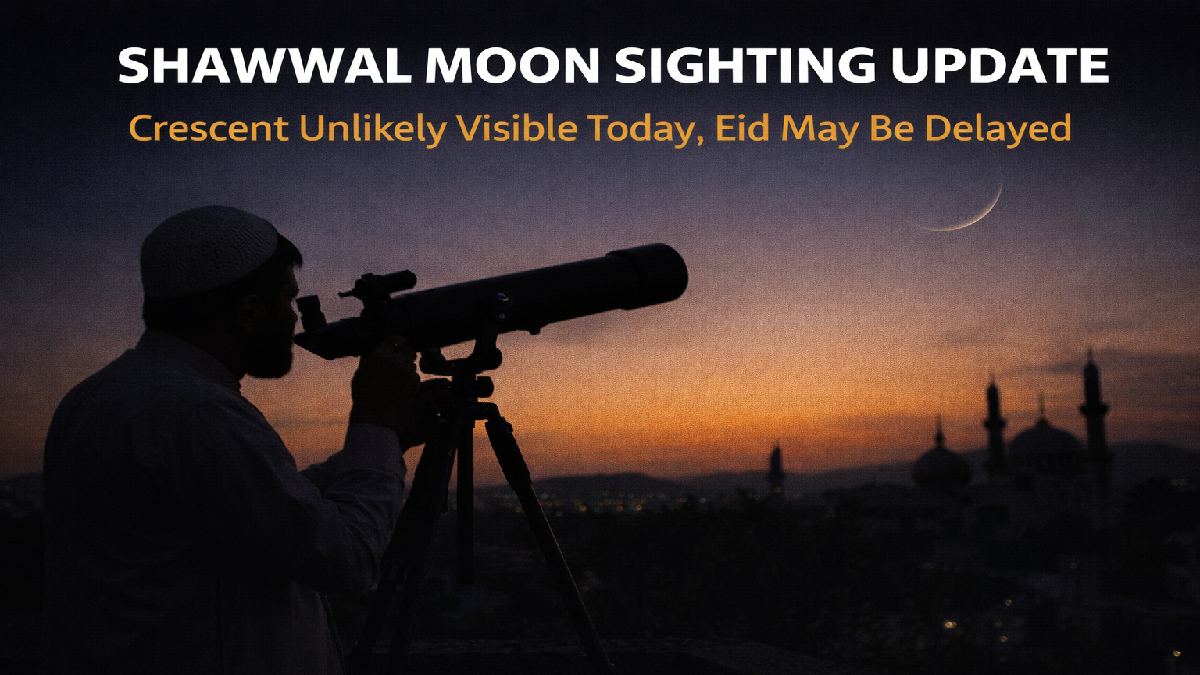
Eid-ul-Fitr 2026 in India has been officially confirmed to fall on Saturday, March 21, after the Shawwal crescent moon was not sighted on the evening of March 19. Religious authorities and moon-sighting committees across the country announced that the absence of the crescent means the holy month of Ramadan will complete 30 days this year.
The sighting of the crescent moon marks the beginning of Shawwal, the tenth month of the Islamic lunar calendar, and signals the end of Ramadan, a period of fasting, prayer, and spiritual reflection observed by Muslims worldwide. Since the moon was not visible on the expected day, Eid will now be celebrated a day later, on March 21.
Traditionally, India follows the practice of physical moon sighting rather than relying solely on astronomical calculations. This often leads to slight variations in Eid dates compared to countries such as Saudi Arabia and the United Arab Emirates, where Eid-ul-Fitr 2026 is being observed on March 20.
With the confirmation now in place, Friday, March 20, will be observed as the final day of fasting (30th Roza), followed by Eid celebrations the next day. The announcement has brought clarity for millions of people preparing for the festival, including arrangements for prayers, feasts, and charitable giving.
Eid-ul-Fitr, also known as the “Festival of Breaking the Fast,” is one of the most significant Islamic celebrations. The day begins with special prayers at mosques and open grounds, followed by gatherings with family and friends, sharing of festive meals, and acts of charity such as Zakat al-Fitr.

The eve of Eid, known as Chand Raat, is marked by vibrant markets, late-night shopping, and festive preparations across cities in India. With the date now confirmed, celebrations are expected to begin in full swing from Friday evening.