
Hallucinations are experiences in which a person perceives sights, sounds, smells, tastes, or physical sensations that are not present in reality. In these cases, they may sound vivid or convincing despite the lack of external causation. They happen when the brain misinterprets or creates sensory signals without real input. Hallucinations are a medical issue as well as one affecting psychology, and this must be approached with sensitivity, accuracy, and empathy. Hallucinations may have more than one type.
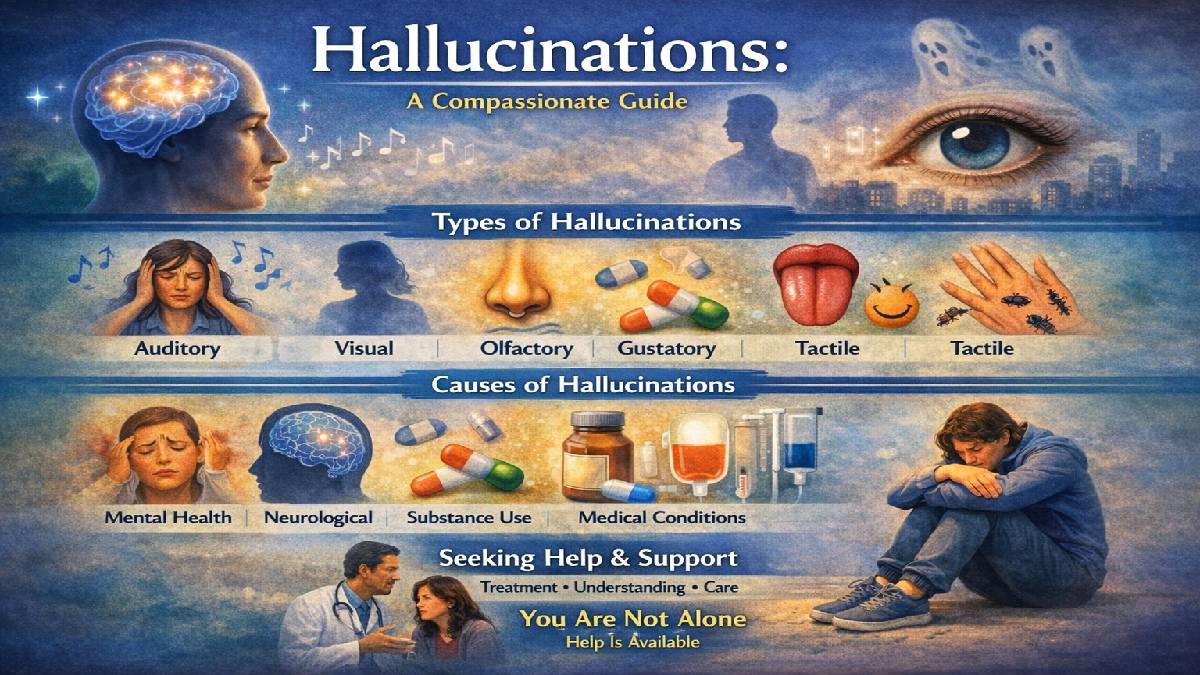
Most people report that they have auditory hallucinations, that is, voices or sounds. Visual hallucinations include visions of people, objects, or lights that are not present in reality. There are also olfactory hallucinations, where someone experiences odors that don't exist; gustatory hallucinations, where someone experiences tastes without a source; and tactile hallucinations, which cause physical sensations like touch, pressure, or movement on the skin. These can lead to various forms of hallucinations.
They are frequently linked to conditions like schizophrenia, bipolar disorder, and severe depression, in addition to psychiatric disorders. Neurological illnesses such as epilepsy, Parkinson’s disease, dementia, brain injury, and stroke may also cause hallucinations. Besides, medical conditions including high fever, infections, dehydration, metabolic imbalances, and low oxygen levels that affect brain function cause hallucinations. Drug use, withdrawal from alcohol and drugs, severe sleep restriction, extreme stress, trauma, and adverse impacts of some drugs can also create hallucinations.

How hallucinations manifest varies from person to person. Some know that what they see is not real and others, however, believe it outright. The nature and frequency of hallucinations can range from occasional or mild, to long term and upsetting events. Professional medical or mental health professional help is important if such hallucinations lead to fear, confusion, dangerous activity, or impact the quality and/or frequency of daily living.
By diagnosis and treatment, many hallucinations can be effectively managed or reduced, and most people can help prevent or combat these problems. Treatment may be medication, therapy, lifestyle modifications, or an adjustment to underlying medical issues.Explaining hallucinations also helps reduce stigma and misinformation. With guidance and timely care on this front, society at large can help maintain mental health and quality of life of individuals living with this issue.








Comments