For decades, the corporate world believed that “real work only happens in the office.” The desk, the cubicle, the manager’s watchful eye—these were seen as the foundations of productivity. But the rise of remote work challenged this long‑held belief and revealed something deeper: work isn’t about where you sit, it’s about how balanced your life feels.
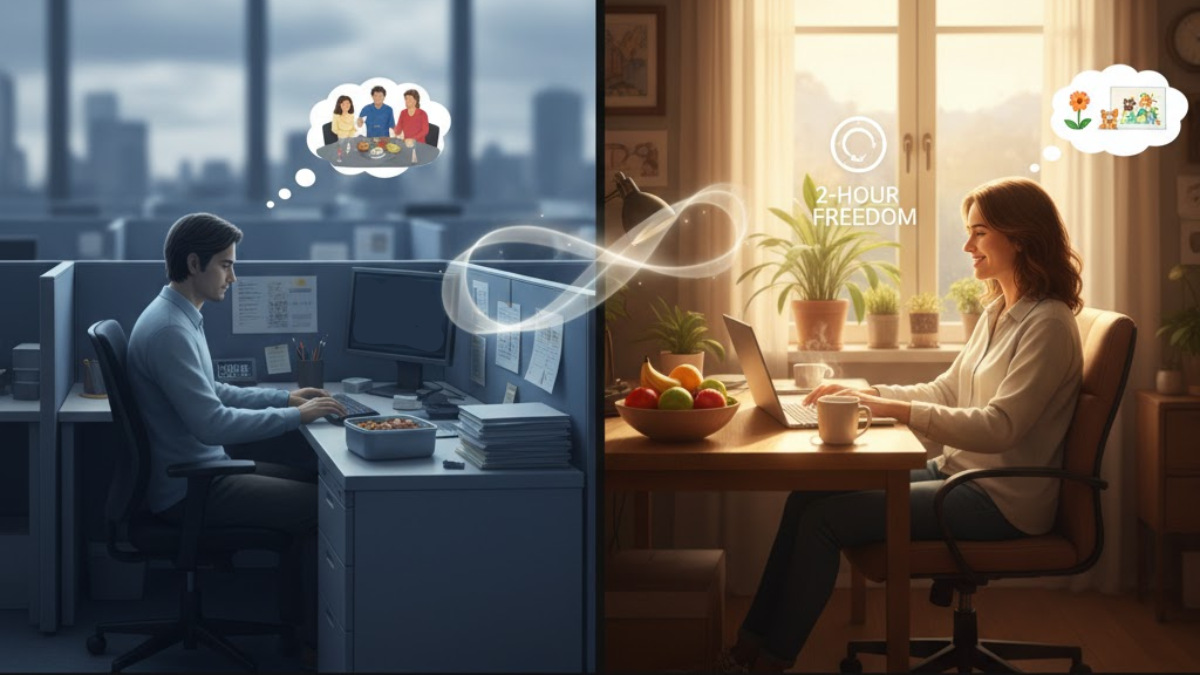
When the world shifted to remote work, something changed quietly yet profoundly. People began to feel more human again. The rigid routines of office life gave way to flexibility, and the boundaries between professional and personal life started to blur in healthier ways. Remote work didn’t just change where we work—it changed how we live.
A Day Compared: Office vs Remote
- 6 AM Alarm → Slow Morning
- Goodbye Hug → Good Morning Hug
- Manager Watching → Self‑Watching
- Two‑Hour Commute → Two‑Hour Freedom
- Cold Lunchbox → Warm Home Meal
- Post‑Work Exhaustion → Evening Freedom
- Missed Dinner → Family Dinner
- Formal Dress → Comfortable Dress
These small shifts add up to something bigger: a life that feels more balanced, peaceful, and free. Remote work gave people back time to breathe, space to think, moments with family, and energy after 6 PM.
Beyond the Challenges
Of course, remote work isn’t perfect. It brings distractions, blurred routines, and fewer face‑to‑face conversations. Yet for many, the trade‑off has been worth it. The freedom to design one’s day, the comfort of home, and the ability to reconnect with family have redefined what it means to be productive.
The Truth
Productivity doesn’t come from a desk or an office badge. It comes from a clear mind and a happy heart. Remote work has shown us that work is not just about output—it’s about living a life where balance and well‑being are part of the equation.
The Cons of Remote Work
While remote work has brought freedom, balance, and flexibility, it also comes with challenges that can’t be ignored:
Blurred Boundaries – The line between work and personal life often disappears, leading to longer hours and difficulty switching off.
Isolation – Without daily office interactions, many employees feel socially disconnected and miss spontaneous conversations with colleagues.
Reduced Collaboration – Brainstorming, team bonding, and creative problem‑solving can be harder without face‑to‑face energy.
Distractions at Home – Household chores, family demands, or even the comfort of home can reduce focus and productivity.
Tech Dependence – Remote work relies heavily on stable internet and digital tools; technical glitches can disrupt workflow.
Limited Visibility – Employees may struggle with career growth or recognition when they’re not physically present in the office.
Routine Challenges – Without structure, some find it difficult to maintain discipline, leading to irregular schedules and burnout.