
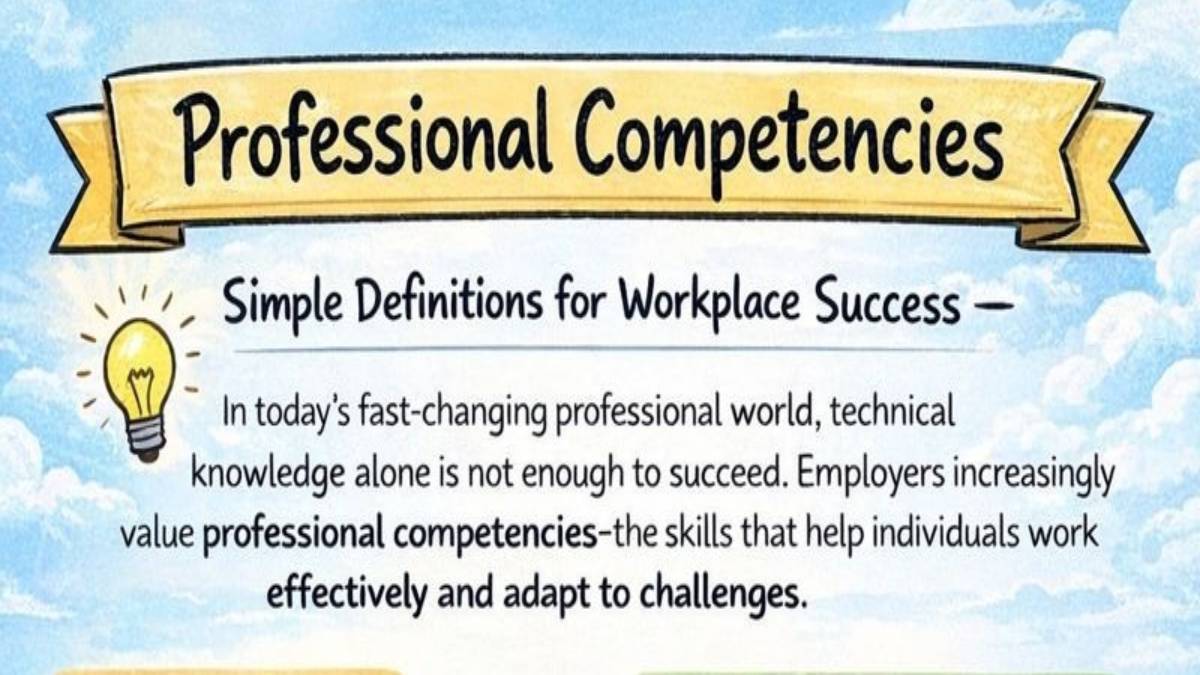
Technical knowledge alone doesn’t equal success in today’s fast-paced world of work. More and more employers expect employees to possess professional competencies — the skills and behaviors able to help them work efficiently, make wise decisions and adapt to unfamiliar circumstances. Here is a brief summary of some key professional competencies expressed simply.
Decision Making
Decision making is the process of analyzing options, evaluating outcomes, and choosing the best course of action. Good decision makers weigh facts, risks and consequences before they act and with good choices have better results for people and organizations.
Teamwork and Collaboration
You can also know the concept of teamwork as performing well with others to accomplish a common task. It is about team working, respect to difference, communication, and helping team members. Effective collaboration boosts productivity and sets a positive workplace.

Problem Solving
Problem solving refers to the skill of identifying issues, understanding their root causes, and finding effective solutions. Professionals who are very good at problem-solving remain composed under pressure and take logical and creative approaches to work through obstacles.
Stakeholder Management
Stakeholder management means, for instance, interacting with people who have an interest in a project, or also an organization: customers, business managers and partners. Stakeholder expectations are well managed by the project team. Trust is developed as well, which in turn results in smoother project execution.
Project Management
Project management is the design, organization, control and delivery of human capital related project tasks according to the work done within the time and budget. This includes establishing targets, monitoring progress, managing resources, and the delivery of quality outcomes.


Change Management
Change management is about helping people and whole teams learn to work with new systems, processes and environments. Change management helps to minimize resistance, generate acceptance, and facilitate the transitions.
Critical Thinking
Critical thinking is the art of clear thinking, questioning, and objectively evaluating information. It enables professionals to make informed decisions, solve complex problems to prevent mistakes brought on by bias or incomplete data.
Career advancement and business success hinge most importantly on professional skills. Professionals are able to respond better to challenges they encounter while working and delivering value in any job by learning how to make decisions, work as part of a team, solve problems, and think critically.










Comments
Leave a Comment