A new experimental therapy called VERVE-102 has been generating great interest among scientists and cardiologists worldwide after early clinical trials showed that it could significantly lower “bad” LDL cholesterol levels with a single treatment. Developed by Verve Therapeutics and recently acquired by Eli Lilly and Company, the gene-editing therapy could dramatically change the way high cholesterol and cardiovascular disease are treated in the future, and it is likely to be a game-changer.
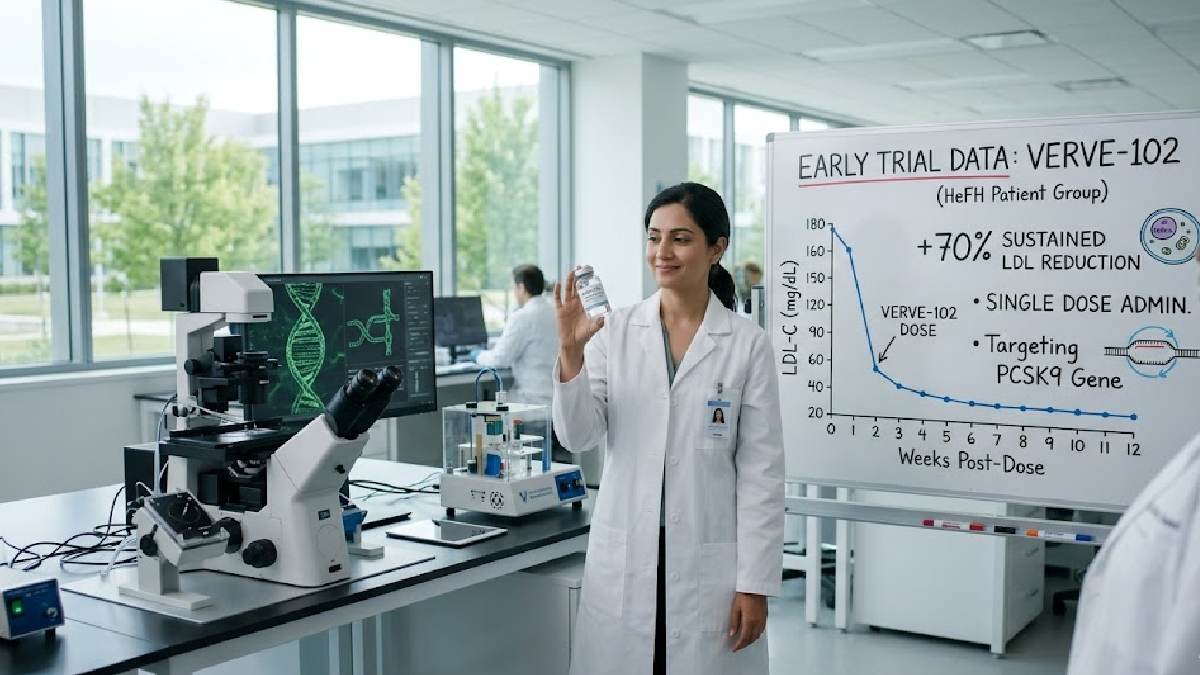
The therapy gained significant attention after promising results from the Phase 1b Heart-2 clinical trial were presented at the European Atherosclerosis Society Congress and published simultaneously in The New England Journal of Medicine. Researchers see the treatment as a key step in gene-editing medicine and a new approach to preventing heart disease.
Unlike standard cholesterol-lowering drugs, which are either pill-based or injectable over the course of a day or two, VERVE-102 is a one-time intravenous infusion. The therapy employs advanced in vivo base-editing technology to target the PCSK9 gene in the liver. It has been known for decades that people who naturally inherit inactive PCSK9 genes tend to have very low LDL cholesterol levels and have a much lower risk of heart attacks and cardiovascular complications.
VERVE-102 seeks to replicate this natural protective effect by permanently switching off the PCSK9 gene after a single treatment. By reducing the production of the PCSK9 protein, the body can remove more LDL cholesterol from the bloodstream, perhaps providing long-lasting cardiovascular benefits.
The Heart-2 Phase 1b trial evaluated the therapy in adults with heterozygous familial hypercholesterolemia (HeFH) or premature coronary artery disease (CAD). Both have dangerously elevated cholesterol levels and a much higher risk of heart attacks and other cardiovascular events.
In the interim analysis of 35 participants, researchers found significant reductions in PCSK9 protein and LDL cholesterol levels at the above-mentioned dose levels. The highest dose of 1.0 mg/kg participants experienced up to an 88 per cent decrease in circulating PCSK9 protein and a 62 per cent decrease in LDL cholesterol.
And perhaps even more remarkable was the long-term effect of VERVE-102. The treatment was effective for as long as 18 months following a single infusion, researchers reported, meaning VERVE-102 may even be used for long-term cholesterol control without frequent therapy.
Statins have been the cornerstone of cholesterol management and cardiovascular disease prevention for decades. And while they are effective, many patients struggle with long-term adherence due to side effects, treatment fatigue, medication costs, or the long-term need to maintain daily therapy. Gene-editing treatments like VERVE-102 could eventually transform cardiovascular care from chronic disease management to a one-time therapeutic intervention.
Safety is a major issue for any experimental gene-editing therapy, and early results have been promising. No treatment-related serious adverse events, no dose-limiting toxicities, and no withdrawal of patients due to treatment complications were reported. The most common side effects reported were mild infusion-related reactions and short-term fatigue that were manageable.
The importance of this development goes beyond cholesterol management. Heart disease is still one of the leading causes of death worldwide, while familial hypercholesterolemia affects about one in every 200 to 250 people worldwide. Despite aggressive treatment with existing medications, many patients with inherited high cholesterol develop premature cardiovascular disease.
At VERVE-102, the Food and Drug Administration (FDA) has granted Fast Track designation based on its ability to address a major unmet medical need.
While more Phase 2 and Phase 3 studies will be required before regulatory approval can be considered, the initial findings have raised strong optimism. If VERVE-102 were to prove its efficacy and safety, there might be a new era in cardiovascular medicine in which one infusion permanently lowers LDL cholesterol and dramatically reduces the risk of heart disease.
As such, for millions of people living with inherited cholesterol disorders or elevated cardiovascular risk, that possibility is a potentially transformative breakthrough in modern health care.