When Victimhood Performs Its Own. Across cultures, languages and belief systems, one universal is apparent: actual suffering demands safety, not applause. But in contemporary hyper-public spaces of visibility, the boundary between real pain and a performance of victimhood is more and more porous.
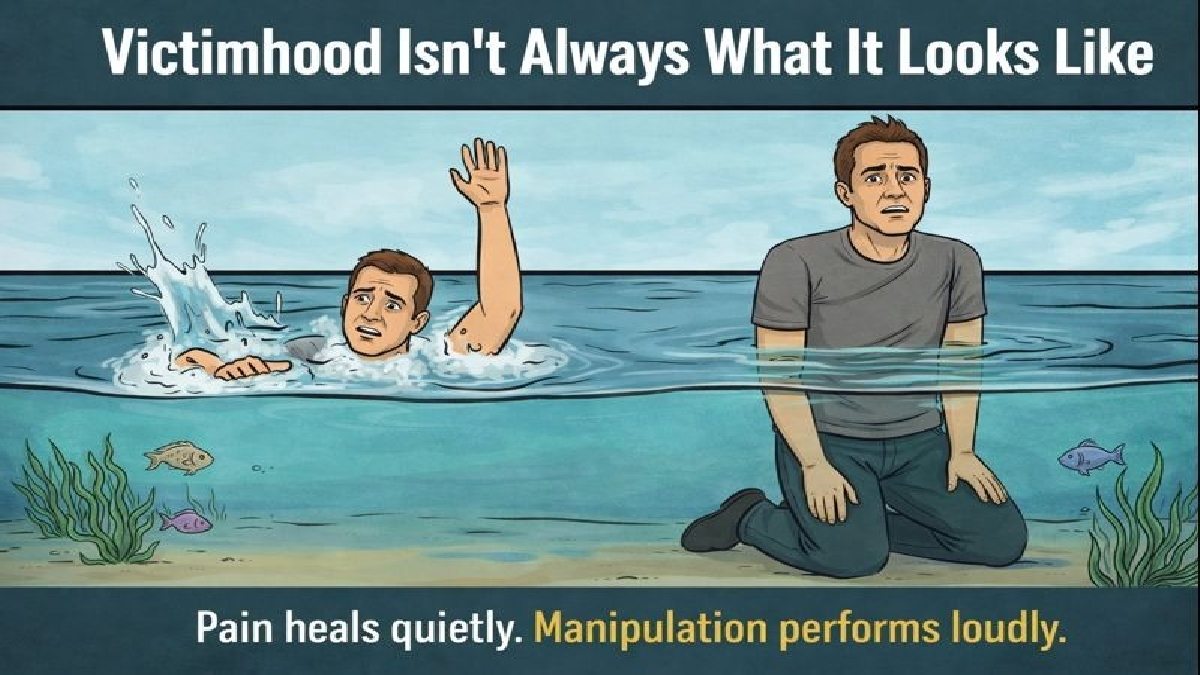
Social platforms and workplaces, and families and even public discourse more broadly have created a terrain in which pretending to be hurt can sometimes lead to more reward than healing. This is the quiet part of the dialogue where narcissistic victimhood comes to the fore.
Real Victims Seek Relief
Authentic victims of harm emotional, physical, or psychological are prone to seeking:
- Safety
- Stability
- Distance from the source of harm
- Privacy while healing.
They minimize their pain, doubt their experience, or have no words at all. Their energy is absorbed into survival and recovery, and not storytelling. Real pain is exhausting. It doesn’t crave an audience. Narcissistic Victimhood Is seeking sympathy. Narcissistic victimhood, by contrast, is not about healing it is about control. It appears as: loud suffering with no real danger involved. Ongoing public disclosure with no progress toward resolution.
Denial of solutions, boundaries, and accountability. Anger when sympathy fades. The goal isn’t safety. The goal is attention and validation and moral superiority. This kind of victimhood most often makes people into villains, rescues obligations, disagreement cruelty. It flourishes in spaces where empathy is unexamined and boundaries are discouraged.
Why This Matters Globally
Empathy is a virtue in all cultures. But unfiltered empathy taken without discernment can become a weapon. When performative victimhood comes to win:
- Genuine victims are drowned out.
- Accountability becomes “oppression”.
- Boundaries are repackaged as betrayal.
- Communities divide over emotional manipulation.
This is not only relevant in personal relationships. It affects leadership, activism, education and parenting around the world. The Visual Metaphor We Miss. Picture flailing in water, screaming for assistance with feet firmly laid on solid ground. Surface: They appear to be drowning. Below the surface, they’re safe. This is the peril of calculating distress by noise alone. Real crisis seeks out exit ways. False crisis seeks spectators. Teaching Discernment Without Losing Compassion. This is not a call to be cold or cynical. It’s a call to be wise. Compassion should ask:
Is this person seeking safety or sympathy?
Do their actions match their words? Are boundaries respected or punished? Is there movement toward healing, or just repetition? Empathy and boundaries go hand in hand. In fact, boundaries protect empathy from exploitation. A Lesson Worth Passing On. This distinction is especially helpful for younger generations, or future generations and for our descendants. Teach them: Kindness does not mean self-sacrifice.
Someone else’s pain does not obligate your silence. Not every cry is an emergency. Real help supports growth, not dependency. Because the world doesn’t need more performances of suffering. It needs honest healing, quiet strength and the courage to tell the difference.
Pain heals quietly. Manipulation performs loudly.