Superstitions are old beliefs that connect daily actions or signs with luck, fate, or unseen powers. They are not based on science but are passed down through culture and tradition. People often follow them to avoid bad luck or to bring good fortune.
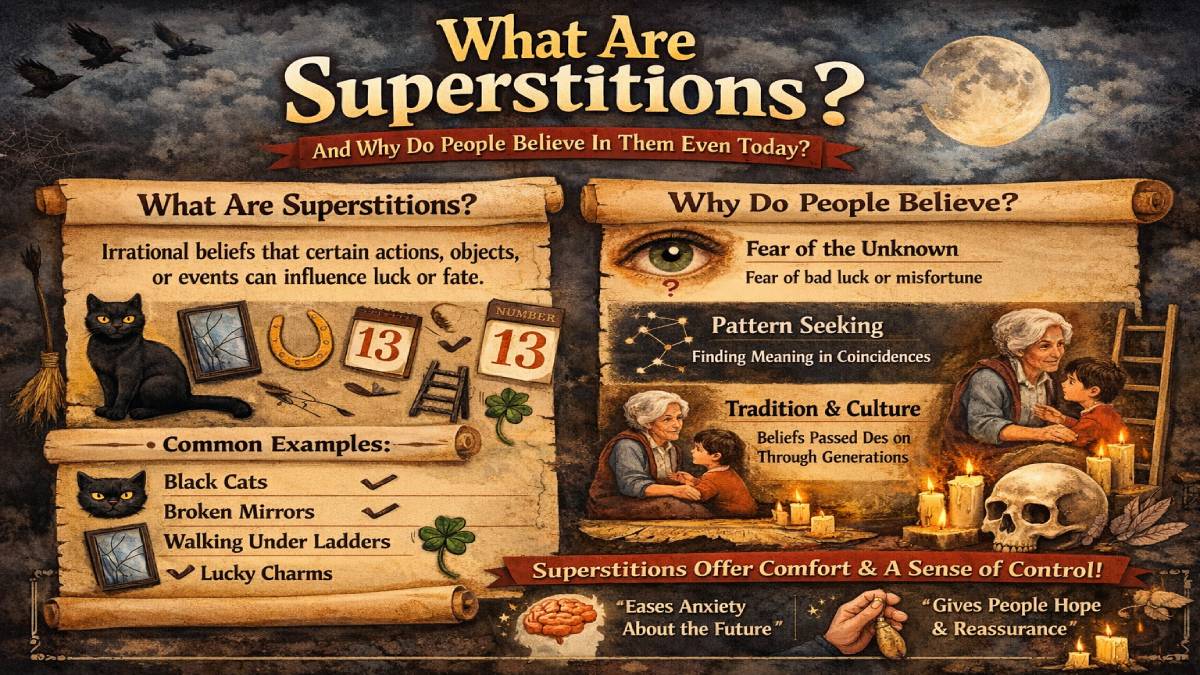
Superstitions are different in every country. In India, many believe a black cat crossing your path brings bad luck. In Western countries, breaking a mirror is said to cause seven years of misfortune. In China, the number 4 is avoided because it sounds like the word for “death,” while red is seen as lucky. In Japan, whistling at night is thought to attract spirits.
People believe in superstitions because they give comfort, hope, and a sense of control. While some are harmless, others can cause fear or poor decisions. Even today, superstitions remain strong and continue to shape human behavior worldwide.
What Are Superstitions?
Superstitions are old beliefs that link daily actions or signs with luck, fate, or hidden powers. They are not based on science but are passed down through culture, tradition, and family stories. People follow them to avoid bad luck or to bring good luck, even if there is no clear proof.
Superstitions are different in every part of the world. In India, many people think a black cat crossing your path means bad luck. In Western countries, breaking a mirror is believed to bring seven years of misfortune. In China, the number 4 is avoided because it sounds like the word for “death,” while the color red is seen as lucky.

People believe in superstitions because they give comfort, hope, and a feeling of control when life is uncertain. Some superstitions are harmless, but others can cause fear or lead to poor choices.
Common Superstitions Around the World
India
- A black cat crossing your path means bad luck.
- Crow cawing outside the house signals guests are coming.
- Itchy palms are believed to bring money.
- Cutting nails at night is considered unlucky.
Western Countries
- Breaking a mirror brings seven years of bad luck.
- Friday the 13th is seen as unlucky.
- Knocking on wood prevents bad fortune.
- Throwing salt over your shoulder keeps away evil.
China
- The number 4 is avoided because it sounds like “death.”
- Red is considered a lucky color, especially during festivals.
- Giving clocks as gifts is avoided, as it symbolizes death.
Japan
- Whistling at night is thought to attract spirits or snakes.
- Sticking chopsticks upright in rice is linked to funeral rituals.
Middle East / Turkey
- The “evil eye” charm is used to protect against jealousy and harm.
Why Do People Believe in Superstitions?
People believe in superstitions because they give comfort and make life feel more under control. Life is full of surprises, and superstitions are a way to explain or handle those unknowns. For example, carrying a lucky charm or doing a small ritual before an exam can make someone feel more confident, even if there is no real proof behind it.
Superstitions are often passed down through culture, tradition, and family. Children see parents or elders follow them, and they learn to do the same. Over time, these habits become part of everyday life.
From a psychological view, superstitions help reduce stress and worry. They make people feel safe and ready, especially in difficult times. On the good side, they can bring hope and connect communities. On the bad side, they may create fear or lead to wrong choices. Even with modern science, superstitions stay strong because they touch human emotions deeply.
Positive & Negative Impacts of Superstitions
Superstitions can have both good and bad effects on people and society. On the good side, they give comfort and hope when life feels uncertain. For example, carrying a lucky charm or doing a small ritual before an exam can reduce stress and make someone feel more confident. Superstitions also help keep cultural traditions alive, since they are passed down through families and communities. They can even bring people together through shared beliefs and practices.
On the bad side, superstitions can create fear, worry, or unnecessary limits in daily life. Some people avoid certain actions or numbers, which may stop them from taking good opportunities. In serious cases, superstitions can lead to poor decisions, money loss, or being tricked by people who misuse these beliefs. They can also block logical thinking and delay real solutions, like medical help.
Final Thoughts
Superstitions are old beliefs that link daily actions or signs with luck, fate, or hidden powers. They are not based on science, but they still influence people in many cultures. From black cats in India to breaking mirrors in the West, or avoiding the number 4 in China, these examples show how strongly human emotions and traditions affect behavior.
People follow superstitions because they bring comfort, hope, and a feeling of control when life is uncertain. They can help keep cultural identity alive and bring communities together. At the same time, they may also cause fear, stop people from taking chances, or lead to poor decisions. Even though modern education and science question these beliefs, superstitions remain powerful because they connect deeply with human feelings.
In the end, superstitions remind us to balance tradition with reason. Understanding them helps us respect culture while making wiser choices in life.