In the short Russian novel White Nights, at least two centuries after Fyodor Dostoevsky wrote it, young readers who want to read it are seeing something familiar in the lonely protagonist.
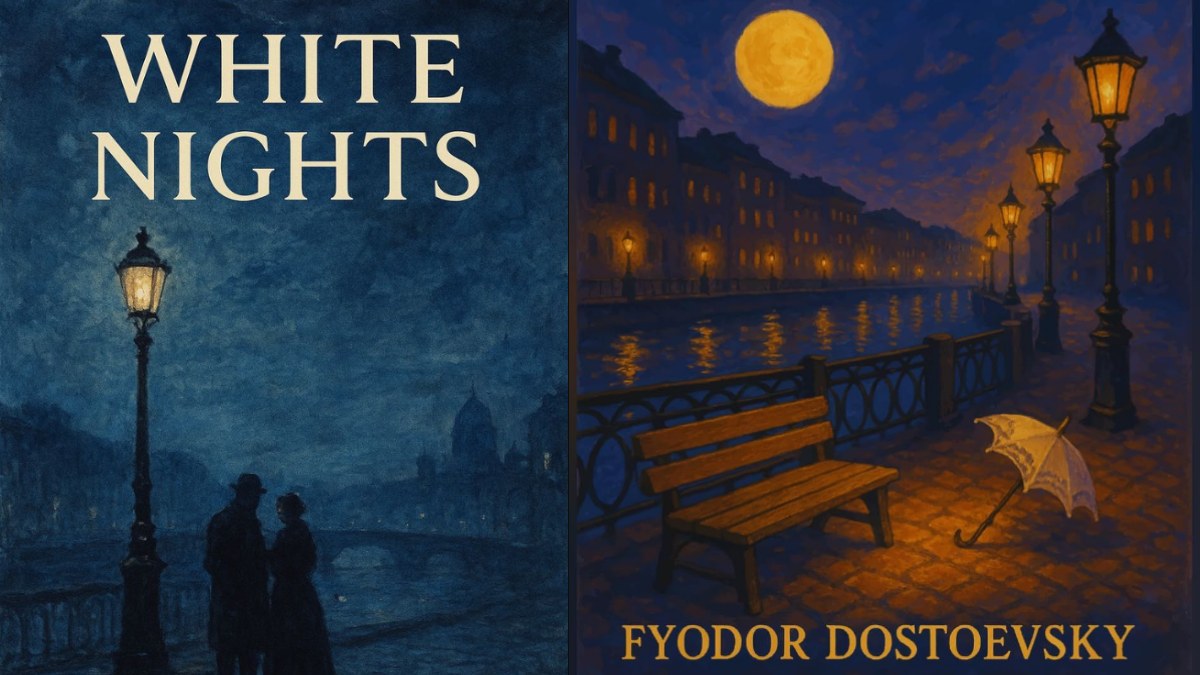
The 1848 story has recently been back in the news on BookTok and other social media sites to get emotional reactions, quotes, and recommendations. Young people in Brazil and Spain have just begun to see it becoming popular.
White Nights’ character is a young man who describes himself as a dreamer. He lives a lonely life in Saint Petersburg and wanders the city, taking in people’s faces and thinking about relationships instead of participating in them.
That emotional isolation is one of the reasons the story remains relevant to people who may live in the world differently but are still surrounded by people and feel they are alone.
Loneliness, love, and being seen.
White Nights follows the narrator’s chance meeting with Nastenka, a young woman he meets during one of his night walks.
The two talk about their lives, hopes, and disappointments over many nights. The narrator is instantly emotionally attached to her, while Nastenka is in contact with another man she is waiting to hear from.
The story goes beyond a typical romance. It is about loneliness, emotional dependence, imagination, and the desire to be understood.
The narrator has lived largely in his own imagination for years. His encounter with Nastenka changes that: for the first time, he has someone with whom he can openly share his thoughts.
That temporary connection is one of the novella’s most important themes. The narrator doesn’t just want romance. He wants companionship and recognition.
Human connection, fleeting happiness, and the tension between dreams and reality have also been central themes in literary analyses of the novella.
This makes it quite easy to put the book in the context of loneliness.
Why Gen Z is Connecting with the Dreamer
Young people can still have hundreds of digital connections while experiencing emotional isolation. Social media provides constant communication, but it doesn’t always provide meaningful companionship.
That contrast has made Dostoevsky’s narrator feel very human in a very different way, and so Dostoevsky’s narrator seems immediately relatable.
White Nights: The young man is physically present in a busy city; he’s emotionally detached from the people he’s around. He watches strangers, imagines conversations, and gets emotional links in his head.
Today’s readers might also have a version of that experience in their own lives, especially if online interaction sometimes replaced face-to-face contact.
As a result, recent coverage of the trend has described the narrator as a “solitary dreamer” whose emotional isolation feels unexpectedly familiar to young readers. Marcelo Nogueira, a Brazilian book influencer, said young readers were responding to this aspect of the character.
The story is also short enough.
White Nights, unlike Dostoevsky’s much longer novels like Crime and Punishment or The Brothers Karamazov, can be read relatively quickly. That makes it an accessible introduction to an author whose reputation can otherwise make new readers hesitate.
BookTok Made a 19th-Century Classic Into A Modern Conversation
Social media has brought the novella back into the spotlight.
BookTok, the book-centered community on TikTok, has become a gateway to older literature alongside contemporary fiction. Short videos can turn a particular character, quotation, or emotional reaction into a recommendation for millions of viewers.
White Nights fits well into this format because it’s short, emotional, and based on themes that can be described in a few seconds: loneliness, longing, unrequited love, heartbreak.
The novella became a bestseller in Brazil after getting the attention of TikTok (AFP). Marcelo Nogueira, one of the book influencers, helped market it to a new audience.
The trend is not entirely new. The book had already become a huge BookTok phenomenon in previous years, and literary commentary attributed its popularity to emotional videos and visually appealing editions of the classic.
This also demonstrates how social media has changed the way that people find literature. A reader is not necessarily the first one to see a recommendation from a teacher, critic, or bookseller. They might read a quotation or emotional response on their phone and only then consider reading the original work.
The Comfort May Come From Recognition, Not Solutions
White Nights’ appeal might be that it does not offer an easy solution to loneliness.
The narrator experiences a brief, intense connection, but that happiness does not turn into the relationship he wishes it would. It’s painful, but he still values the time he spent with Nastenka.
That idea may feel comforting precisely because it does not assume that every emotional experience needs to end happily.
The novella suggests that even a short-term connection can carry meaning. Even if it isn’t lifelong, a conversation, a friendship, a moment of feeling understood can be meaningful.
It is why, for young readers who are in isolation, the story is not a tale of a love once in a while but one that they know.
The popularity of White Nights does not necessarily mean that every generation has the same emotion. BookTok trends are driven by algorithms, influencers, publishing strategies, and aesthetics as much as they are based on genuine literary identification.
But the renewed interest highlights the power of older literature to acquire new meanings.
Dostoevsky wrote White Nights in 1848, but its questions about loneliness, imagined relationships, emotional vulnerability, and fleeting happiness have not yet disappeared. And nearly 180 years later, young readers are finding that a lonely dreamer walking through the streets of nineteenth-century Saint Petersburg can still sound remarkably familiar.