
The incident took place on a busy road in Jhansi, Uttar Pradesh, on Oct 24, when a group of transgender people placed police barricades from the Police Lines area onto the main road and began protesting, removing their clothes. They allegedly assaulted commuters, climbed onto vehicles and hurled insults at police officers. The incident continued for around an hour, with commuters recording the scenes and videos subsequently going viral on social media. Five people were arrested in connection with the incident.
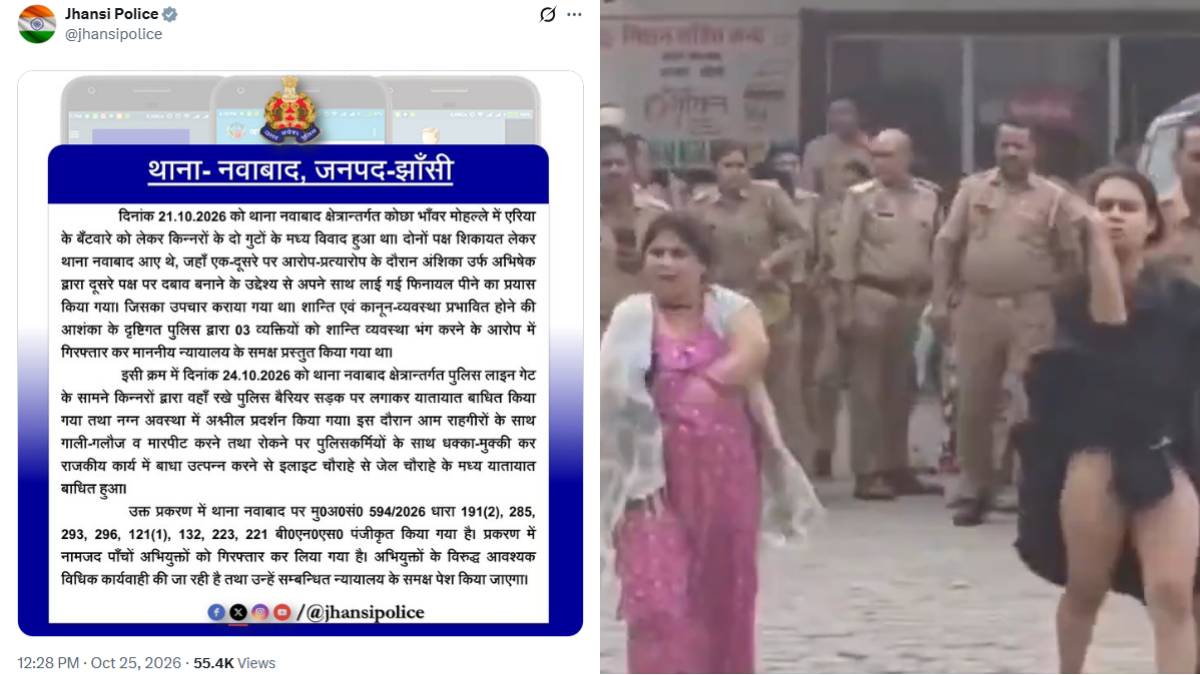
The reason for the protest was reportedly a dispute between two groups over the division of areas in the Kocha Bhanwar and surrounding localities for collecting "badhai", the customary gifts given to transgender people during occasions such as childbirth and weddings.
The two groups had previously approached the police to file complaints. During an earlier confrontation, a transgender woman named Anshika allegedly attempted to consume phenyl and required medical treatment. Police subsequently arrested three people in connection with an earlier incident, with the dispute continuing between the groups.
Is it acceptable to strip and protest?
Nudity in public is not automatically treated as a separate offence in every circumstance in India. However, public acts considered obscene can attract legal action under Section 296 of the Bharatiya Nyaya Sanhita (BNS), depending on the circumstances. In this case, the reported road blockade, alleged assaults and disruption of public order also formed part of the police action.
Protest, at times, pushes the boundaries of what society considers acceptable. Nude or partially nude demonstrations have been used by activists around the world to challenge social norms and draw attention to particular causes. FEMEN, an international feminist protest movement, is known for topless demonstrations intended to highlight issues involving women's rights, objectification, and political power.
Historically, India has also witnessed dramatic protests involving nudity. In July 2004, 12 women from Manipur, associated with the Meira Paibis movement, staged a naked protest outside the Assam Rifles headquarters in Imphal following the death of Thangjam Manorama, who had been arrested by security personnel. The women carried a banner reading, "Indian Army Rape Us", drawing national and international attention to allegations of sexual violence and abuse. This, however, was not the same
So, are nude protests acceptable? Yes and no.
On one hand, there is the question of protesting for a cause and using unconventional methods to draw attention to grievances. On the other, the Jhansi incident reportedly involved blocking roads, disrupting commuters, and allegedly assaulting members of the public and police personnel. These actions raise concerns beyond the question of nudity itself.
It is also important to remember that a National Human Rights Commission study found that around 96% of transgender respondents reported being denied employment opportunities, while roughly a quarter depended on traditional "badhai" collections as a source of livelihood. These figures highlight the discrimination and economic challenges faced by many transgender people in India.
However, these broader challenges do not mean that every action taken in the name of protest is justified. The alleged assault of individuals, intimidation of commuters and disruption of public movement are separate issues that must be examined on their own merits.
The protesters could have raised their grievances, demanded police action and even organised a disruptive demonstration without allegedly targeting ordinary people.
Public indecency and alleged violence can also reinforce negative stereotypes about an already marginalised community, rather than help address the discrimination its members face.
I don't think we can qualify this as a protest either; it was more of a public scene with no clear demands.


Comments