
The Supreme Court on Today did not stay the interim bail granted to senior Samajwadi Party leader Azam Khan in a money laundering case being probed by ED. The central agency had moved the apex court challenging Allahabad High Court’s order of November 17 granting interim bail to Khan.
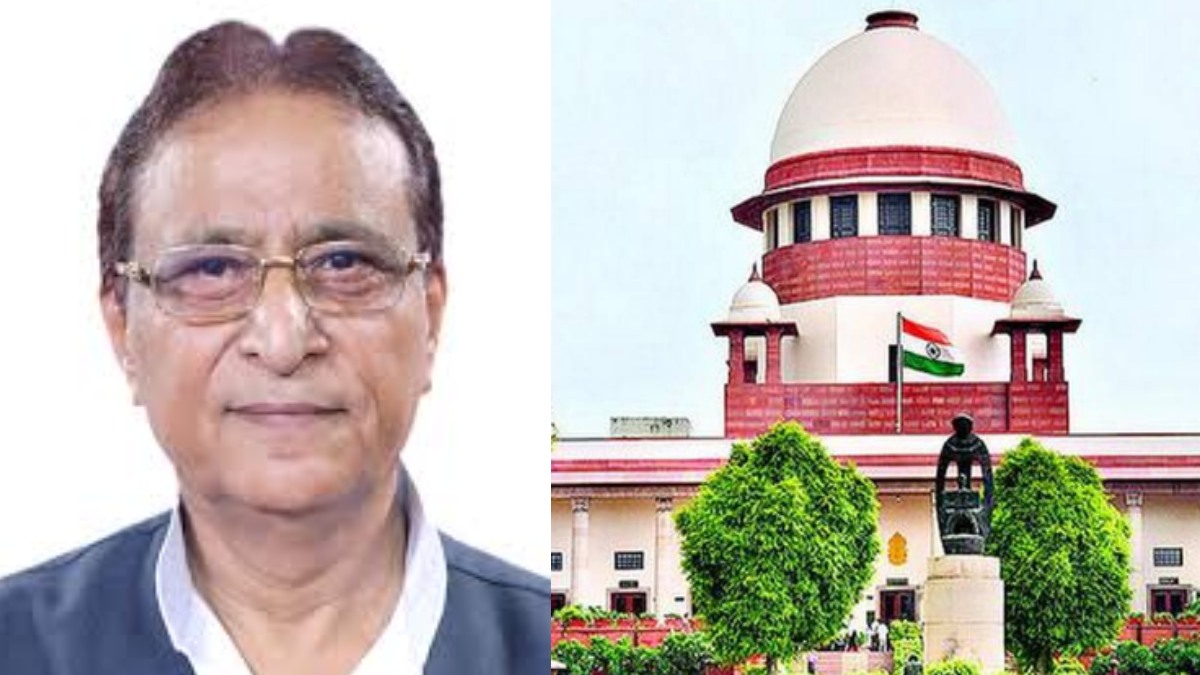
Although the SC agreed to hear the ED’s challenge on Thursday (November 19), it refused to pass any order preventing his release immediately. During the hearing the bench said “Heavens will not fall. Let him be on interim bail” meaning that it was not willing to interfere with relief given by High Court before hearing arguments of agency. It has become an issue in UP political circles since Khan is senior Samajwadi Party leader and former state minister who has been facing several cases.
The matter came up before a bench comprising Chief Justice of India Surya Kant and Justices Joymalya Bagchi and V Mohana. Additional Solicitor General S V Raju appearing for the Enforcement Directorate sought urgent hearing of the agency’s petition.
The law officer questioned whether Allahabad High Court had granted interim bail as it was “effectively granting relief without giving investigating agency an opportunity to put in its complete response”. ED also opposed High Court observations on circumstances under which Khan was arrested and investigation by agency.
Raju requested the Supreme Court not to interfere until challenge could be heard as Khan might be released from custody before matter comes up for hearing. However, bench did not grant immediate relief sought by agency and posted the matter for Thursday.
The dispute relates to the Enforcement Directorate’s money laundering investigation into Maulana Mohammad Ali Jauhar Trust and Mohammad Ali Jauhar University in Rampur, Uttar Pradesh. Khan founded and controls the trust and is honorary chancellor of the university.
The ED has been investigating financial irregularities relating to the trust diversion of government funds; irregularities in land acquisition; questions relating to construction of university etc.; agency has also alleged that funds and materials meant for public works were diverted to activities related to university. These allegations are part of a larger investigation and have not become proven offences just because they have been raised by the investigating agency.
Khan was arrested by the Enforcement Directorate on October 31 just after he walked out of Rampur district jail after getting bail in another forgery case. He was arrested within minutes of his release raising questions about circumstances and procedure followed by agency. Allahabad High Court looked into legality of arrest while hearing Khan’s plea.
On November 17, High Court granted interim bail to him but made some important observations about how ED had handled arrest procedure court felt that written grounds of arrest and documents were not given to Khan before he was produced for remand; questioned agency’s claim that Khan refused to accept documents and said video footage or photographs supporting same had not been produced; etc.
The High Court order referred to safeguards under Article 22(1) of the Constitution and Section 19 of the Prevention of Money Laundering Act (law requirements for arrest and communication of grounds of arrest to an accused person). These provisions deal with law relating to arrest and communication of grounds of arrest to an accused person.
The High Court’s observations were central to its decision to grant interim bail. It also questioned how Khan was taken into custody immediately after he got bail in another case. But the ED has challenged the High Court’s order before Supreme Court saying that its findings and conclusions should be reconsidered. Now the apex court will decide on agency’s challenge.
The Supreme Court’s refusal to stay the interim bail order does not mean that ED’s challenge has been dismissed or that money laundering allegations underlying it have been decided. The court has agreed to hear the matter on November 19 and the agency will get an opportunity to present its objections.
So these proceedings are therefore an important stage in the legal dispute immediately before us is whether Allahabad High Court’s interim bail order should be stayed.
The Allahabad High Court has also listed Khan’s matter for further hearing on December 10 and directed the ED to file a detailed response. The Supreme Court hearing on November 19 may throw more light on the agency’s challenge and status of interim relief as well. Till then, High Court’s interim bail order will remain in force since the SC did not suspend it yet.
The latest development comes against a backdrop of several legal cases against Khan and his family members. On Tuesday November 17, the Supreme Court also dismissed a petition filed by UP government challenging Allahabad High Court’s order staying Khan’s conviction in a fake birth certificate case (that is a different case from ED’s money laundering probe).
But the two developments have still brought Khan’s legal battles back into the limelight. For now it is all about Thursday’s hearing before the Supreme Court where Enforcement Directorate will challenge interim bail granted to senior Samajwadi Party leader Khan.




Comments