
Mumbai’s local train network often called the lifeline of the city is another casualty as automatic doors struggle to keep up with the daily rush of passengers.
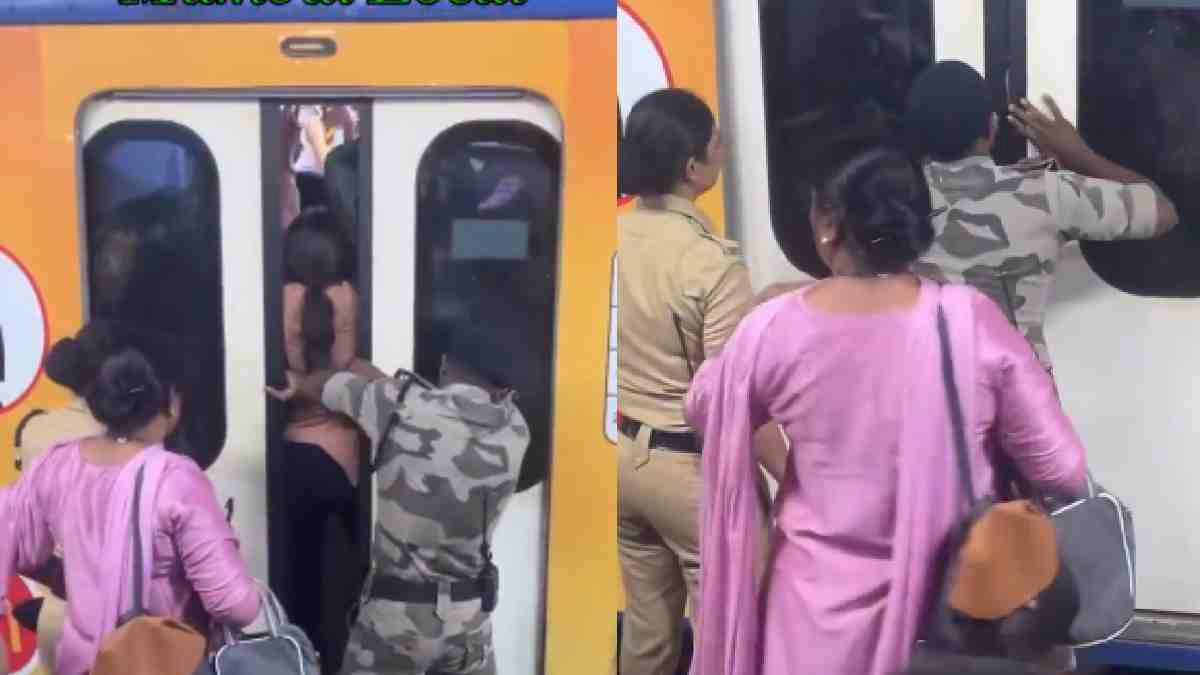
While the technology is supposed to increase passenger safety overcrowding, delayed boarding and technical problems are already raising questions about how well these doors will work in one of India’s busiest suburban railway systems.
Automatic doors are already part of Mumbai’s air conditioned local trains. Whereas on conventional local trains passengers can travel with open doorways AC locals keep their doors closed when moving and only open them at stations so as to reduce risk of falling from moving train or dangerous footboard travel.

But operating these doors at peak times has been difficult. Thousands of commuters try to get on and off within a very short station halt. When passengers crowd around entrances or block door sensors the doors may not close immediately trains spend longer at platforms and punctuality on closely scheduled routes is affected.
In May 2026 The Indian Express reported that AC local train entrances were overcrowded and causing delays in departures as passengers were standing near the doorways when they closed them. Trains were running with doors open during some incidents too.
The problem is not just passenger behaviour. Automatic doors rely on functioning sensors, motors and electronics too. Technical failures, door jamming and maintenance have been cited as problems for AC local trains before.
Western Railway has taken steps to improve operations and plans to have marshals at some busy stations in peak hours. They will help manage movement of passengers, speed up boarding and ensure doors close without undue delay.
🚨 Automatic doors on Mumbai local trains are struggling to cope with daily operations. https://t.co/ojF9OryLKt
— Indian Tech & Infra (@IndianTechGuide) November 20, 2026
Meanwhile Indian Railways is also working towards automatic doors on non-AC local trains. This is important because millions of ordinary commuters depend on affordable non AC services. The first non AC closed door rake arrived in Mumbai in April 2026 for testing and certification before passenger rollout.
But automatic doors in conventional local trains are not easy either. These trains rely on open doorways for natural ventilation in Mumbai the weather is hot and humid so the new design has ventilation arrangements so that airflow can happen while passengers remain inside the coaches.
But it also has to be tested under real commuting conditions. Doors have to open and close reliably at every station when large crowds are entering and leaving simultaneously; any delay could affect several trains because Mumbai’s suburban railway operates on a tightly packed timetable.
Automatic doors could make Mumbai’s local trains a lot safer but technology by itself won’t solve the overcrowding problem in the city: better crowd management, maintenance reliability, train capacity and discipline will all be required.
The bigger question is whether Mumbai’s railway infrastructure can evolve to accommodate modern safety technology without slowing down the daily commute of millions. How well automatic doors work in the city’s busiest travel hours will determine their success.





Comments