
The powerful message against sexual violence and in support of women's safety was on display at the Gonikoppa Dasara procession in Kodagu district, Karnataka.
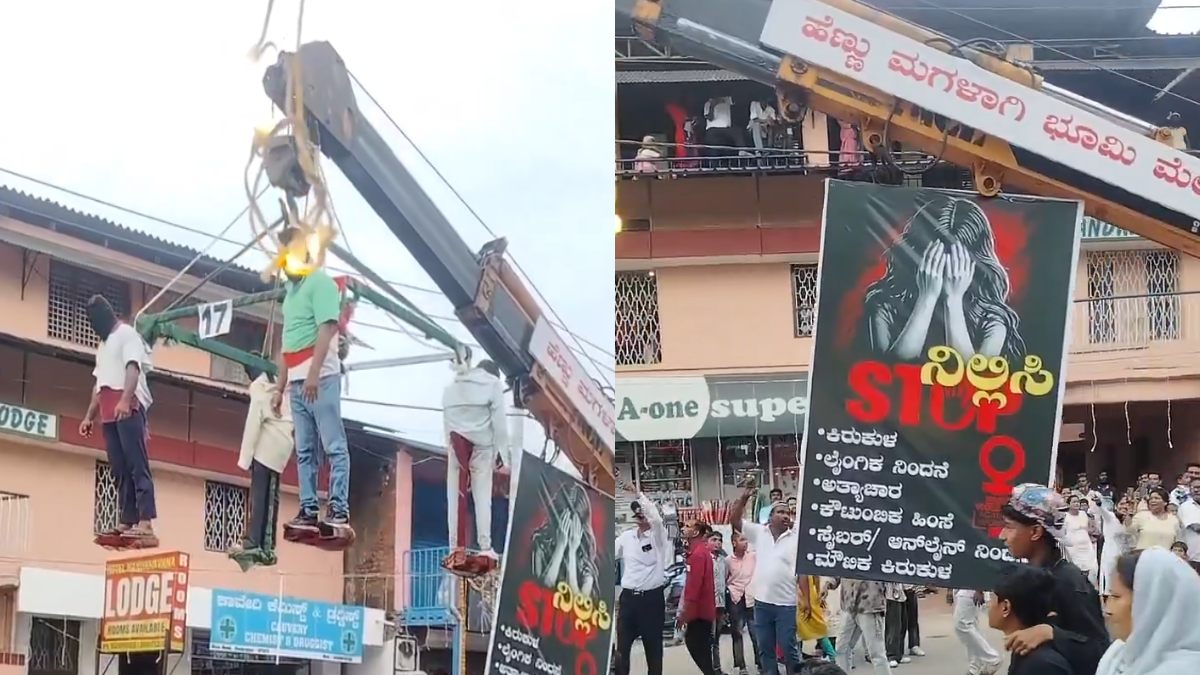
The demonstration stressed the urgent need to protect women and girls, ensure quick justice for survivors of sexual violence, and take strict action against those convicted of serious crimes.
Promoted with slogans “Stop Rape, Respect Women” and “Death Penalty for Rapists,” the campaign called for stronger action to stop sexual violence and to build a society where women can live without fear.
The most striking aspect of the demonstration was a mock hanging with a crane, where effigies representing four rapists were employed. This was one of the main aspects of the procession and drew the attention of the audience, and the protesters were calling for accountability and more severe punishment for sexual crimes.
The demonstration at Gonikoppa was part of a broader dialogue around women's safety and how to respond more aggressively to sexual violence. Public campaigns of this kind are designed to bring attention to crimes that can have devastating consequences for survivors, their families and communities.
The participants used visual symbolism and simple slogans to communicate that sexual violence must not be tolerated and that offenders should face serious legal consequences.
The mock hanging was a symbolic expression of public anger and a demand for justice. But the message had much more to do with punishment and the need for society to come together to prevent abuse, to challenge disrespectful attitudes and to make life safer for women and girls.
The slogans during the procession were about respect for women from the very beginning of the campaign. “Stop Rape, Respect Women” was the principal message that women should be treated with respect in the home, workplace, education system, public places and online.
A strong message against sexual violence and in support of women’s safety was conveyed during the Gonikoppa Dasara procession in Kodagu district. Under the slogan “Stop Rape, Respect Women,” a demand was raised for the death penalty for rapists and murderers. The highlight of the demonstration was a mock hanging of effigies representing four rapists, staged using a crane. The display attracted public attention and conveyed the message that protecting women and girls is a collective social responsibility. The demonstration emphasised the need to ensure women’s safety, deliver speedy justice to victims of sexual violence, and impose strict punishment on offenders. Through the slogans “Stop Rape, Respect Women” and “Death Penalty for Rapists,” the campaign called for stronger action against sexual violence and greater respect for women in society. The demonstration at the Gonikoppa Dasara procession served as a reminder that women’s safety must go beyond slogans and become a shared responsibility.
— Hate Detector 🔍 (@HateDetectors) October 24, 2026
The demands for the death penalty to be imposed on rapists were a very real part of the demonstrators’ demand to see the most severe punishment for perpetrators of sexual violence. But discussions about criminal punishment must also focus on due process, fair trials, credible investigations and evidence-based judicial decisions. Accountability is only possible when an investigation is conducted quickly and thoroughly, victims will be supported, and the courts can deliver justice without delay.
At this point the show highlighted the need for rapid justice. Survivors of sexual violence are faced with strong emotional, social and practical barriers to finding support and justice in the criminal justice system.
Such delays in investigations and court proceedings can only compound their distress and erode public trust in the system. Better handling of complaints, good communication and care for the system of justice and police, prosecutors and courts is needed to improve the response.
Public awareness campaigns can help keep these issues in focus but effective policy can only be sustained if laws are implemented consistently and institutions are held accountable.
The Gonikoppa Dasara demonstration also showed that women’s safety can’t be achieved through slogans alone.
Family members, employers, community organizations, law enforcement agencies and local authorities are all in the business of tackling sexual violence, but so are schools and educational institutions and employers, law enforcement agencies and others.
Respect and consent, not victim-blaming, responding to sexual harassment and bystanders making a call for help can make communities safer. Public places should be safe and secure and victims should be able to report crimes without fear of stigma and retaliation.
Prevention also requires changing attitudes that normalize harassment, discrimination or the abuse of power.
The crane hanging the four effigies made the campaign more visible during the procession. The visual display of anger and the demand for swift action against sexual violence spoke volumes.
At the same time the main message was one of collective responsibility: protecting women and girls is not the task of survivors alone, and not only law enforcement. But it requires sustained engagement from society as a whole.
The Gonikoppa Dasara procession in Kodagu is a reminder that the fight against sexual violence needs to go beyond rallies and slogans. While the campaign demanded the punishment of offenders, we are talking about is more important on the whole: prevention, dignity, accountability and timely justice.
A safe society can only exist when girls are treated fairly, complaints are taken seriously, survivors are supported and the system of justice is efficient. The message from Gonikoppa was this: women’s safety is a shared social responsibility and if we want change we must take action every day.







Comments