
A dead pregnant wild elephant was found in Bandipur Tiger Reserve of Karnataka’s Chamarajanagar district’s Gopalaswamy Betta forest range in Gundlupet taluk. The elephant (approx. 35 years old) was found dead on private land near the boundary of the forest.
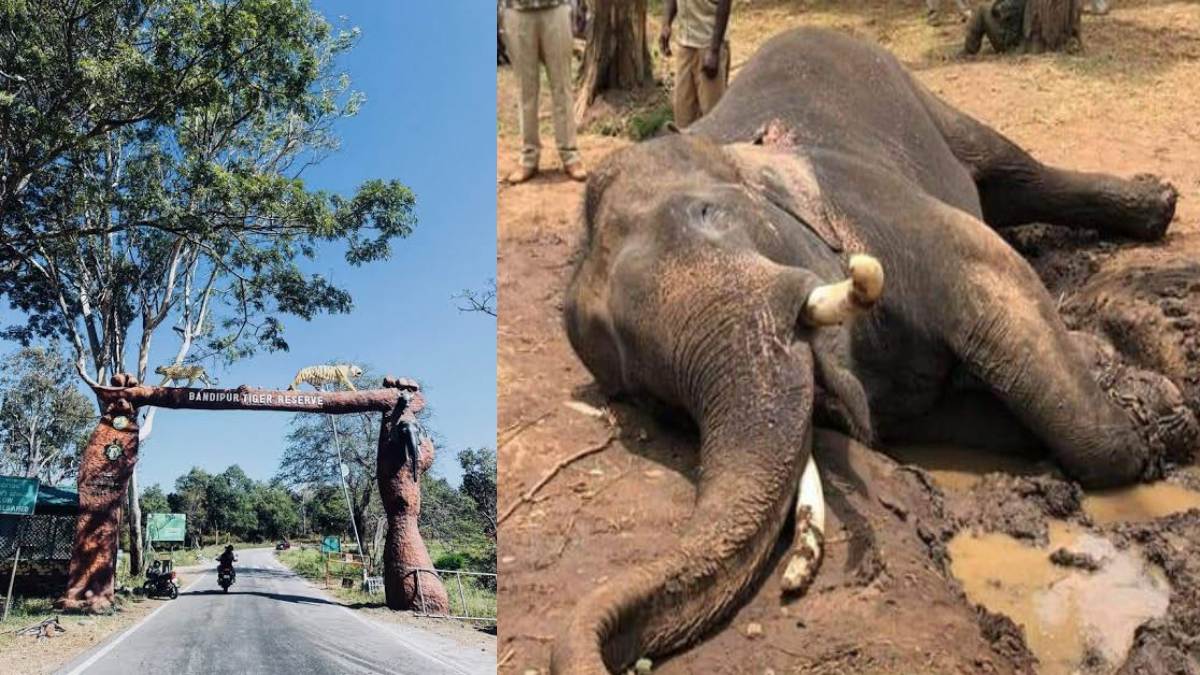
Forest officials suspect that the animal died after a violent encounter with a male elephant in musth. Wildlife officials and conservationists are worried as the elephant was carrying a one-year-old foetus when it died. Immediately after getting information, forest department personnel went to the spot, and a post-mortem examination was done according to norms.
The elephant’s carcass was found in Survey No. 155, which is about 150 metres from the boundary of Gopalaswamy Betta forest range (Bandipur is the largest tiger reserve in South India and has a large population of Asian elephants). As soon as information about dead elephant reached forest officials rushed to spot to examine the carcass and find out cause of death.
Forest officials reportedly found that the elephant was pregnant and had a foetus (estimated to be one year old). This made the incident very tragic, as an adult elephant along with her unborn calf died.
The elephant might have died after coming into contact with a male wild elephant in musth. Musth is a natural biological condition in male elephants when testosterone levels rise, and aggressive behaviour increases. During this period, male elephants become very territorial and aggressive (sometimes even with other elephants).
Forest officials say that the female elephant may have refused to mate with the male elephant, and then the male elephant hit her on the back forcefully with its trunk. The impact fractured her bone, and she died. But the sequence of events and medical cause of death will depend on the postmortem report.
Gopalaswamy Betta Range Forest Officer (RFO) Satish Kumar, ACF Shubham Singh Tanwar, and forest department veterinarian Dr Mirza Wasim went to the spot after it was discovered. They examined the carcass and performed post-mortem procedures to find out the cause of death (post-mortem is done in wildlife mortality cases because injuries, internal damage, etc. are clues that forest authorities can use to find out what caused an animal’s death). A foetus was also present during the examination, which added another important aspect to the investigation.
Bandipur Tiger Reserve is one of Karnataka’s most important wildlife habitats and part of the larger Nilgiri Biosphere Reserve. The forest supports elephants, tigers, leopards, gaurs (wild goats), deer and many other species. Elephants are vital in maintaining the ecological balance of forests through seed dispersal and vegetation management, but their lives are also affected by several natural factors: territorial behaviour, mating competition and interactions within elephant herds, etc. Male elephants during musth sometimes come into contact with each other and get injured or killed if they fight aggressively.
The death of the pregnant elephant demonstrates how difficult it is to monitor and protect wildlife in forests. Forest officials patrol for elephant movement and deal with reports of injured or dead animals. Investigations into such incidents help authorities learn about animal behaviour and identify risks within protected forest areas, but at the same time wildlife experts say undisturbed habitats need to be maintained and natural elephant movement corridors protected too.
Wildlife lovers and conservation supporters are worried about this incident in Gopalaswamy Betta range. Though the initial assessment is that it may have been attacked by a male elephant in musth, the final veterinary examination report will help in knowing the exact cause of death. Forest department investigation and post-mortem report will throw more light on what exactly happened to the 35-year-old pregnant elephant.





Comments