
Karnataka bus passengers will have to shell out more money for travel as the state government has revised bus ticket fares in its four transport corporations. With milk prices going up recently, the bus fare revision is likely to affect daily commuters, office-goers, students and people travelling between Bengaluru and other parts of the state too.
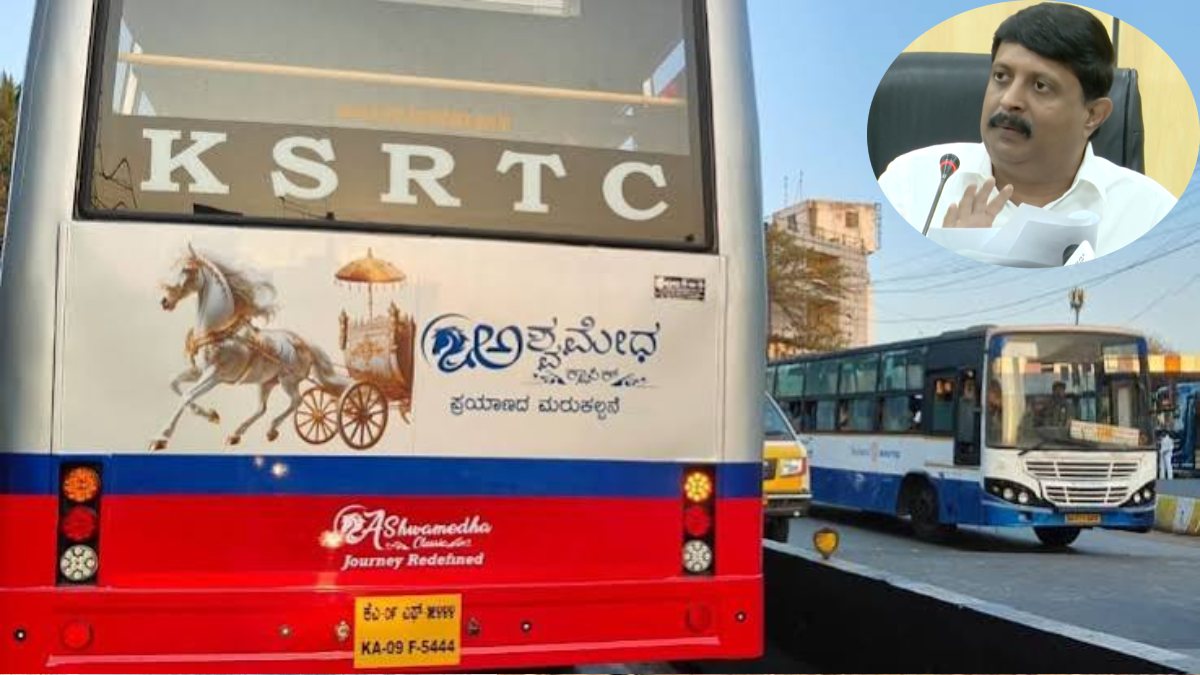
Transport Minister Bhairathi Suresh said that new rates would come into effect from midnight today (Monday). Passengers travelling on some routes may have to pay an increase of up to ₹9 at stage level while longer-distance routes will see much higher increases depending upon the distance covered by them.
The revision covers Karnataka State Road Transport Corporation (KSRTC), Bengaluru Metropolitan Transport Corporation (BMTC), North Western Karnataka Road Transport Corporation (NWKRTC) and Kalyana Karnataka Road Transport Corporation (KKRTC).
Speaking to the media in Bengaluru, Transport Minister Bhairathi Suresh said why the decision was taken and the financial problems faced by state transport corporations. Karnataka has one of the largest public transport networks in South India: 26,125 buses run on 24,179 routes in four transport corporations; about 1.24 crore passengers travel every day.
About 1,03,646 workers are employed by the department who maintain daily transport operations across the state. Managing such a large transport network requires a huge amount of money as fuel prices have gone up, salaries of employees have increased and operational expenses have also, the minister said.
The minister also said diesel prices have gone up and that has increased the burden on transport corporations “Diesel prices have gone up by ₹10.47 per litre; 80 per cent of expenditure of corporations is on diesel and employee cost. The four corporations spent about ₹5,694 crore on diesel every year.
Fuel price hike added another ₹500 crore every year. He cited outstanding diesel payments (about ₹1,111.88 crore), salary-related expenditure (₹7,719 crore) and loans (₹2,192 crore). “Govt had to release about ₹5000 crore towards Shakti scheme payments but will clear in phases”, he said.
Opposition parties have been criticising Shakti free bus travel scheme for women financially hurting transport corporations. Bhairathi Suresh denied this, saying the government compensates transport corporations for the full value of journeys done by women under the Shakti scheme. “Corporations are not providing free services entirely at their own cost as state government releases money to reimburse cost of travel,” he said, adding that Shakti scheme should not be blamed for transport corporations’ financial woes.
The revised fares will impact several important suburban routes linking Bengaluru with neighbouring towns. For instance, the ticket price from Majestic to Nelamangala has been hiked from ₹35 to ₹44, while that of Majestic to Hoskote has also risen from ₹35 to ₹44. Ticket price for travel to Doddaballapur has gone up from ₹38 to ₹47, and from Anekal it is now ₹47 instead of ₹38; fare for Magadi and Malur routes connecting Bengaluru have reportedly increased from ₹46 to ₹57, i.e., by ₹11.
Long-distance passengers travelling on express buses will also be charged a higher fare. The fare from Bengaluru to Kolar and Tumakuru has been raised from ₹81 to ₹100 (₹19 increase). Mandya passenger now has to pay ₹136 instead of ₹110 while Mysuru passengers have to pay ₹197 instead of ₹160; Bengaluru to Hassan revised fare is ₹270 (₹51 more) as against ₹219 and Chikkamagaluru passenger will have to pay ₹363 (₹295 earlier) instead of ₹245 as fare.
When asked how the government had arrived at that figure, the transport minister explained that it was not a percentage increase on all routes but that ticket prices had been revised according to distance travelled and stages along each bus route. So the increase varies with journey; short-distance travellers may see relatively small increases while those travelling long distances could have higher additional costs.
The minister also mentioned the previous fare revision and salary hikes for transport workers. He said ticket fares had not been revised much over the past decade, while employee salaries have increased, as have operating costs; therefore, corporations are under increasing pressure to maintain services, control fuel expenditure and meet employee-related obligations.
The latest fare hike will directly affect thousands of daily commuters who depend on government buses for cheap transport. Bengaluru’s suburban passengers especially will have to pay more while travelling to neighbouring towns for work, education and other reasons. As revised prices come into effect from midnight, passengers are advised to check the applicable ticket rates before they start their journey. The changes in fares across KSRTC, BMTC, NWKRTC and KKRTC are another landmark development in Karnataka’s public transport sector.





Comments