
India remembered its first Prime Minister Pandit Jawaharlal Nehru on his birth anniversary. PM Narendra Modi, Congress president Mallikarjun Kharge, Congress Parliamentary Party chairperson Sonia Gandhi and several other political leaders paid tributes to the veteran freedom fighter and national leader.
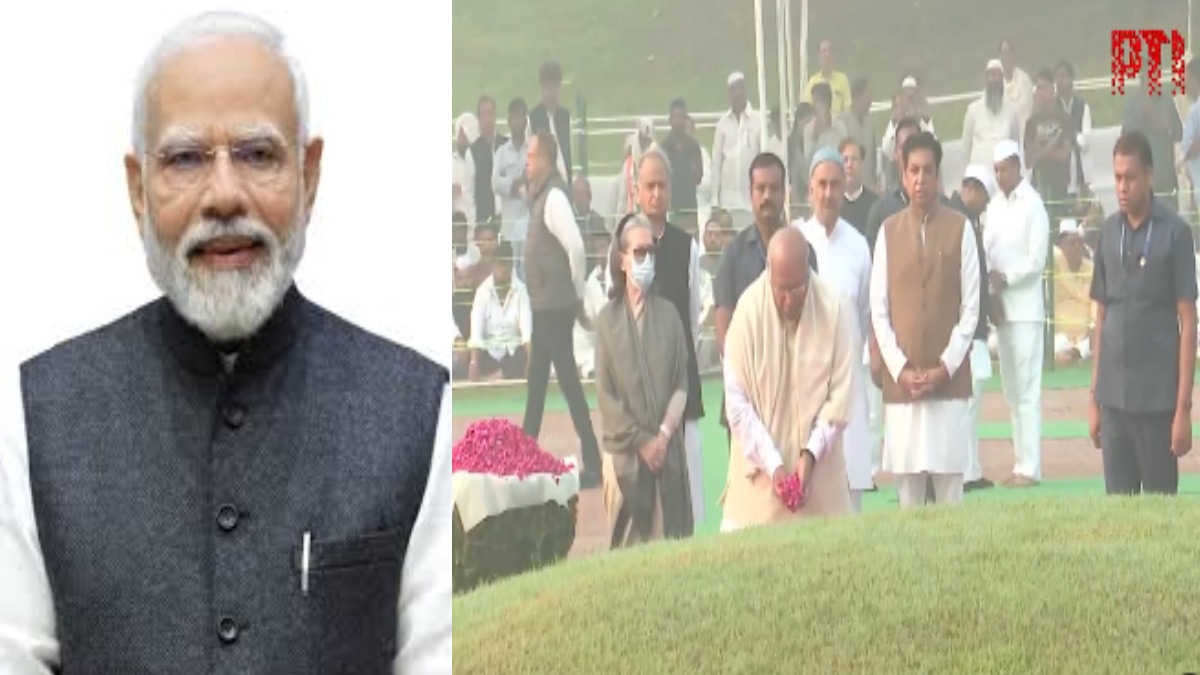
Floral tributes were offered in Delhi to remember Nehru’s contribution to India’s freedom struggle and how he shaped the country during its early years as an independent nation. Leaders from different parties came together to remember one of India’s most prominent historical figures.
Prime Minister Narendra Modi paid tribute to Pandit Jawaharlal Nehru on his birth anniversary in a message posted on X. In the message he referred to the former Prime Minister and said how important his legacy was for India’s political history.
Paying tribute to former PM Pandit Jawaharlal Nehru on his birth anniversary.
— Narendra Modi (@narendramodi) November 14, 2026
The message was part of the national observance on the birth anniversary of the country’s first Prime Minister. Nehru is still an important figure in modern India as he led the government in the formative years after independence in 1947.
In Delhi, Congress president Mallikarjun Kharge and Congress Parliamentary Party chairperson Sonia Gandhi were among those who paid floral tributes to Nehru. Leaders paid homage to him remembering his contribution to the country and honouring his legacy.
The floral tribute ceremony reflected the historical association of Congress party with Nehru he was one of the most powerful leaders of Indian National Congress during freedom movement and later became India’s first Prime Minister.
VIDEO | Delhi: Congress president Mallikarjun Kharge, CPP chairperson Sonia Gandhi and other leaders pay floral tributes to Pandit Jawaharlal Nehru on his birth anniversary. #JawaharlalNehru (Full video available on PTI Videos - https://t.co/d8jp61yd2p) https://t.co/RlpfGoyhUe
— Press Trust of India (@PTI_News) November 14, 2026
Jawaharlal Nehru was born on November 14, 1889 in Allahabad (now Prayagraj in Uttar Pradesh). He was one of the leaders of India’s struggle against British colonial rule and worked closely with Mahatma Gandhi and other freedom fighters.
When India became independent on August 15, 1947, Nehru became its first Prime Minister. He held this office until his death on May 27, 1964 making it one of the most important periods in India’s early democratic history.
Nehru was responsible for India’s parliamentary democratic system and its political and economic direction after independence. His government built national institutions, expanded education, scientific research and developed the country’s industrial infrastructure.
Several major public-sector industries, research institutions and higher education centres were established or expanded during his time. He felt that scientific progress, modern education and industrial development were necessary for long term growth of India.
One of the main features of Nehru’s leadership was democratic institutions and secular values. He wanted a political framework within which people from different religious, linguistic and cultural backgrounds could participate in the country’s democratic process.
His government also promoted planned economic development (large infrastructure projects, dams, industrial facilities and public institutions). These policies had an impact on India’s development strategy for decades but his political and economic choices have also been subjects of debate among historians and political commentators as well.
Nehru’s contribution to India’s foreign policy was also important. He was one of the foremost proponents of non-alignment during Cold War; he wanted to keep India independent rather than formally joining either United States-led or Soviet-led blocs. He wanted to protect India’s strategic autonomy and cooperation among newly independent countries. The Non-Aligned Movement later became an important platform for countries looking for an independent path in international affairs.
14 November is also Children’s Day in India popularly known as Bal Diwas. Nehru was associated with children and was called Chacha Nehru affectionately. His birthday came to be celebrated as Children’s Day so that people would understand the importance he attached to children’s welfare, education and development. Schools and educational institutions all over the country traditionally organise programmes, cultural activities and special events on this day.
The tributes paid by Narendra Modi, Mallikarjun Kharge and Sonia Gandhi among others demonstrate that Nehru’s birth anniversary remains public property. Parties may have different views on his policies and legacy but this is an occasion for reflection on the history of India’s independence, its democratic institutions and the problems faced by its first government.
Floral tributes in Delhi and Prime Minister Narendra Modi’s message on social media were another reminder of Nehru’s birth anniversary. Apart from the political ceremonies, November 14 reminds us also of education, scientific thinking and development of future generations. Even as India celebrates Nehru’s role in freedom movement and his influence on early years of country as independent republic part of national conversation remains.

Comments