When NASA’s Artemis-II astronauts flew around the Moon in April 2026, they were asked to keep watch for something that is extremely difficult to observe from Earth: tiny flashes of light caused by objects striking the lunar surface.
The crew were able to spot them.
NASA's newly released Artemis-II Preliminary Lunar Science Report confirms that astronauts aboard the Orion spacecraft observed five extremely faint bursts of light on the Moon during their lunar flyby. The flashes came as tiny "pinpricks" on the dark lunar surface and were caused by rocky fragments hitting the Moon at high speed.
The observations were conducted when Orion was about 46,000 miles from the Moon (around 74,000 km). Scientists had to rule out other possible explanations, such as reflections of the spacecraft and cosmic-ray signals, before concluding the flashes were lunar impact events.
What caused The Flashes?
Unlike Earth, the Moon has virtually no atmosphere to slow down or burn up incoming space debris.
Small rocky objects moving through space can therefore hit the lunar surface directly at extremely high speeds. When they collide with the ground, some of their kinetic energy is released as heat and light, producing a brief flash that can sometimes be observed from a distance.
The objects responsible for the Artemis-II flashes were estimated to be no more than a couple of inches wide, NASA said. They were moving thousands of miles per hour when they hit the surface.
Only a tiny fraction of the energy from these impacts becomes visible light. NASA's Impact Flash project says less than 1% of the energy from a lunar impact is converted into a brief flash, while most of the energy goes into producing a crater and disturbing the surrounding surface.
The flashes are therefore not explosions in the conventional sense. They are extremely short-lived bursts produced by the violent collision between a space rock and the Moon.
Why Could Artemis-II Astronauts See Them?
The timing of the observations was important.
The Artemis-II crew experienced a nearly hour-long total solar eclipse while passing behind the Moon. The darkened lunar surface made for excellent lighting conditions for identifying the faint flashes.
The astronauts had also been trained, and instructed to look for impact flashes as part of the mission's lunar science programme.
NASA had included impact-flash observations in the Artemis-II science plan because these events can provide information about the population of small objects travelling through the Earth-Moon system.
The astronauts’ direct observations were particularly valuable since the flashes can be extremely difficult for cameras to capture. The Artemis-II science team reported that trained human observers can sometimes find events that imaging systems may miss.
The crew recorded the locations of the flashes on a tablet. NASA has now released an annotated image showing observations made by astronauts Reid Wiseman, Victor "Ike" Glover and Jeremy Hansen.
Why do Lunar Impact Flashes matter?
At first sight, a tiny flash on the Moon could look like nothing but a spectacular sight for astronauts. For scientists, however, these events are good data about the lunar environment.
By recording when and where the impact flashes occur, scientists can calculate how often objects of various sizes strike the Moon. The observations can also shed light on the objects causing the impacts and the craters they make.
That information is of particular interest to NASA and other space agencies as they plan for long-term lunar exploration.
Future lunar missions might spend astronauts much more time on or near the Moon's surface. Knowing how often small meteoroids hit the lunar environment can therefore help engineers assess potential risks to spacecraft, habitats and other infrastructure.
NASA has said Artemis-II observations are going to help determine the frequency of these small impacts, which will help us evaluate the long-term risks of future lunar habitats and infrastructure.
Artemis-II Data could Help Future Moon Missions.
The impact flashes are only one part of the scientific information returned by Artemis-II.
NASA released more than 800 gigabytes of lunar science data from the mission on October 7, including more than 11,000 full-resolution images and videos, 8.5 hours of crew audio recordings and crew-annotated images. The agency said the data would be available to scientists and the public for further study.
The science of the mission is expected to contribute to the planning for Artemis-III and lunar missions in the future.
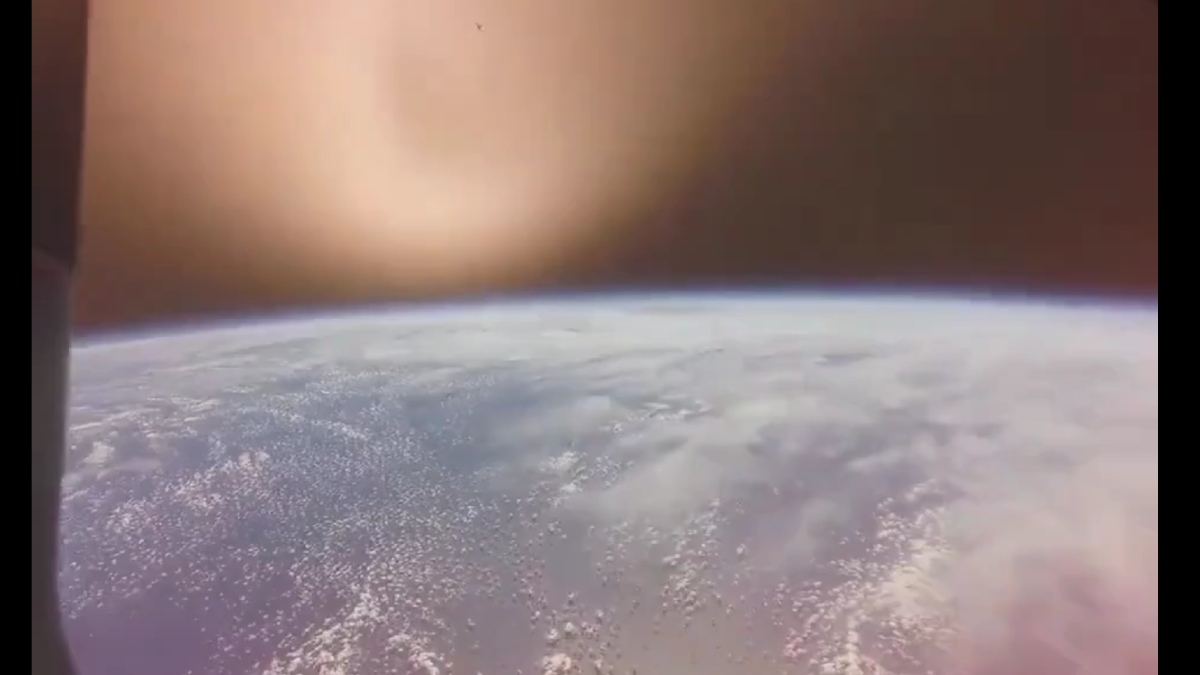
🚀 NASA just released incredible onboard footage of Artemis II returning from the Moon! Orion slammed into Earth’s atmosphere at nearly 25,000 mph after traveling 252,756 miles from Earth. 🔥🌍 The spacecraft survived the extreme heat, deployed its parachutes, and safely splashed down in the Pacific Ocean 🌊 .
— Chain Bucks Official (@MalikSaqibH) October 8, 2026
The five flashes seen by the crew may have lasted only fractions of a second, but they give scientists a good view of the continuing bombardment of the Moon.
Every one of these impacts is a reminder that the lunar surface is not static. Even today small pieces of space rock are constantly striking the Moon, gradually reshaping its surface.
For Artemis-II astronauts, those impacts were visible as tiny points of light in the darkness. For scientists, they are another piece of information that could help make future human activity on the Moon safer.