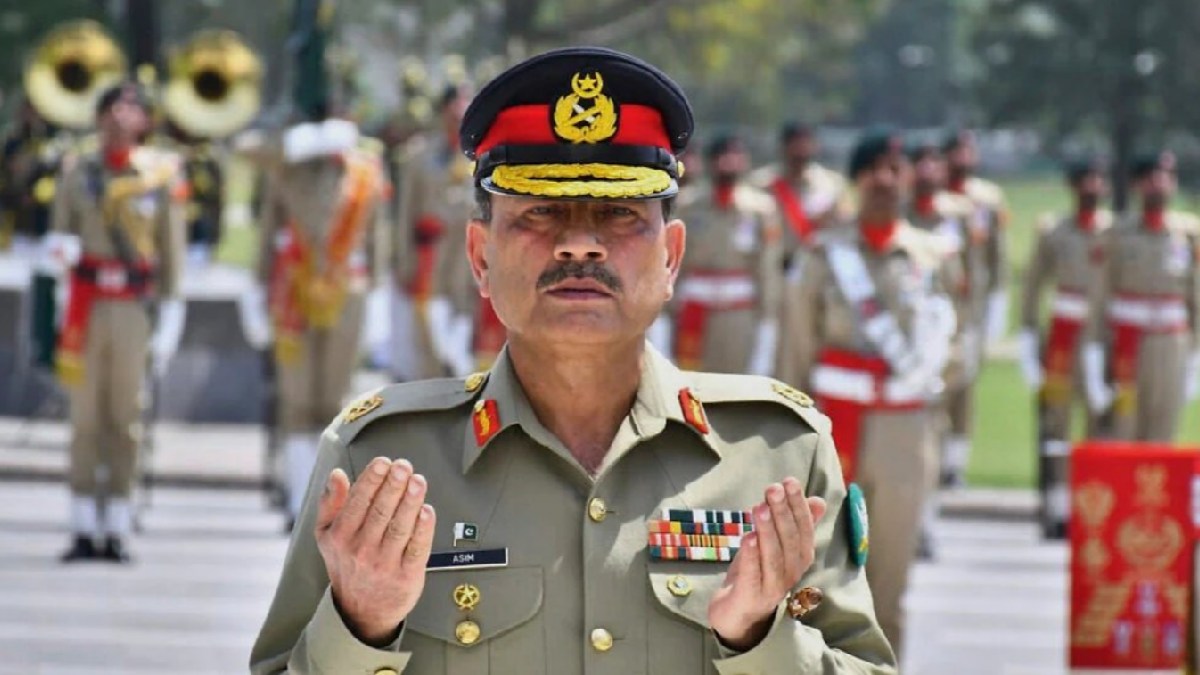
Pakistan Army Chief Field Marshal Asim Munir allegedly used a private oil-transport venture linked to a senior Iranian military commander as leverage to help broker an understanding under which Tehran agreed to halt attacks on Saudi Arabia, as reported by The Times of Israel.
The report, which was published on July 23 and cited three officials familiar with the situation, said Munir used a joint business arrangement with Islamic Revolutionary Guard Corps (IRGC) chief Ahmad Vahidi. The report said that the venture had been shipping oil from Iran to Pakistan since late 2025.
The alleged understanding between Iran and Saudi Arabia was reached in late March, during the early stages of the US-Iran conflict. Munir warned that continued Iranian attacks on Saudi Arabia could risk the future of the oil venture.
The report said the deal had been an extremely lucrative one for all involved and the Iranian oil exports had been curtailed and its prices driven down. The company has not been identified in the report, and neither has Pakistan, Iran or Saudi Arabia publicly claimed to have been involved.
Iran-Saudi Tensions and Pakistan’s Diplomatic Balancing Act.
The reported arrangement indicates Pakistan’s complicated position in the Middle East. Islamabad has good relations with Saudi Arabia but also has a long border and deep economic ties with Iran.
The recent US-Iran conflict has further put pressure on Pakistan to balance its ties with Washington, Tehran and Riyadh. Recent reports have also claimed Islamabad is trying to broker diplomatic relations to avoid friction between the US and Iran.
As The Times of Israel points out, Saudi Arabia had faced Iranian attacks early in the conflict but saw a moment of relative calm after the purported March understanding. Iran later launched a missile toward Saudi Arabia over the weekend, which raised new fears over the fragile regional situation.
Saudi-Pakistan Defence Pact Adds Strategic Significance
The reported developments also come at the same time as a major defence agreement signed by Pakistan and Saudi Arabia in September 2025.
The Strategic Mutual Defense Agreement signed in Riyadh on 17 September 2025 stipulates that aggression against either country would be considered aggression against both. The agreement aims to enhance defence cooperation and joint deterrence in an effort to strengthen defence cooperation and joint deterrence in the two countries.
The agreement has given Pakistan a new strategic dimension in terms of relations with Saudi Arabia, at a time when Riyadh’s security risks as a whole are growing with the region’s conflict.
Pakistan’s role has therefore become increasingly sensitive. Islamabad has strong defence ties with Saudi Arabia but it needs to maintain its relationship with Iran, a neighbouring country with which it shares a border and has many commercial ties.
Why the Development Matters for India.
The deepening Pakistan-Saudi defence relationship has also attracted India's attention.
When the Strategic Mutual Defense Agreement was signed, India’s Ministry of External Affairs said New Delhi was aware that the arrangement had been under consideration and would study its implications for India’s national security as well as regional and global stability.
The agreement is significant because Saudi Arabia is a major regional power and Pakistan is one of the most militarily capable countries in the Muslim world. A closer defense relationship between the two countries could affect security calculations across West Asia and South Asia.
The development is important to India as it suffers from a longstanding security rivalry with Pakistan and has expanded its economic and diplomatic relations with Gulf countries such as Saudi Arabia.
Pakistan’s Delicate Regional Position
The latest accusations only highlight the ever-more complicated role Pakistan is trying to play in the Middle East.
Islamabad is interested in forming closer strategic and economic ties with Saudi Arabia, while maintaining relations with Iran. And Pakistan has been engaged in diplomatic efforts linked to the broader US-Iran conflict.
So if it is true, the alleged use of an oil venture as leverage would show how economic interests, military influence and diplomacy are becoming increasingly interconnected in that region.
But the main claims in the report are based on anonymous officials’ accounts and have not been independently confirmed by the governments or military institutions involved in these cases. The alleged oil venture, a possible number of individuals who may have benefited from it, and the exact nature of any Iran-Saudi understanding are not clear.
And for now, this episode shows Islamabad's delicate balancing act taking place as the Middle East conflict continues to reshape regional alliances, energy routes and security partnerships.