Astronomers have announced a planetary discovery of a planet that has been puzzling scientists for years in space, and it is an alien life that looks like it is not what you should look for. The new planet is challenging what we believed in planetary development and evolution through space so far: How planets are formed and evolved and survive in this very hostile environment.
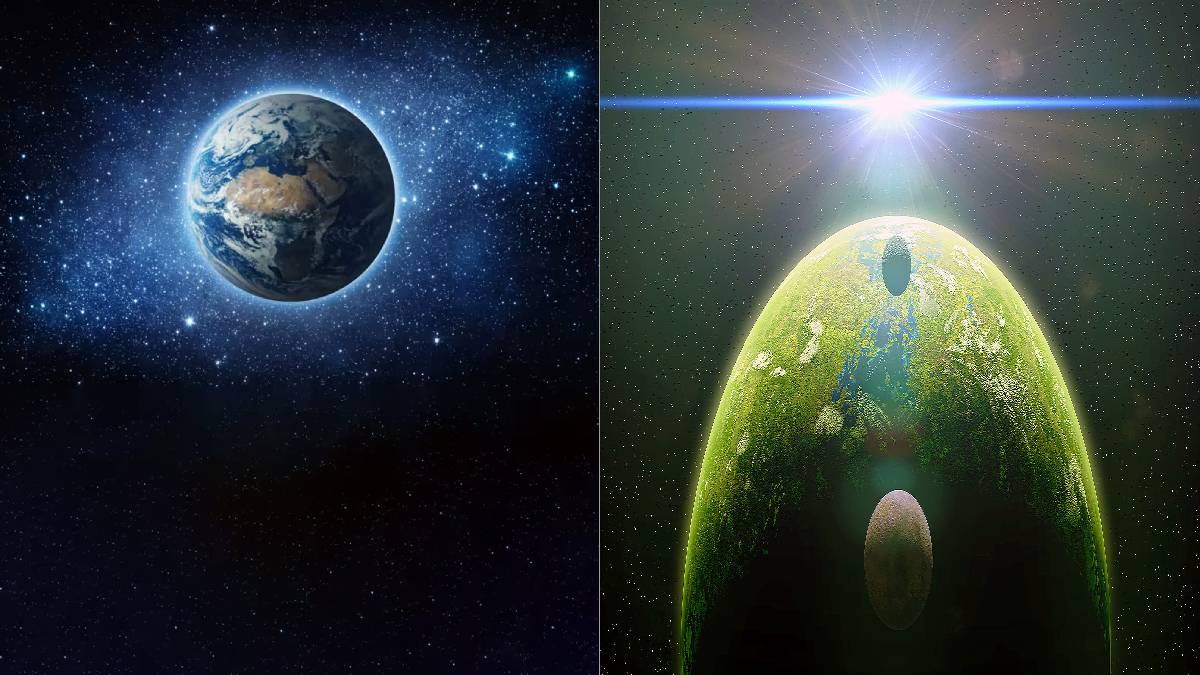
The planet, located hundreds of light-years away from our solar system, belongs to the new class of exoplanets, those orbiting stars beyond the Sun, but unlike rocky planets (e.g., Earth or Jupiter), it has an interesting combination of physical and atmospheric properties that would make it one of the most fascinating worlds ever discovered.
Researchers found it with new space-based and ground-based telescopes that were able to study the faint light that can be seen or reflected from distant planets. The size, mass, orbit, and atmosphere of the planet were examined, and it was found that it existed in conditions never witnessed.
One of the planet’s most striking features is its extreme environment. Scientists believe its atmosphere may contain exotic chemical compounds, and temperature and pressure levels could create weather systems completely different from those on Earth. Some models even suggest clouds made from minerals or metals rather than water - and the incredibly wide variety of planetary systems in our galaxy.
The discovery also poses questions about planetary formation. Theories in planetary formation include disks of gas and dust around young stars that form planets. But this new world appears to have evolved in a manner that doesn't seem to fit well with earlier models of planetary formation. Scientists are now exploring whether unique gravitational interactions, stellar radiation, or chemical composition influenced its development.
Although the planet is not habitable, studying such extreme environments helps scientists better understand where life is (or might not be) present elsewhere in the universe. Each unusual exoplanet contributes to understanding how we can better assess the diversity of planets that look like Earth and how they differ.
Modern observatories, like big next-generation space telescopes, have significantly advanced our capability to identify and study distant planets. Such instruments can identify gases, estimate surface temperatures, and even monitor weather on planets hundreds or thousands of light-years away. As technology advances, astronomers will find even more surprising discoveries in the next 10 years.
And the new world also demonstrates just how little is known about our cosmic neighborhood. Only a few decades ago, scientists had not even been able to determine the existence of any exoplanets. Now thousands of them have been found— an impressive collection of planetary systems from lava planets to ocean planets to super-Earths, mini-Neptunes and planets orbiting other stars.
The discovery is additional proof that the universe is far more diverse than we had thought. Each new planet that we have discovered challenges the existing theory of how planets work and opens new lines of research in planetary physics, atmospheric chemistry, and stellar evolution.
🚨 Breaking: Astronomers have discovered a world unlike anything on Earth 🌊🪐
— Physics-astronomy (@Physicsastronmy) July 14, 2026
The planet appears to be covered entirely by water, with no continents or exposed land. Scientists believe its oceans may extend hundreds of kilometers deep—far deeper than any ocean on Earth.
This… pic.twitter.com/AGsnOJ5BR6
The mystery is just one of the things astronomers will keep searching for at least the next 10 years to study it with much more advanced telescopes that will make it possible to trace it to the very details about its composition, atmospheric dynamics, and origins. More interesting features might be revealed in the future, which we will be able to find in an even more profound way in order to learn more about how planets are formed and who creates them throughout the galaxy, and to understand how planets form within the galaxy at large.
Unearthings like these not only make us hope we are not on the verge of a discovery, but they also make us think about how much we are still in the universe, and there are so many mysteries to be discovered. Nowhere is the universe more beautiful and so much bigger than in space, and the vast array of planets beyond our solar system.