In the past 150 years, Charles Darwin had already provided some good scientific evidence for one of his long-standing theories about carnivorous plants.
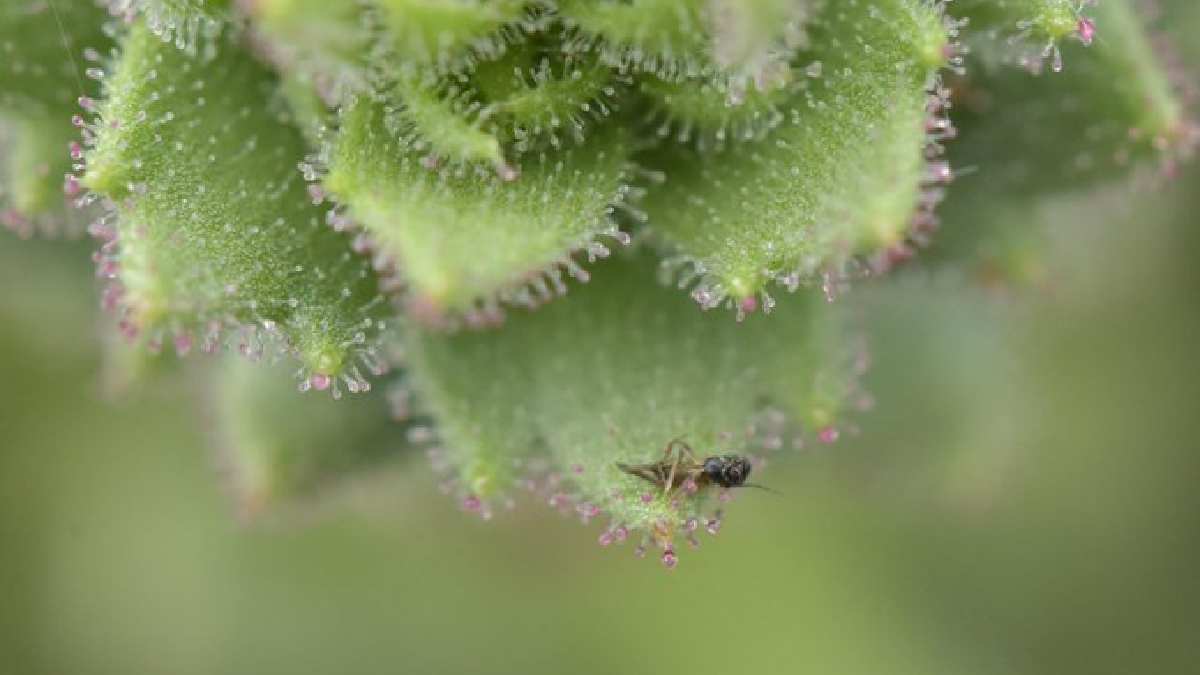
Now researchers have found evidence that carnivorous plants evolved in the presence of insects and, in so doing, prove Darwin's theories on evolution are still true.
Darwin’s interest in carnivorous plants began in the late 19th century, and he would publish extensive work on how such unusual species capture, digest and absorb insects to survive in nutrient-poor environments.
While he was right on the ground and did so carefully, scientists of the time were not equipped to understand the genetic mechanisms of these remarkable plants.
Using DNA sequencing and molecular analysis tools, an international team of experts studied the evolution of an insect-eating plant.
Their findings suggest that the unique trapping structures of a plant evolved gradually from leaves, as Darwin's original theory of natural selection in which the environment evolved more complex features as evolutionary processes (and hence the system evolved and evolved over time) is not far from reality.
They found that genes that are responsible for leaf growth in the typical plant are being adapted to perform entirely new functions in carnivorous species.
Evolution did not create new organs, but adapted existing leaf structures so that they can trap prey, produce digestive enzymes and absorb essential nutrients released during digestion.
Scientists also wanted to know how the plant reacts when an insect is captured. The prey triggers a series of biochemical reactions in the digestive system to break down the insect’s body into nutrients such as nitrogen and phosphorus.
These nutrients are then absorbed by the plant so that it can survive where there’s very little natural fertility.
According to the experts, this adaptive strategy is why carnivorous plants thrive in bogs, marshes and other nutrient-poor areas where plants would not be able to grow very well.
And their ability to harvest nutrients from insects is a huge evolutionary advantage.
Besides confirming Darwin's theories of plant evolution and genetics, the research also provides information about plant evolution and genetics.
Scientists believe that a better understanding of such genetic pathways could lead to future agricultural innovation, to produce crops that are more adaptable to harsh environments, and that can deal better with them if they are more flexible and adaptable by nature.
The findings also illustrate Darwin's great scientific foresight. Even in the 1800s, when he was working with little technology, Darwin accurately described evolutionary processes that researchers today can verify in the laboratory using modern techniques.
Experts say the study supports one of the central tenets of evolutionary biology, that complex adaptations come about slowly over generations not so suddenly.
The genetic evidence found in this study backs that up and shows that existing plant structures can be turned into very specialized organs.
More than a century after Darwin was writing about carnivorous plants, modern science is still confirming his understanding.
What we just learned strengthens one of his theories and also confirms our understanding of how plants are adapted to survive in some of the most challenging settings.