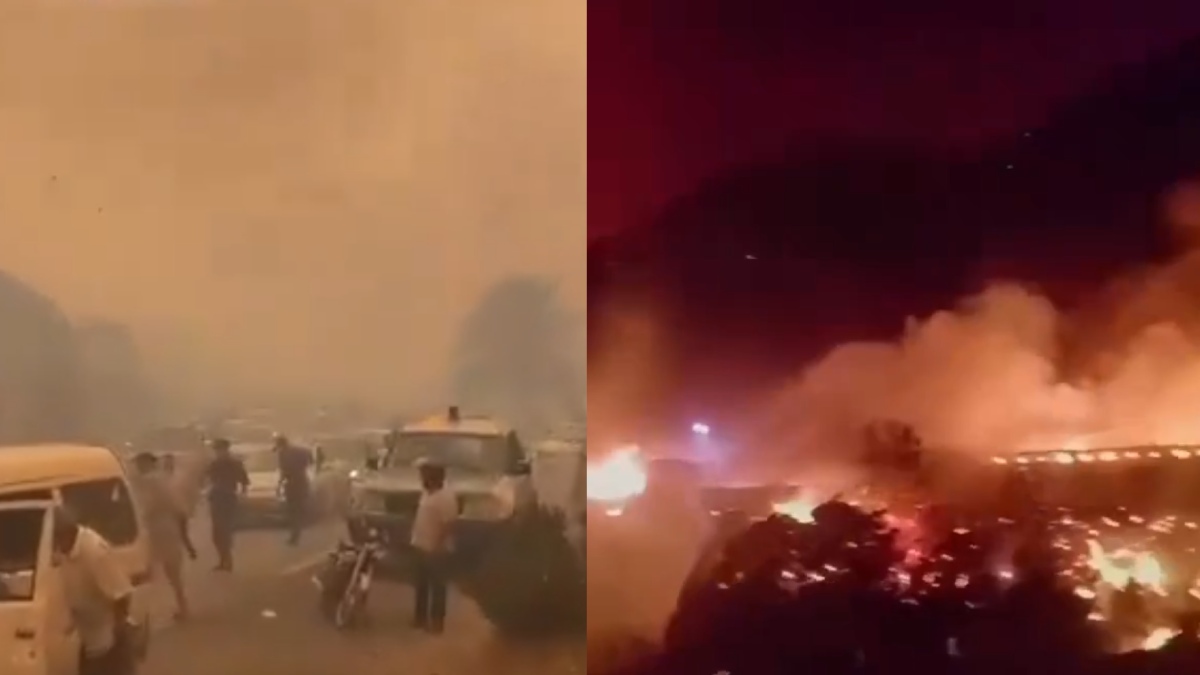
One big question has emerged after the devastating flash floods that struck the Nepal-China border region on 26 August 2026: Was Nepal warned in time about the approaching flood from Tibet?
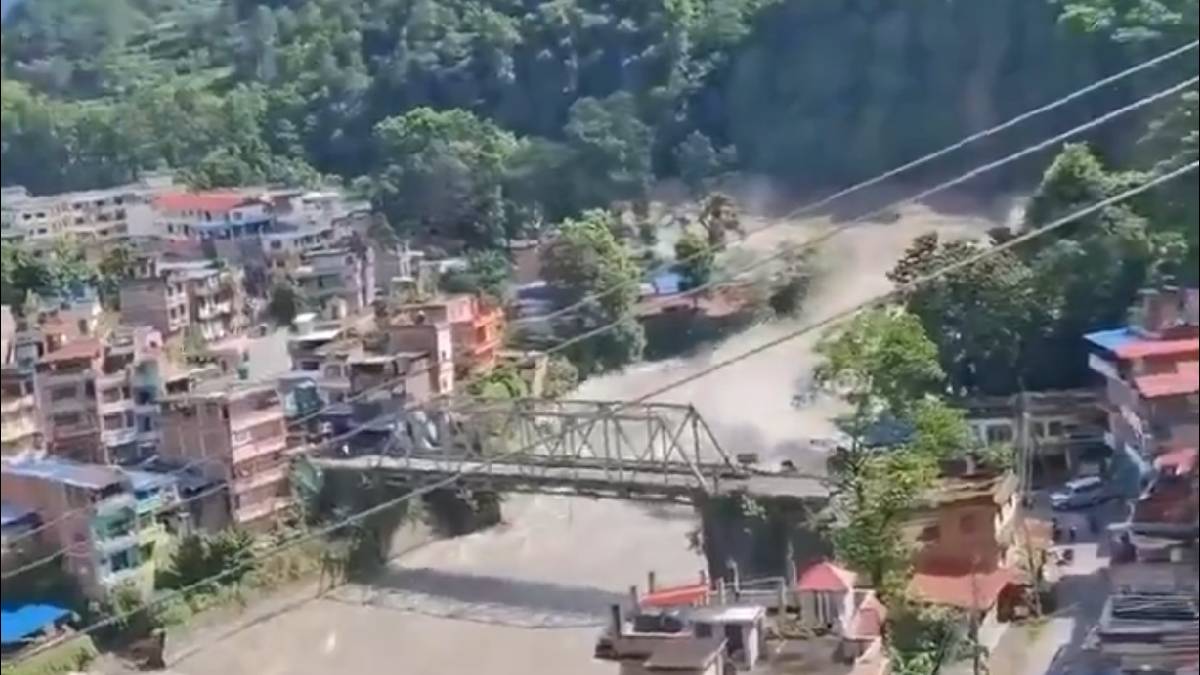
Nepali media, citing Chinese media coverage, have highlighted a potentially significant timeline. A local Nepali newspaper reported that a flash flood hit Tibet’s Kerung (Gyirong) County around 10:30 a.m. China time. Given Nepal is 2 hours and 15 minutes behind China, that would be 8:15 a.m. Nepal time. And that same reporting has raised questions as to whether authorities and local communities downstream of Nepal had enough notice before the flood hit.
The issue is particularly sensitive because the flood then caused catastrophic destruction in Nepal’s Bhote Koshi valley. Mud, rock and water washed through settlements and infrastructure near the border, destroying roads, bridges and buildings and killing or missing many people.
The disaster was caused by a massive collapse of ice and rock into the river system along the Himalayan border, Reuters reported. Flooding and debris flow occurred on both sides of the China-Nepal border, so infrastructure and communities were damaged and people were left poor.
The current timeline has led to speculation about whether earlier information from the Tibet side could have helped Nepal prepare for the approaching flood.
The claim that China purposefully failed to warn Nepal has not been independently established. The fact that the event in Tibet was reported after a time gap between the flood impact in Nepal does not in itself mean that Chinese authorities knew exactly what was happening, had enough information to predict the downstream impact, or deliberately withheld a warning.
🚨 BIG ALLEGATION ON CHINA
— News Algebra (@NewsAlgebraIND) August 27, 2026
China didn't inform Nepal on time.
Nepali media reports, citing Chinese media, say the flood hit Tibet’s Kerung County around 10:30 AM local time - more than two hours before the devastating flood reached Nepal.
Why was Nepal not warned earlier by…
That distinction is crucial in the aftermath of a natural disaster.
Flash floods caused by glacial or ice-rock collapses can move incredibly fast through narrow Himalayan valleys. The US Geological Survey initially identified the disaster as a glacial ice-rock avalanche and not an earthquake.
At the same time, the cross-border nature of the river system makes communication between China and Nepal very important. Water coming or accumulating on the Tibetan side can quickly affect communities downstream in Nepal. In such cases, the real-time sharing of hydrological information, landslide observations and emergency warnings could potentially be a matter of life and death.
The controversy comes at a time of a huge humanitarian crisis also in Nepal. The death toll has soared, and hundreds are missing. Foreign tourists and pilgrims are among the missing people, Nepal’s government says.
China has also suffered extensive casualties and infrastructure damage. The Gyirong border area and major transport infrastructure were severely damaged. Emergency response systems were activated, and rescue efforts were still ongoing on both sides of the border.
The immediate priority is rescue and relief. But once the crisis is over, we are likely to receive more attention to cross-border early-warning mechanisms.
Nepal and China have a mountainous border on which bad weather, landslides, glacial instability and sudden flooding are perennial threats. Meanwhile, the deadly disaster is on top of many previous flooding disasters in the region and is only adding to fears that better monitoring and communication systems are needed.
If authorities on either side had actionable information before the flood came through Nepal, questions about how and when that information was communicated will naturally arise. If the event developed too quickly for a meaningful warning to be given by authorities, they will need to clarify that.
So for now, reports of a delayed Chinese warning should be treated as an allegation that needs to be verified, not evidence of intentional withholding.
But the tragedy is a lesson for the Himalayas: if a disaster occurs across an international border, early warning cannot stop at the border. Information sharing between neighboring countries will be critical to allow downstream communities to get a few more minutes away and seek safety.
As Nepal is still searching for missing people and assessing the magnitude of the damage caused by the flood, the disaster’s timeline— including the 10:30 a.m. Tibet event and the impact in Nepal— is likely to intensify.
Note: The claims of delay in warning Nepal are based on media reports and have not been independently established as evidence of deliberate withholding by China.