Chinese engineers have achieved a major milestone in reusable space technology by successfully catching a rocket booster using a specially designed wire-based recovery system. China is rapidly growing in commercial spaceflight, and this is the first time a rocket has landed using a wire-based system instead of landing pads or drone ships.
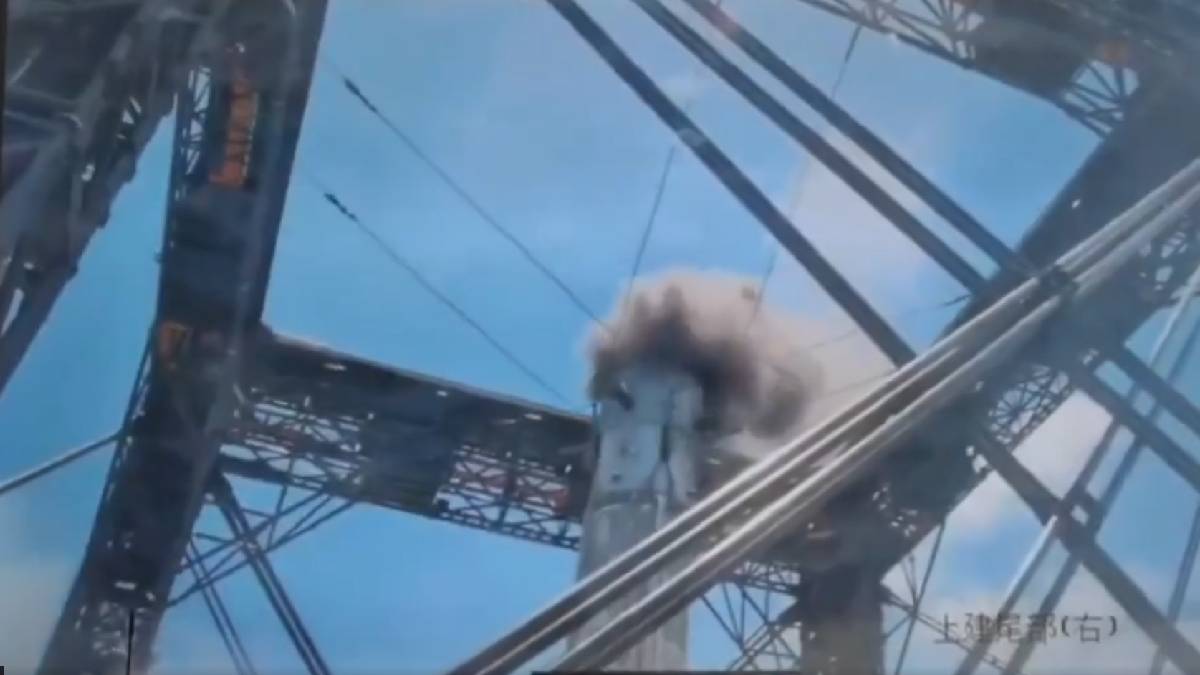
The recovery test involved a reusable rocket booster descending with precise guidance and being captured by a network of high-strength steel wires suspended between support structures. Instead of falling straight down, the booster was held by the tensioned wire system and was not thrown into the ground at all. The controlled recovery reduced the impact force, reduced the wear and tear on the rocket, and could reduce refurbishment costs for relaunching it after a few years of service.
Reusable rockets are an essential part of space exploration today because they drastically reduce the cost of launching satellites, cargo, and ultimately humans. Once an expensive component of a rocket is recovered in space, companies and space agencies can reuse a lot of the hardware and not build a new launch vehicle for every mission. China’s latest breakthrough is a step toward more advanced reusable launch technology that will be capable of competing with leading global space programs.
The wire-based capture system may have several advantages over conventional vertical landings. Without the need for a hard touchdown, engineers can reduce structural stress on the rocket booster and also simplify landing infrastructure. The suspended wire structure provides a controlled way of absorbing the remaining kinetic energy during descent, thus protecting sensitive engines and structural components.
Chinese engineers using wires to perfectly catch rocket boosterpic.twitter.com/Er2onXCsVj
— Massimo (@Rainmaker1973) July 13, 2026
Success in such a task requires great precision. The booster has to control its speed, orientation, and position as it descends during the final phase. These navigation systems, onboard computers, guidance algorithms, sensors, and propulsion controls are coupled to ensure that the rocket is at the right height with the capture wires and that the rocket is precisely in line with the wires. A slight deviation can lead to a failed recovery, and so the achievement is a huge engineering accomplishment.
China has been investing heavily in reusable rocket technology as part of its broader ambitions to expand commercial launch services and, more broadly, to be a player in the global space industry. Reusable launch vehicles from Chinese aerospace companies are being developed to serve satellites, scientific missions, and future space transportation. Reusable recovery methods will be key to making frequent launches more affordable and sustainable.
Experts think that other recovery methods like wire capture might be useful for future launch systems, particularly in cases where landing space is limited and cost reduction is a priority. Traditional landing pads are still used, but new ways of performing them are available for engineers with various mission needs and vehicle designs.
And as competition for space continues to increase in the global space industry, so does the need to make reusable rocket technology a reality. Every improvement in recovery efficiency helps reduce launch costs, increase mission frequency, and increase operational reliability. China’s successful wire-based booster capture shows how engineering innovation is changing the way we think of reusable spaceflight and could shape the next generation of launch and recovery technologies worldwide.