Such serious allegations about Pakistani security forces have triggered outrage and revived calls for an independent investigation of reported human rights violations in Khyber Pakhtunkhwa and Balochistan.
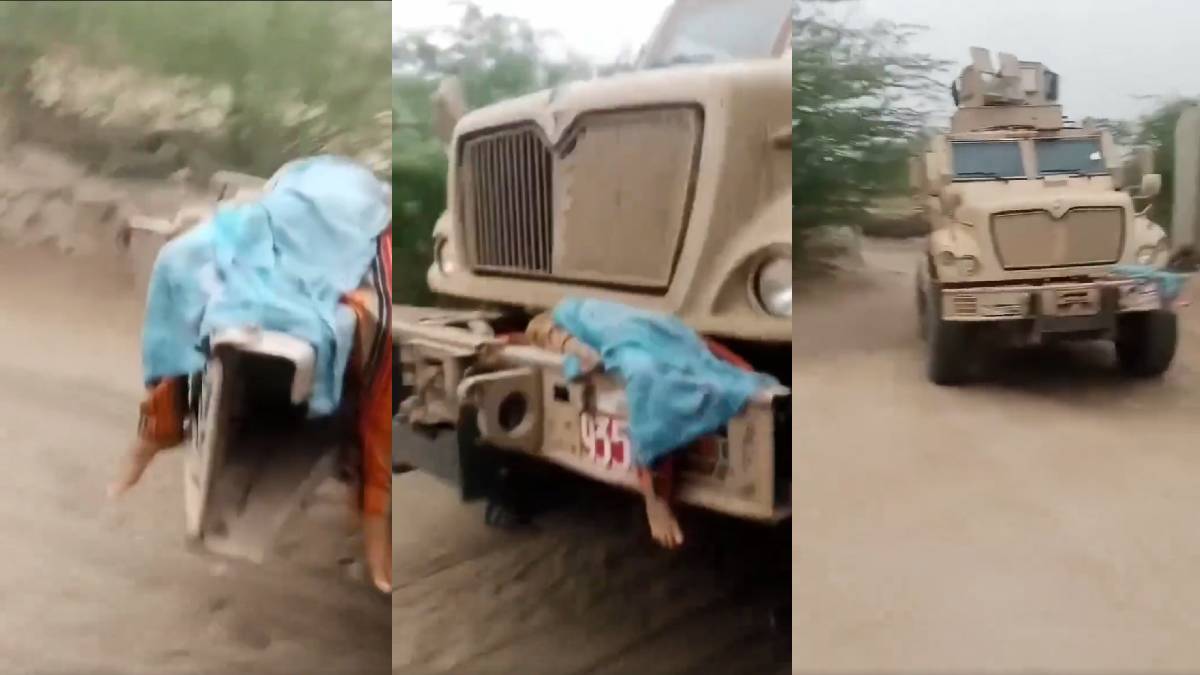
According to claims in connection with the incident, an innocent girl was shot by Pakistani forces. The allegations also claim that her body was then put on the front of an armored vehicle and paraded through the streets in a manner which critics say is deeply degrading and inhumane.
Pak forces shot an innocent girl, then placed her body on the front of an armored vehicle as if she were some kind of trophy or prize.
— برهان الدین | Burhan uddin (@burhan_uddin_0) July 29, 2026
They paraded her through the streets.
This is what NaPak Army has been doing in KPK And Balochistan for many years.https://t.co/MnJy27fne7
The details of the alleged killing, such as the girl's identity, location, date, and the sequence of events, could not be independently confirmed at the time of publication. There was also no independent evidence of the murder and the display of the body publicly.
But the claims have led to strong responses from activists and citizens who are concerned about the treatment of civilians in conflict-affected regions. If the allegations are accepted and verified in an unbiased manner, the incident would constitute a grave breach of human dignity and international human rights principles, critics say.
The accusations have also revived long-standing allegations of abuses, excessive force, enforced disappearances and civilian suffering in Khyber Pakhtunkhwa and Balochistan. Both of these regions have been plagued by decades of security problems, militant violence, insurgency and military operations.
In Khyber Pakhtunkhwa, the security situation is still volatile, and police and security forces have been attacked in many districts. Balochistan has also seen a long-running separatist insurgency, militant attacks and security operations.
Human rights advocates have stressed that security concerns do not relieve state institutions of the obligation to protect civilians and follow the law in any matter. Even in a counterinsurgency or counterterrorism context, the use of force must be legal, and allegations of civilian deaths should be investigated transparently and impartially.
The reported placing of a civilian’s body on an armored vehicle, if true, would raise more questions than the purported killing. Some say that showing a dead person publicly could be degrading treatment and would violate basic human dignity.
Such allegations have resulted in the call for a credible inquiry that looks at any evidence (video footage, eyewitness accounts, medical records and official operational reports). A transparent investigation would also be needed to determine whether the incident happened as claimed, who was responsible, and whether any laws or regulations were violated.
Accountability has become a major part of the public response. Activists say an investigation needs to be independent and should protect witnesses and families. The findings should be public so that the misinformation and the facts are made available to the public as well, they say.
The issue has also raised awareness of responsible reporting. In conflict zones, videos and claims can spread rapidly on social media before the authenticity, location, or context is established. Independent verification is necessary, especially when allegations are made about the death of a child and accusations against state security forces.
At the same time, a lack of immediate verification should not bar serious allegations from being investigated. Human rights groups have long stressed that credible claims of civilian harm need to be investigated promptly and not dismissed.
Khyber Pakhtunkhwa and Balochistan remain politically and socially sensitive. Local communities have often voiced concern about security operations, missing persons and civilian protection, and Pakistani authorities have claimed that security measures are aimed at curbing militancy and protecting the public.
At this time, no such thing has been proven. The available evidence makes it clear that an unbiased, evidence-based investigation should be conducted to establish the facts and determine if there is any wrongdoing.
If the allegations are proven, then the ones who are responsible must be held accountable through due process. And if the claims are wrong and misleading, a transparent investigation would also help clarify the record.
The most important concern is the protection of civilians and respect for human dignity. Accountability and credible fact-finding are necessary in situations of conflict if public trust is to be maintained and serious allegations are to be resolved under the rule of law.