The growing use of artificial intelligence (AI) in everyday life has now reached courtrooms, raising new questions about ethics, credibility and the future of legal proceedings. The recent case of a France woman using an AI-written statement to document what happened on the night she was allegedly sexually assaulted by her former boyfriend has ignited vigorous debate among the legal community, technology experts and victim advocate groups.
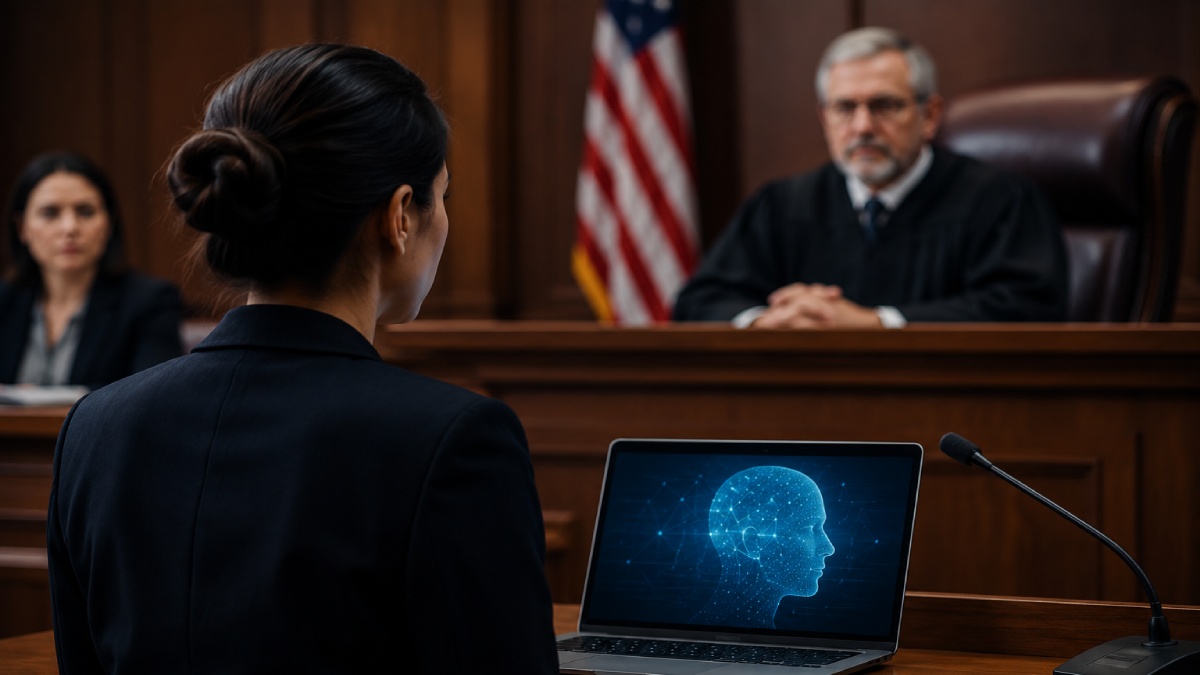
AI tools are increasingly being used for drafting documents, summarising information and helping with legal research, but the situation has raised questions about the necessity of being able to rely on AI for someone to share deeply personal accounts when they are in court.
These technology tools have been used for many years and AI-based storytelling has been used in many different forms of entertainment, education, and mental health. The woman submitted an AI-assisted narrative to describe her experience of the alleged assault.
Legal experts say that in criminal cases involving sexual assault, courts rely on testimony given by witnesses, corroborating evidence, forensic evidence, digital records and other admissible evidence. AI can help to organize documents, but it cannot make decisions and replace evidence that is given under oath. Ultimately it is up to the court to judge the reliability, consistency and admissibility of all information that is offered in legal proceedings.
The incident has raised questions of how AI should be used in very sensitive legal matters. Artificial intelligence systems generate text by analyzing patterns from a huge amount of data and not by the witness's knowledge of the event.
Because of this, any AI-generated data will reflect the information given to the system and it could be confused with how the information is put into the data. This creates the danger that we do not know the true story and that technology might be a factor in witness reports.
Technology experts say that AI tools have a role to play in administrative tasks such as proofreading, translation, document formatting and legal research. But when it comes to factual narratives in criminal proceedings, human oversight must be present. Lawyers and judges have to differentiate between witness recollection and language generated or altered by AI software.
Victim support organisations have also weighed in, pointing out that survivors of traumatic experiences often struggle to recall events in a linear or detailed manner. Trauma can affect memory, communication and emotion. AI-assisted writing tools could provide a way for survivors to organise their thoughts before talking to investigators or lawyers, some say. But technological help is to be disclosed and should never alter the integrity of the person’s story.
The case is also emblematic of the broader problem of how judicial systems are being challenged as artificial intelligence becomes more woven into society. Courtrooms are already facing AI-generated documents, deepfake videos, synthetic audio recordings, and digitally manipulated evidence. As these technologies become more sophisticated, legal systems are working to establish clear standards for authenticity, disclosure, and admissibility in order to safeguard judicial processes.
Some legal academics think future regulations may require parties to disclose when AI has been used to draft or substantially help in the preparation of court documents. Such transparency would enable judges to assess the role of technology while maintaining confidence in the legal process. Legal regimes are already considering guidelines for AI use among lawyers, litigants and court personnel.
The incident has also raised a lot of discussion on social media, which is divided by people’s opinions. While AI gives people who cannot communicate due to trauma or emotional distress tools to help them, criminal proceedings are about personal testimony that is about the person and not what a person has to say and people need to be given the time to tell the truth to make the case. AI should be a support rather than a replacement for a person’s voice.
As AI gets more involved in the legal system, its use is more inevitable. When it comes to AI in court, courts, lawyers, policymakers, and technology developers need to work together to make sure that innovation does not undermine justice (fairness, transparency and reliability in the evidence of the process).
A recent case serves as a reminder that AI can help with communication and document preparation, but the decision to determine what to believe in criminal cases will still depend on evidence and the courts will have to weigh that in as much as they need to. And as we are on the verge of the global discussion about whether AI should be used by the courts in a responsible manner, those debates are going to only keep going on.